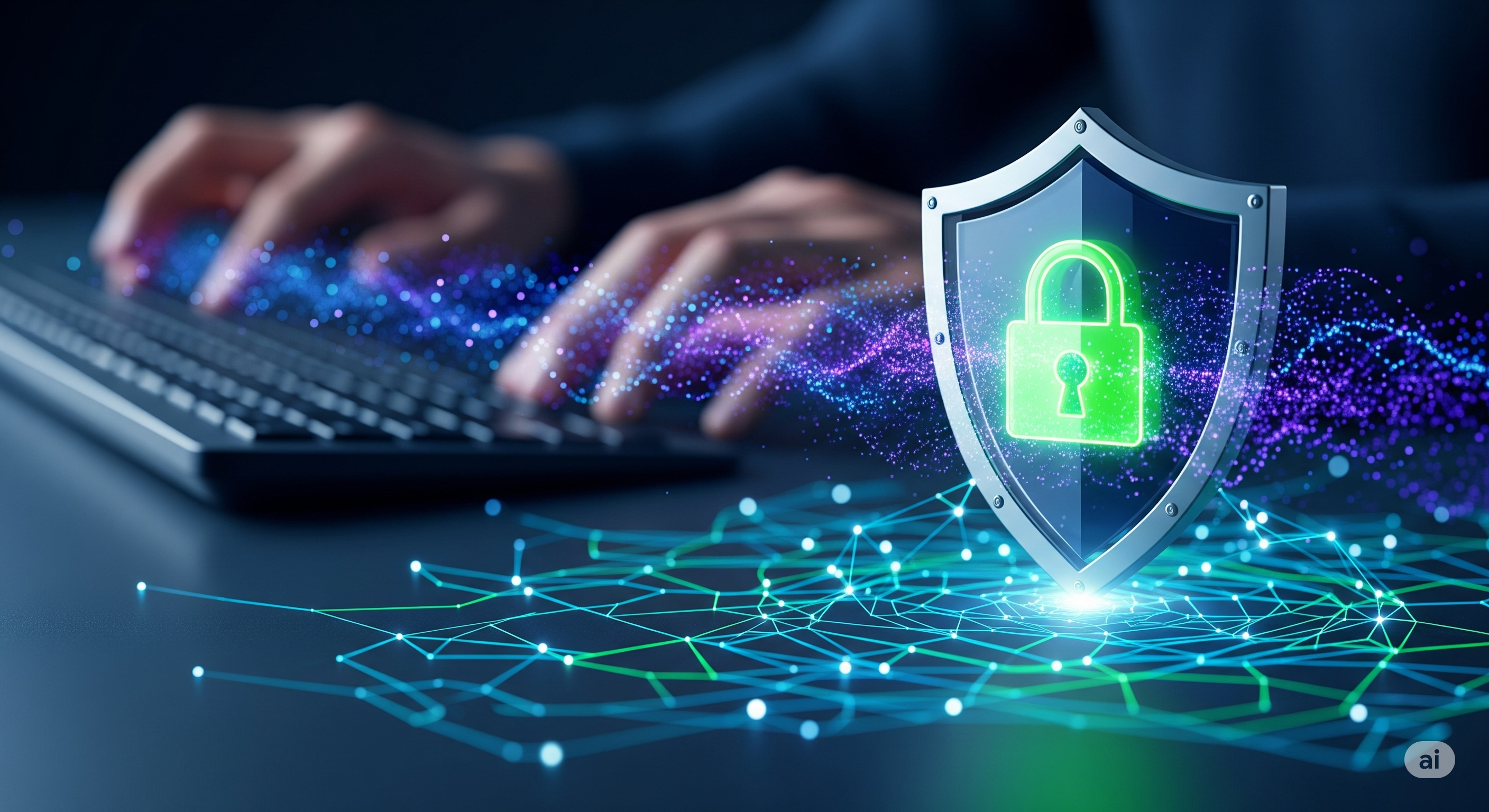
This isn’t just about a virus infecting your system; it’s about a new era of cyber warfare where algorithms learn to identify your weakest points, craft tailored attacks, and extort payment with unparalleled efficiency. The question is no longer *if* your digital fort will be tested, but *when*, and whether your defenses are agile enough to withstand an intelligent, adaptive siege.
The New Face of Ransomware: Smarter, Faster, More Destructive
Ransomware has always been a significant threat, evolving from simple encryption schemes to sophisticated double-extortion tactics where data is not only locked but also stolen and threatened with public release. But the integration of Artificial Intelligence and Machine Learning (AI/ML) has fundamentally reshaped its landscape. We're witnessing a new generation of ransomware that's not only faster but also eerily intelligent.
These AI-enhanced variants can perform automated reconnaissance, meticulously mapping target networks to identify critical assets, vulnerable systems, and potential entry points. They can mimic legitimate network traffic, making detection by traditional intrusion detection systems incredibly difficult. Once inside, they can adapt their attack vectors in real-time, side-stepping defenses designed for static threats. This means the time between initial compromise and full system encryption or data exfiltration is shrinking, often to mere minutes or hours, leaving security teams scrambling to react to an enemy that learns with every interaction.
The financial and reputational fallout from these attacks is catastrophic. Businesses face not just the cost of downtime and potential ransom payments, but also the long-term damage of compromised trust, regulatory fines, and intellectual property theft. The recent wave of high-profile incidents across various sectors – from healthcare to critical infrastructure – serves as a stark reminder that no one is truly safe in this new paradigm.
AI: The Cyber Adversary's New Secret Weapon
How exactly are threat actors leveraging AI to amplify their attacks? The methods are diverse and increasingly sophisticated:
* Automated Phishing & Social Engineering: AI can generate highly convincing, personalized phishing emails, texts, and voice messages at scale. By analyzing public data, AI can craft lures that exploit individual psychological biases and current events, making them almost indistinguishable from legitimate communications. This drastically increases the success rate of initial intrusion.
* Exploit Generation & Vulnerability Discovery: AI algorithms can scour codebases and networks to identify zero-day vulnerabilities or weak configurations far more rapidly than human researchers. They can even generate novel exploits on the fly, tailoring them to specific target environments.
* Polymorphic Malware: AI-driven malware can continuously mutate its code and behavior, creating an endless stream of new variants that evade signature-based antivirus and even some heuristic detection systems. This makes it incredibly difficult for security tools to keep up.
* Evasion and Obfuscation: AI can help ransomware payloads remain stealthy, blending in with legitimate network traffic, delaying detection until the attack is well underway. It can learn from defensive responses and adjust its tactics to avoid being flagged.
* Target Prioritization: By analyzing vast amounts of data, AI can identify the most valuable targets within a network, ensuring that critical data or systems are encrypted first, maximizing the impact and the likelihood of a ransom payment.
These capabilities transform ransomware from a blunt instrument into a precision weapon, capable of executing complex, multi-stage attacks with minimal human intervention, making it faster, more scalable, and far more insidious.
Beyond the Fort Knox: Why Traditional Defenses Are No Longer Enough
For decades, cybersecurity strategies have largely focused on building robust perimeters – the "Fort Knox" approach. Firewalls block unauthorized access, antivirus scans for known threats, and patch management closes known vulnerabilities. While these foundational elements remain crucial, they are increasingly insufficient against an AI-powered adversary.
The problem lies in reactivity. Traditional defenses are designed to respond to *known* threats or *patterned* attacks. But AI-driven ransomware excels at generating *novel* threats and adapting its patterns. It can operate stealthily within the network, bypassing the perimeter and exploiting trust relationships. A static defense, no matter how strong, will eventually succumb to an adversary that continuously learns and evolves its attack vectors.
The human element, often cited as the weakest link, becomes even more perilous when confronted with AI-generated social engineering. Furthermore, the sheer volume of data and alerts generated in modern networks overwhelms human security analysts, making it easy for subtle, AI-driven incursions to go unnoticed until it’s too late. The paradigm must shift from simply building walls to actively hunting for threats, continuously verifying trust, and leveraging intelligence to predict and prevent future attacks.
Building Your Cyber Resilience: A Proactive Blueprint
The good news is that just as AI can be used for malicious purposes, it can also be a powerful ally in defense. Building true cyber resilience against these advanced threats requires a proactive, multi-layered, and intelligent approach:
#### Embrace AI for Defense
Deploy AI and Machine Learning technologies in your security stack. These tools can analyze vast quantities of data faster than humans, detect anomalous behavior indicative of a stealthy attack, predict potential threat vectors, and automate responses, significantly reducing reaction times. AI-powered behavioral analytics can identify ransomware activity even if the specific malware signature is unknown.
#### Implement a Zero-Trust Architecture
Shift from "trust but verify" to "never trust, always verify." Assume that every user, device, and application could be compromised, whether inside or outside your network. Implement strict access controls, continuous authentication, and micro-segmentation to limit lateral movement within your network, even if an initial breach occurs.
#### Bolster Employee Training
Your employees are your first and last line of defense. Invest in continuous, engaging security awareness training that focuses on recognizing sophisticated phishing attempts, understanding social engineering tactics, and following best security practices. Foster a culture where security is everyone's responsibility, not just IT's.
#### Develop Robust Incident Response & Recovery Plans
Despite your best efforts, breaches can happen. A well-defined, regularly tested incident response plan is critical. This includes clear communication protocols, forensic analysis capabilities, and, crucially, a comprehensive data backup and recovery strategy. Ensure backups are isolated, immutable, and frequently tested to guarantee business continuity.
#### Prioritize Proactive Threat Hunting & Vulnerability Management
Don't wait for alerts. Actively hunt for threats within your network, looking for indicators of compromise (IOCs) that may have slipped past automated defenses. Combine this with rigorous and continuous vulnerability assessments, penetration testing, and prompt patching to minimize your attack surface.
The age of AI-powered ransomware is not a distant future; it's our present reality. The digital landscape is shifting, and yesterday’s defenses are no longer adequate. It's time to evolve our strategies, embrace intelligent security solutions, and cultivate a culture of relentless vigilance. Only then can we hope to safeguard our digital fortresses against an enemy that learns and adapts faster than ever before.
What steps are YOU taking to prepare your business or personal data against these next-gen threats? Share your thoughts and strategies in the comments below, and help us build a more resilient digital future by sharing this critical information with your network.
