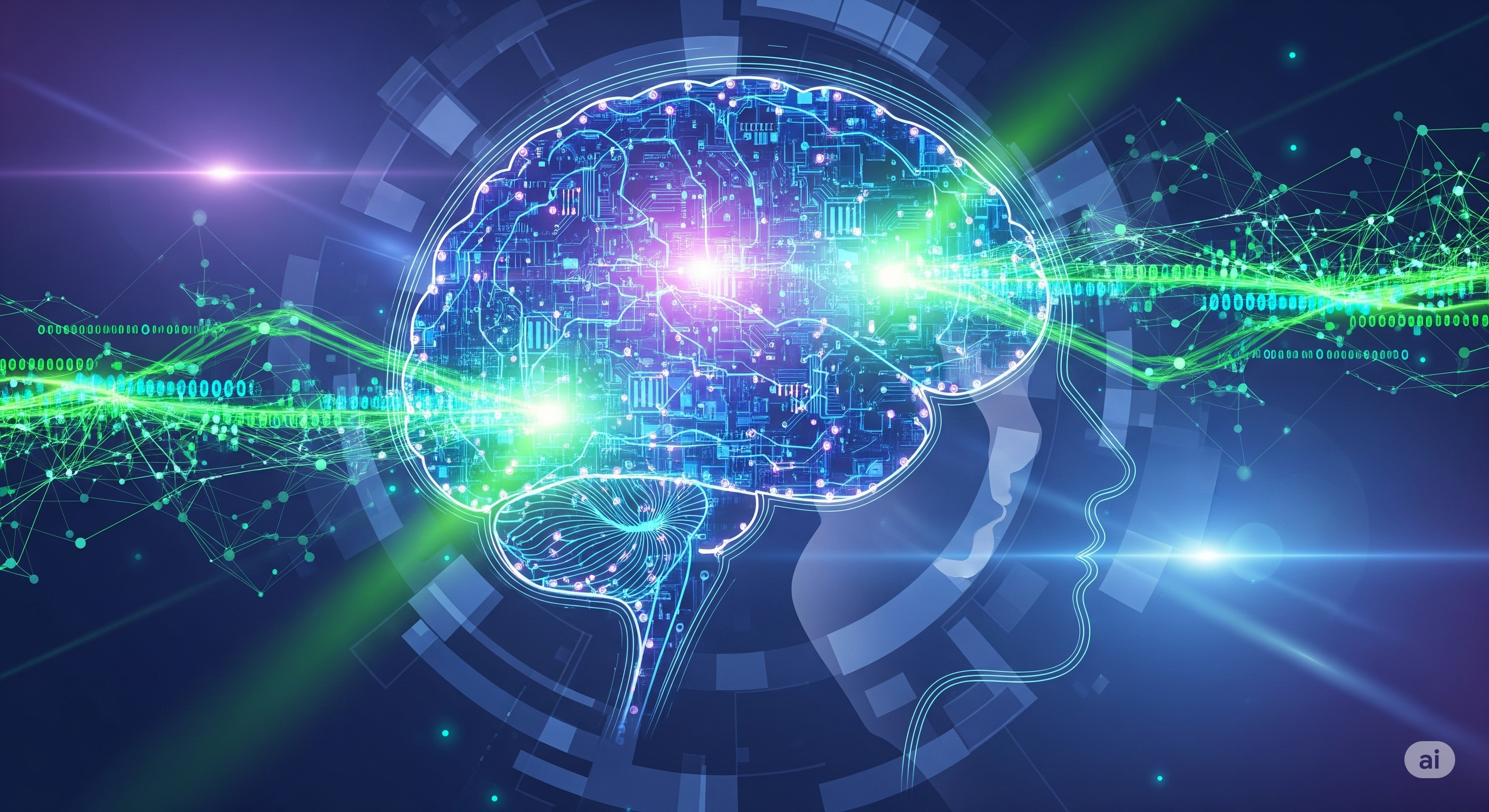
The Great Leap Forward: How Neural Networks Are Redefining Intelligence as We Know It
It feels like every week, another headline screams about a new artificial intelligence breakthrough. From crafting compelling prose to generating hyper-realistic images, AI has permeated our consciousness and our daily lives. But beneath the surface of these seemingly disparate advancements lies a singular, powerful engine: neural networks. These complex algorithms, inspired by the human brain, have been steadily evolving, and the latest generation is not just impressive – it's transformative. We’re moving beyond text-only conversations to a world where AI understands, processes, and interacts with us across every human sense. This isn't just another incremental update; it's a leap forward that promises to fundamentally reshape our understanding of intelligence and interaction.
From Text to Touch: The Multimodal AI Explosion
For years, many of us experienced AI through text – chatbots, search engines, or large language models like early versions of ChatGPT. While powerful, these systems operated within a limited sensory framework. The latest breakthroughs, however, are ushering in the era of Multimodal AI, where neural networks can seamlessly integrate and understand information from multiple sources: text, images, audio, and even video.
Imagine an AI that can not only understand your spoken request but also interpret the tone of your voice, analyze the expression on your face in real-time, process what it sees through a camera, and respond with contextually appropriate words and actions. This isn't science fiction; it's becoming reality. Models like the recently unveiled GPT-4o demonstrate this stunning capability, allowing for fluid, natural voice conversations with human-like latency, the ability to "see" your surroundings and comment on them, and even detect emotions. It's like interacting with an intelligent entity that possesses senses akin to our own, capable of perceiving and responding to the nuances of the physical and digital world.
This multimodal understanding dramatically expands AI's utility. A neural network can now:
* Analyze complex medical scans alongside patient notes and doctor's dictations to aid in diagnosis.
* Translate spoken languages in real-time while understanding cultural context from visual cues.
* Generate an entire video from a simple text prompt, incorporating specific visual styles and audio tracks.
* Help a visually impaired person navigate their surroundings by describing what it sees in real-time.
This profound shift means AI is moving from being merely a tool for specific tasks to becoming a more intuitive, perceptive, and deeply integrated partner in our lives.
Beneath the Surface: Why These Neural Networks Are Different
What fuels this remarkable leap? It's a combination of several factors pushing the boundaries of neural network design and training:
1. Architectural Innovations: The transformer architecture, which revolutionized natural language processing, has been adapted and extended to handle multimodal data. These architectures are incredibly efficient at identifying complex relationships and patterns across diverse data types.
2. Vast Datasets: Training these multimodal neural networks requires truly immense and diverse datasets that include paired text, image, audio, and video. The sheer scale of data available today, combined with sophisticated data curation techniques, is unprecedented.
3. Computational Power: The ability to train these colossal models demands staggering computational resources. Advances in specialized hardware (like GPUs and TPUs) and distributed computing allow researchers to train models with billions, even trillions, of parameters, unlocking emergent abilities that were previously unimaginable.
4. Emergent Abilities and Generalization: As neural networks grow in size and are trained on broader datasets, they often develop "emergent abilities" – capabilities that weren't explicitly programmed but arise from the complexity of the network. This includes better reasoning, problem-solving, and a more robust capacity for generalization, meaning they can apply what they've learned to novel situations with surprising accuracy. The goal is no longer just specialized AI, but general-purpose AI that can adapt and learn across a multitude of domains.
Real-World Impact: Where We're Already Seeing the Shift
The implications of these advanced, multimodal neural networks are far-reaching, promising to touch every industry and aspect of daily life.
Revolutionizing Workflows
From software development to creative design, AI is becoming an invaluable co-pilot. Coders can describe their desired functionality, and AI can generate code, debug, and even suggest improvements by understanding both text and visual diagrams. Designers can turn rough sketches into polished graphics or videos with simple prompts. Marketers can generate campaigns, analyze performance metrics, and even simulate customer reactions using multimodal insights.
Personalized Learning & Healthcare
Imagine an AI tutor that adapts its teaching style based on your facial expressions, verbal cues, and written responses, providing truly personalized education. In healthcare, multimodal AI can assist doctors in diagnostics by cross-referencing patient history, imaging results, and even the nuances of a patient's spoken symptoms, leading to faster and more accurate prognoses. It's also accelerating drug discovery and personalized treatment plans.
Enhancing Creativity & Entertainment
Artists, musicians, and writers are leveraging AI to brainstorm ideas, generate unique content, and explore new creative frontiers. From AI-generated soundtracks for films to interactive narratives that adapt based on a user's spoken input, the entertainment landscape is set to become more dynamic and immersive than ever before. Virtual assistants will no longer be mere command-and-response systems but perceptive companions.
The Future of Interaction
Perhaps the most profound impact will be on how we interact with technology itself. Clunky interfaces, complex menus, and frustrating voice commands could become relics of the past. Instead, we'll communicate with machines as naturally as we do with other humans – through speech, gestures, and shared visual contexts, leading to a much more intuitive and friction-less digital experience.
Navigating the Neural Frontier: Challenges and Opportunities
While the opportunities are immense, it’s crucial to approach this neural frontier with both excitement and caution. The rapid progress of AI, particularly in its multimodal forms, brings significant challenges:
* Ethical Concerns: Issues of bias in training data, the potential for misuse (e.g., deepfakes, misinformation), and the impact on human autonomy demand careful consideration and robust ethical guidelines.
* Safety and Control: Ensuring these powerful AIs align with human values and remain under human control is paramount. The concept of "AI safety" is a growing field dedicated to this critical challenge.
* Job Displacement: While AI creates new jobs and opportunities, it will undoubtedly transform existing roles, requiring societal adaptation and upskilling initiatives.
* Explainability: Understanding how complex neural networks arrive at their conclusions, especially in critical fields like medicine or finance, remains an ongoing challenge for researchers.
* Energy Consumption: Training and running these massive models consume substantial energy, raising environmental concerns that need to be addressed through more efficient architectures and sustainable practices.
However, these challenges are not insurmountable. They underscore the necessity for interdisciplinary collaboration – involving technologists, ethicists, policymakers, and the public – to shape a future where these powerful tools augment humanity rather than diminish it.
The Next Chapter of Intelligence Is Being Written
The evolution of neural networks, culminating in the dazzling capabilities of multimodal AI, marks a pivotal moment in human history. We are witnessing the emergence of artificial intelligences that don't just process data but genuinely perceive, understand, and interact with the richness of our world. This isn't just about faster computers or clever algorithms; it's about redefining the very nature of intelligence and the potential it unlocks.
This journey is just beginning. What are your thoughts on these revolutionary neural networks? How do you envision multimodal AI changing your life or industry? Share your predictions and insights in the comments below, and let's discuss the incredible future we're building together!
