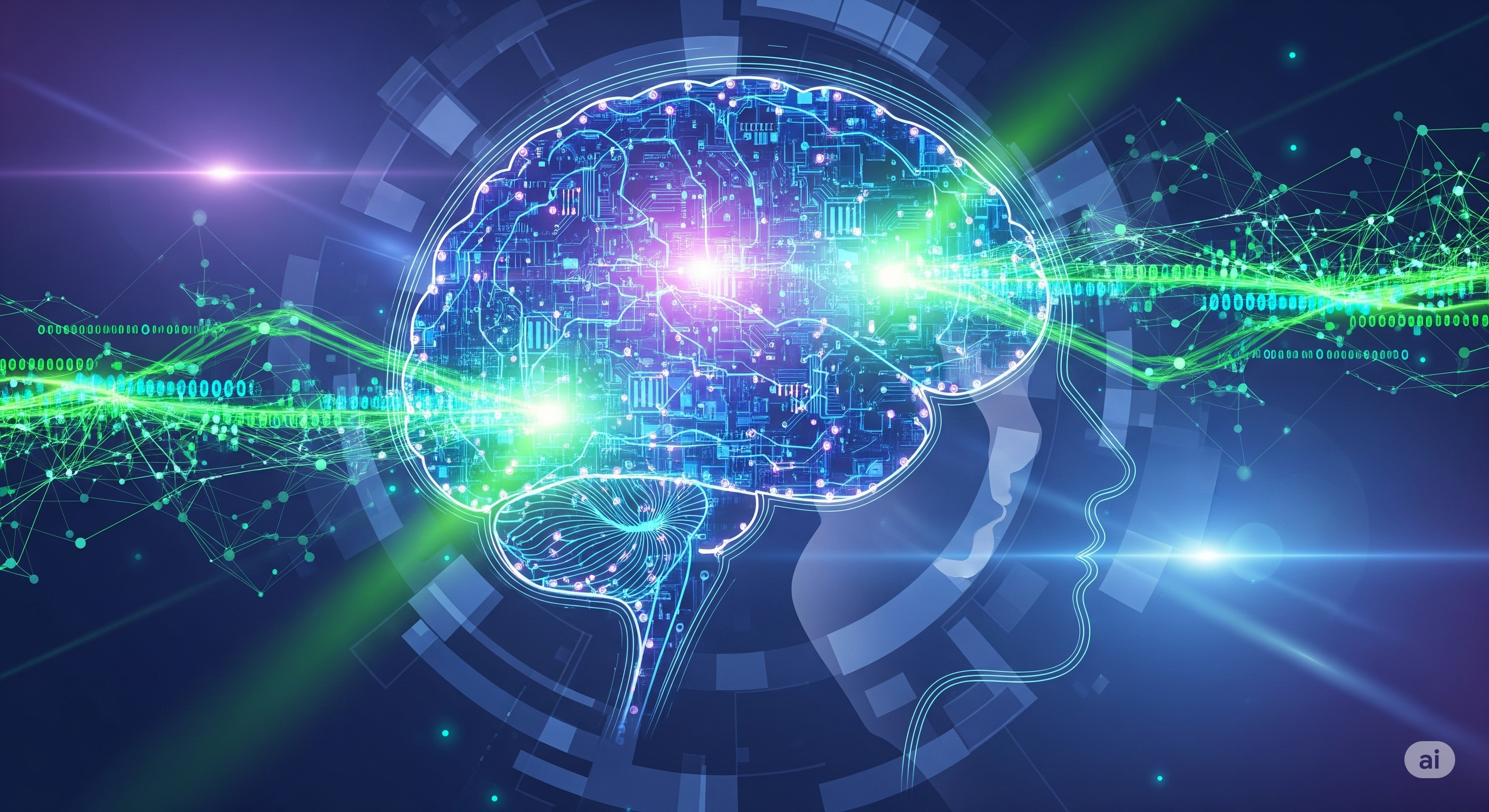
But something significant has shifted. We’re not just seeing incremental improvements; we’re witnessing a quantum leap in AI capabilities driven by remarkable new developments in neural network design and application. This isn't just about faster calculations; it's about intelligence that is beginning to exhibit surprising, sometimes even awe-inspiring, emergent properties. Get ready to explore how these intricate digital brains are not just processing information, but genuinely redefining the very notion of intelligence.
The Unseen Engines: What Are Neural Networks (Really)?
Before diving into the bleeding edge, let’s quickly demystify the core concept. Neural networks are a subset of machine learning, specifically deep learning, designed to recognize patterns and make predictions. Imagine a vast network of interconnected "neurons" (mathematical functions) arranged in layers. When you feed data (like images, text, or sounds) into the input layer, it travels through hidden layers, where each neuron processes a piece of information and passes it on. The network "learns" by adjusting the strength of these connections, much like our brains strengthen synapses, until it can accurately identify patterns or generate new outputs.
Unlike traditional programming, where humans explicitly code every rule, neural networks learn from massive amounts of data. This ability to learn from experience, adapt, and improve without explicit instruction is what makes them so powerful and the engine behind virtually every advanced AI system we encounter today.
The Quantum Leap: What’s Driving AI’s New Superpowers?
The recent explosion in AI capabilities isn't a single "aha!" moment, but rather the culmination of several converging factors. The engines, neural networks, have become exponentially more sophisticated.
1. Unleashing Unprecedented Computational Power
Modern neural networks demand colossal computational resources. The advent of powerful Graphics Processing Units (GPUs) and specialized AI chips (TPUs) has provided the raw processing power needed to train models with billions, even trillions, of parameters. This sheer scale allows networks to capture incredibly intricate patterns and relationships in data that were previously impossible to discern.
2. The Tsunami of Data
The digital age has generated an unimaginable volume of data – from text on the internet to images, videos, and scientific readings. This data acts as the "food" for neural networks. The more high-quality, diverse data they are trained on, the more robust and intelligent they become, enabling them to generalize better and perform tasks with astounding accuracy.
3. Architectural Innovations: The Rise of Transformers and Beyond
While earlier neural networks had limitations in processing sequential data (like sentences), the introduction of the "Transformer" architecture in 2017 revolutionized the field, especially for Large Language Models (LLMs). Transformers excel at understanding context over long sequences, leading to models like GPT and Bard that can generate coherent, contextually relevant human-like text, translate languages with nuance, and even write code. Newer innovations, like Mixture-of-Experts (MoE) architectures, further optimize these models, allowing them to scale even larger while improving efficiency.
4. The Emergence of Unexpected Abilities
Perhaps the most mind-bending aspect of these advancements is the phenomenon of emergent abilities. As neural networks are scaled up, they begin to exhibit capabilities that were not explicitly programmed or even anticipated by their creators. These can include complex reasoning, problem-solving skills, generating novel solutions, or even demonstrating rudimentary forms of "theory of mind" (understanding intentions or beliefs of others). This isn't just pattern matching; it hints at a deeper, more generalized form of intelligence evolving within these digital systems.
Beyond the Hype: Real-World Impacts Taking Shape Now
The implications of these advanced neural networks extend far beyond conversational AI. They are already reshaping industries and pushing the boundaries of what's possible:
* Scientific Discovery: Neural networks are accelerating drug discovery by predicting molecular interactions, designing new materials with specific properties, and even aiding in complex climate modeling and fusion energy research.
* Healthcare: From precisely identifying diseases in medical images (X-rays, MRIs) with human-level accuracy to personalizing treatment plans and developing synthetic proteins, AI is revolutionizing patient care and biomedical research.
* Creative Industries: AI can now generate photorealistic images, compose original music, write compelling narratives, and even assist architects and designers in prototyping complex structures.
* Robotics and Automation: More sophisticated neural networks are enabling robots to learn from their environments, perform complex tasks with greater dexterity, and navigate unpredictable real-world scenarios more effectively.
* Education: Personalized learning platforms powered by AI can adapt to individual student needs, offering customized curricula and feedback, making education more accessible and effective.
Navigating the Future: Challenges and Ethical Imperatives
While the potential is immense, the rapid evolution of neural networks also presents significant challenges and ethical considerations. Questions around bias in training data leading to unfair or discriminatory AI outputs, the "black box" problem of explainability (understanding *why* an AI made a certain decision), and the societal impact on job markets are critical.
Ensuring the safe, ethical, and transparent development of these powerful technologies is paramount. We need robust regulatory frameworks, ongoing research into AI ethics, and a global conversation about how we harness this intelligence for the benefit of all humanity. The future isn't just about building smarter machines; it's about building them responsibly.
The Future Is Now: What’s Your Role?
We are living through an unprecedented era of technological transformation, driven by the relentless advancement of neural networks. From redefining what intelligence means to offering solutions to some of humanity's most complex problems, these digital brains are not just tools; they are collaborators in shaping our future. The journey is just beginning, and the pace of innovation shows no signs of slowing down.
What are your thoughts on these incredible breakthroughs? How do you envision neural networks further impacting our world in the next decade? Share your predictions and join the vital conversation about the future of AI. This revolution isn't just happening *to* us; it's happening *with* us. Share this article to spark discussions and ensure more people understand the power and implications of this incredible technology.
