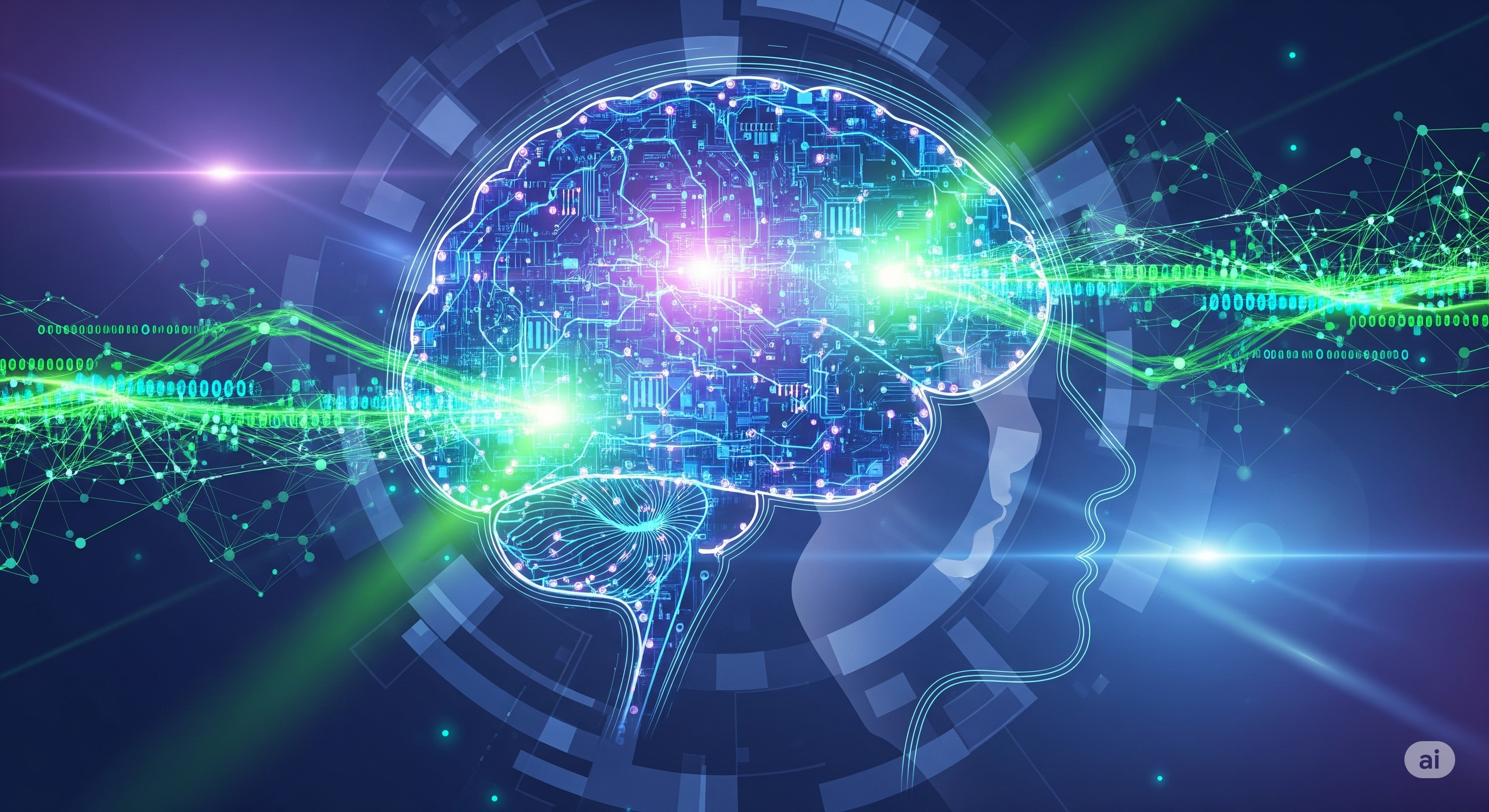
The implications are profound, extending far beyond the labs of tech giants into our homes, workplaces, and public spaces. This isn't science fiction anymore; it's the cutting edge of neural network innovation, and it's happening right now.
The New Language of AI: Seeing, Hearing, and Understanding
At its core, multimodal AI refers to artificial intelligence systems capable of processing and interpreting information from more than one modality. Historically, an AI might be trained on text data (like a large language model) or image data (like a computer vision system). The breakthrough comes from neural networks that can seamlessly integrate and understand the relationships between text, images, audio, video, and even haptic feedback.
How do neural networks achieve this magic? The secret lies in sophisticated architectures, particularly advancements in transformer models and attention mechanisms. These networks are designed to convert diverse data types into a common "language" – dense numerical representations called embeddings. By mapping text descriptions, visual features from an image, and auditory cues from a sound clip into the same conceptual space, the AI can then draw connections, make inferences, and generate outputs that are coherent across these different modalities.
Imagine an AI assistant that can analyze a graph in a research paper, listen to a spoken question about its data, and then generate a concise, accurate textual summary, perhaps even creating a supporting visual explanation. Or consider a diagnostic tool in healthcare that not only processes a patient's medical history (text) but also analyzes MRI scans (images) and even listens to a doctor's consultation notes (audio) to provide a more holistic and accurate diagnosis. These are not distant dreams; they are capabilities emerging from the latest neural network innovations, granting AI a contextual richness that was previously unattainable.
A World Transformed: Impact Across Industries
The advent of multimodal neural networks is poised to ignite a revolution across an astonishing array of industries:
Enhancing Human-Computer Interaction
Our interfaces with technology are about to become incredibly intuitive. Forget rigid commands; imagine an AI that can understand your gestural cues, interpret your tone of voice, and respond with visuals and sounds that match your context. Virtual assistants will evolve into truly intelligent companions, able to "see" what you're seeing through your device's camera and offer real-time, context-aware assistance, whether you're assembling furniture or trying to identify a plant.
Revolutionizing Healthcare
Beyond diagnostics, multimodal AI could power advanced surgical robots that interpret live video feeds, surgeon's voice commands, and patient vitals simultaneously. It could also accelerate drug discovery by analyzing vast biochemical data alongside scientific literature and 3D molecular structures.
Igniting Creativity and Education
Artists and designers will find new collaborators in AI that can take a textual prompt, a rough sketch, and a musical snippet to generate complex, integrated multimedia content. In education, personalized learning platforms could adapt not just to a student's reading comprehension but also to their visual learning preferences and even their emotional state detected through voice analysis, offering truly bespoke educational experiences.
Smarter Robotics and Autonomous Systems
For robots operating in the physical world, understanding is paramount. Multimodal AI allows robots to navigate complex environments by processing visual data, auditory cues (like approaching vehicles), and haptic feedback. This leads to safer, more adaptable autonomous vehicles and industrial robots capable of intricate tasks.
The Ethical Compass: Navigating New Frontiers
While the potential is exhilarating, the rapid ascent of multimodal AI also brings forth critical ethical considerations. The power to synthesize and interpret vast amounts of diverse information raises questions about privacy, data security, and the potential for misuse. The generation of highly realistic deepfakes combining audio, video, and text could become increasingly sophisticated, blurring the lines between reality and fabrication. Bias present in the training data, if unchecked, could be amplified across modalities, leading to unfair or discriminatory outcomes. As these neural networks become more integrated into our lives, ensuring transparency, accountability, and robust safety mechanisms will be paramount. The global conversation around AI ethics, explainability, and alignment must evolve just as rapidly as the technology itself.
Beneath the Surface: Why Neural Networks Are the Engine
Ultimately, it’s the inherent architecture and learning capabilities of deep neural networks that make this multimodal leap possible. Their ability to learn intricate, non-linear patterns from colossal datasets allows them to identify subtle relationships between seemingly disparate forms of information. The sheer scale of modern neural networks, often boasting billions of parameters, gives them the capacity to build complex internal representations of the world. Innovations in self-supervised learning, where models learn from unlabeled data by predicting missing parts, have also been crucial in training these immensely capable systems without requiring prohibitive amounts of human-annotated multimodal datasets. This continuous evolution in neural network design and training methodologies is what underpins the relentless pace of AI advancement we are witnessing today.
The latest news in neural networks isn't just about bigger models; it's about smarter, more versatile models that are beginning to mimic a holistic human understanding of the world. This journey is far from over, with ongoing research focused on making these networks more efficient, more robust, and more aligned with human values.
The Future is Multimodal: Are You Ready?
We stand at a pivotal moment where AI is transitioning from specialized intelligence to a more general, context-aware intelligence. The integration of sight, sound, and text by advanced neural networks is fundamentally changing what AI can do and how it can assist us. From transforming scientific discovery to enhancing our daily interactions, the multimodal revolution is here. It’s an exciting, complex, and sometimes challenging journey into a future where technology truly understands our world in all its rich, diverse forms.
What excites or concerns you most about AI that can see, hear, and understand? How do you envision multimodal AI impacting your daily life or industry in the next five years? Share your thoughts and predictions below – let's collectively explore the unfolding reality powered by these incredible neural networks!