Beyond Words: How Multimodal AI is Reshaping Our World with Human-Like Understanding
Published on June 7, 2026
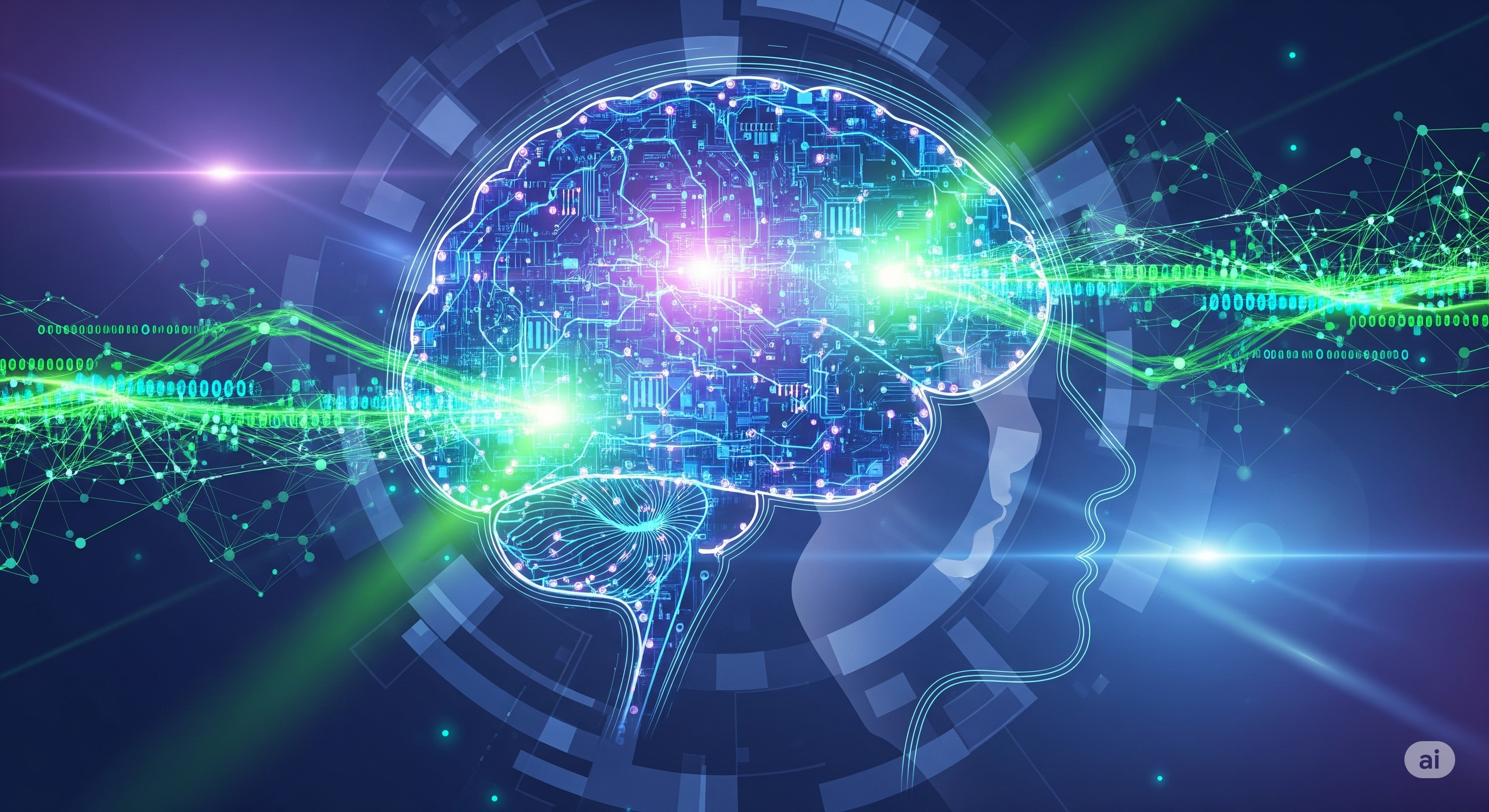
Imagine an AI that doesn’t just read your text but also understands the nuanced emotion in your voice, interprets the meaning of a complex graph, or even anticipates your next move by observing your gestures. For years, artificial intelligence has wowed us with its prowess in specific domains, from generating eloquent prose to recognizing faces in photos. But these intelligences often operated in silos, proficient in one "sense" but blind to others. Today, a revolutionary leap is transforming the landscape of AI: the rise of Multimodal AI. This latest wave in neural network development is teaching machines to integrate information from diverse sources – text, images, audio, video – to forge a more holistic, human-like understanding of the world. It’s not just a technical upgrade; it’s a paradigm shift poised to redefine how we interact with technology, engage with information, and even approach scientific discovery.
H2: The Dawn of Multimodal Minds: Beyond Text-Only AI
For a long time, the cutting edge of AI, particularly with the advent of Large Language Models (LLMs), has been focused on text. These models have demonstrated astonishing capabilities in natural language processing, generating everything from marketing copy to creative fiction. However, even the most sophisticated text-based AI operates with a fundamental limitation: it only "sees" the world through words. It can describe a cat, but it doesn't truly *understand* what a cat looks like, sounds like, or feels like in the way a human does.
Multimodal AI shatters this barrier. By training neural networks on massive datasets that pair different types of information – an image with its description, a video with its corresponding dialogue, an audio clip with accompanying text – these models learn to create connections and build a richer internal representation of reality. They are developing an interconnected understanding that transcends single data types, much like how a human brain processes simultaneous input from our eyes, ears, and other senses. Recent breakthroughs from leading AI labs showcase models that can respond to visual prompts, analyze audio cues, and even understand complex spatial relationships, moving us closer to truly intelligent assistants that perceive and reason across multiple dimensions.
H2: Seeing, Hearing, Understanding: Real-World Applications Unveiled
The implications of multimodal AI are vast and already beginning to ripple across industries and our daily lives.
H3: Revolutionizing Human-Computer Interaction
Forget clunky command lines or even just voice commands. Future interfaces will be incredibly intuitive. Imagine an AI assistant that can observe your screen, understand your verbal query about a specific element you're pointing at, and even infer your intent from your tone of voice or facial expression. This leads to truly proactive and personalized assistance, making technology feel less like a tool and more like a perceptive partner.
H3: Boosting Creativity and Content Creation
Multimodal AI is becoming a powerful muse and co-creator. Artists can provide a rough sketch and a textual description, and the AI can generate a polished image in a specific style. Musicians can input a mood and a short melody, and the AI can compose an entire orchestral piece. Video editors can summarize their vision in words and point to specific scenes, letting the AI generate sequences, transitions, and even background music, drastically accelerating content production across all media.
H3: Smarter Healthcare and Diagnostics
In medicine, multimodal AI holds immense promise. A system could analyze a patient's MRI scans, read their electronic health records, listen to a doctor's consultation notes, and even process physiological sensor data simultaneously. By integrating all these modalities, the AI can detect subtle patterns, predict disease progression, and suggest more accurate diagnoses or personalized treatment plans than a human or unimodal AI could achieve alone.
H3: Enhancing Accessibility
For individuals with disabilities, multimodal AI can be life-changing. An AI system could describe complex visual scenes in real-time for the visually impaired, translating not just objects but the context and mood. For the hearing impaired, it could translate sign language into spoken words and vice-versa, facilitating seamless communication in various environments.
H3: Advancing Robotics and Autonomous Systems
Robots that interact with the physical world need more than just visual perception. Multimodal AI enables them to understand their environment by combining camera feeds with audio cues (e.g., the sound of a falling object), tactile feedback, and contextual textual information (e.g., instructions). This leads to more robust, adaptable, and safer autonomous vehicles and industrial robots.
H2: The Brain Behind the Brilliance: How Neural Networks Make it Happen
At the heart of multimodal AI are sophisticated neural network architectures, often building upon the transformer architecture that powered the LLM revolution. These networks employ specialized "encoders" for each modality – one for images, one for audio, one for text – which translate the raw data into a common, abstract representation. Then, advanced "fusion" mechanisms combine these representations, allowing the network to find correlations and dependencies between different types of information.
The magic happens during the training phase, where these neural networks are exposed to immense quantities of paired data. They learn not just to recognize individual elements within each modality (e.g., identifying a dog in an image or the word "dog" in text) but also to understand how these elements relate across modalities. This deep learning process allows them to grasp concepts like "a happy dog wagging its tail," a concept that spans visual, textual, and even implied emotional understanding.
H2: Navigating the New Frontier: Challenges and Ethical Considerations
While the potential of multimodal AI is exhilarating, it also ushers in a new set of challenges and ethical considerations we must address thoughtfully.
H3: Data Bias and Fairness
Multimodal models are only as unbiased as the data they are trained on. If training datasets disproportionately represent certain demographics or lack diversity across different modalities, the AI can perpetuate or even amplify existing societal biases, leading to unfair or discriminatory outcomes.
H3: Misinformation and Deepfakes
The ability to generate highly realistic, contextually relevant multimodal content raises significant concerns about the spread of misinformation. Deepfakes – synthetic media that are virtually indistinguishable from real content – could become even more sophisticated and harder to detect, blurring the lines between reality and fabrication.
H3: Interpretability and Safety
As these models become more complex, understanding *why* they make certain decisions becomes increasingly difficult. Ensuring their safety, especially in critical applications like healthcare or autonomous systems, requires robust research into interpretability and robust guardrails to prevent unintended or harmful behaviors.
H3: Privacy Concerns
The collection and processing of vast amounts of sensory data – images, audio, video – raise significant privacy concerns. Safeguarding personal information and ensuring informed consent for data usage will be paramount as multimodal AI becomes more ubiquitous.
H3: The "Human-Like" Illusion
It's crucial to remember that while multimodal AI can *simulate* human-like understanding, it does not possess consciousness, emotions, or genuine sentience. We must avoid anthropomorphizing these technologies and maintain a clear distinction between advanced computation and true human intelligence.
H2: The Future is Multimodal: Your Role in the AI Revolution
Multimodal AI represents a profound leap forward in our quest to build more intelligent, intuitive, and integrated artificial systems. It promises a future where technology understands us better, assists us more effectively, and unlocks unprecedented possibilities across every domain imaginable. This isn't just another incremental upgrade; it's a fundamental shift in how we conceive of and interact with AI, pushing the boundaries of what neural networks can achieve.
As these technologies continue to evolve at breathtaking speed, it’s imperative for all of us – technologists, policymakers, educators, and the public – to engage in thoughtful dialogue about their development and deployment. What implications do you see for your industry or daily life? How do you think we can best harness the power of multimodal AI while mitigating its risks? Share your thoughts below and join the conversation shaping our multimodal future!

Turn Your Images into PDF Instantly!
Convert photos, illustrations, or scanned documents into high-quality PDFs in seconds—fast, easy, and secure.
Convert Now