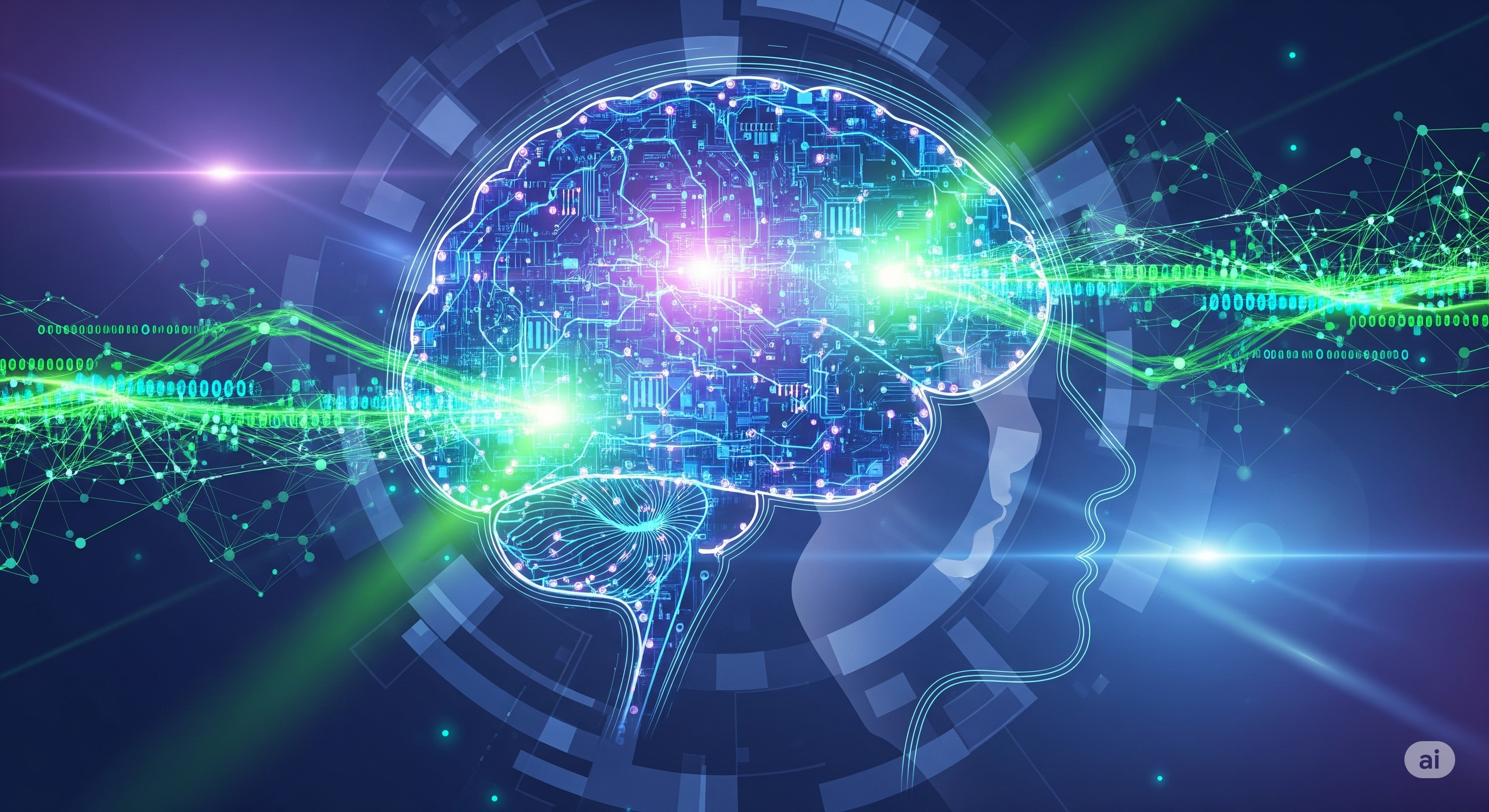
The AI Revolution Just Got Real: Welcome to the Multimodal Era
For years, the promise of Artificial Intelligence felt like a distant dream, confined to sci-fi movies and academic papers. Then, seemingly overnight, AI models like large language models (LLMs) burst into our consciousness, proving AI could write, code, and even generate art. But if you thought generating text or images was impressive, prepare for the next quantum leap: AI that can see, hear, speak, and understand the world in real-time, just like us. This isn't just an upgrade; it's a fundamental shift, powered by the relentless evolution of neural networks, and it's happening right now.
Recent demonstrations have captivated the globe, showing AI models engaging in natural, fluid conversations, observing their surroundings through a camera, and even reacting to emotions in a human voice. This isn't just speech-to-text or image recognition; it's a seamless integration of understanding across multiple senses. This profound advancement marks the dawn of multimodal AI, a concept set to redefine human-computer interaction and reshape industries from healthcare to education.
The Dawn of Multimodal AI: Beyond Text and Pixels
What exactly is multimodal AI? Simply put, it's Artificial Intelligence designed to process, understand, and generate information from more than one modality – such as text, images, audio, video, and even sensor data – simultaneously. Historically, AI models specialized in one domain: language models for text, computer vision models for images. While impressive in their niche, they operated in silos. Multimodal AI breaks down these barriers.
Imagine an AI that doesn't just "see" a picture of a cat, but also "hears" it meow, "reads" a description about its breed, and "understands" the emotional context of a child interacting with it. This holistic understanding allows AI to grasp the nuances of human communication and the complexities of the real world in a way never before possible. It moves beyond isolated data points to construct a richer, more contextual, and profoundly human-like comprehension. This leap in AI capability is what makes the latest neural network breakthroughs so exciting and potentially viral.
How Neural Networks Power This Revolution
At the heart of multimodal AI are sophisticated neural networks. These are computational systems inspired by the structure and function of the human brain. They consist of interconnected "neurons" organized in layers, processing information through complex calculations. For multimodal AI, the magic happens in several key ways:
* Integrated Architectures: Modern neural networks, particularly transformer architectures (made famous by LLMs), have been adapted to handle diverse data types. Instead of separate models for text and vision, a single, unified neural network can learn from and represent information from various modalities.
* Embeddings and Alignment: Each piece of input – whether a word, an image pixel, or an audio snippet – is converted into a numerical representation called an "embedding." The neural network's job is to learn how to align these embeddings across different modalities. For example, it learns that the embedding for the word "cat" should be conceptually close to the embedding for an image of a cat or the sound of a meow.
* Cross-Modal Learning: The networks are trained on massive datasets containing paired data (e.g., images with descriptive captions, videos with spoken narratives). This allows the neural network to learn relationships and transfer knowledge between modalities. If it learns to identify a "tree" in an image, it can then use that knowledge to better understand the word "tree" in text or the sound of rustling leaves.
* Real-time Processing: The latest advancements focus on efficiency and speed, enabling these complex neural networks to process multiple inputs and generate coherent outputs with minimal latency, making truly interactive AI possible.
Real-World Impact: Where We're Already Seeing It
The implications of multimodal AI are staggering, promising to reshape countless facets of our lives.
Natural Human-Computer Interaction
Forget clunky voice commands or rigid text inputs. With multimodal AI, interacting with technology becomes as natural as talking to another human. Imagine an AI assistant that can observe your gestures, interpret your tone of voice, and understand the objects you point to, providing truly contextual and helpful responses. This paves the way for smarter smart homes, more intuitive virtual assistants, and deeply personalized user experiences.
Enhanced Accessibility and Education
Multimodal AI offers unprecedented opportunities for accessibility. AI systems can describe visual scenes for the visually impaired in rich detail, interpret sign language in real-time, or translate spoken language while understanding the speaker's emotional state. In education, it could lead to AI tutors that not only explain concepts but also assess student engagement through facial expressions and voice, adapting lessons dynamically.
Creative Industries & Robotics
For artists, designers, and content creators, multimodal AI can be a powerful co-pilot, generating creative ideas from diverse prompts (e.g., "create a melancholic song based on this abstract painting"). In robotics, multimodal perception means robots can better understand their environment, leading to safer autonomous vehicles, more capable service robots, and greater precision in manufacturing and logistics.
The Road Ahead: Challenges and Ethical Considerations
While the potential is immense, the journey of multimodal AI is not without its hurdles. Training these advanced neural networks requires colossal amounts of diverse, high-quality data and immense computational resources. Ensuring these systems are robust, fair, and free from biases present in their training data is a critical ongoing challenge. We must also grapple with the ethical implications of AI that can so deeply understand and interact with humans, from privacy concerns to the potential for misuse. Responsible development, transparency, and human oversight will be paramount as we navigate this new frontier.
The Future is Multimodal. Are You Ready?
The latest breakthroughs in neural networks are not just incremental improvements; they represent a paradigm shift in how AI perceives and interacts with our world. By integrating vision, hearing, and language, AI is moving closer to a holistic understanding of human experience, opening up possibilities that were once confined to the realm of science fiction. This isn't just about making machines smarter; it's about making them more intuitive, more helpful, and ultimately, more human-centric.
The multimodal AI revolution is here, and it’s accelerating at an incredible pace. What aspects of this new era excite you the most? How do you foresee multimodal AI changing your daily life or industry? Share your thoughts and join the conversation as we collectively step into this astonishing new chapter of artificial intelligence!
