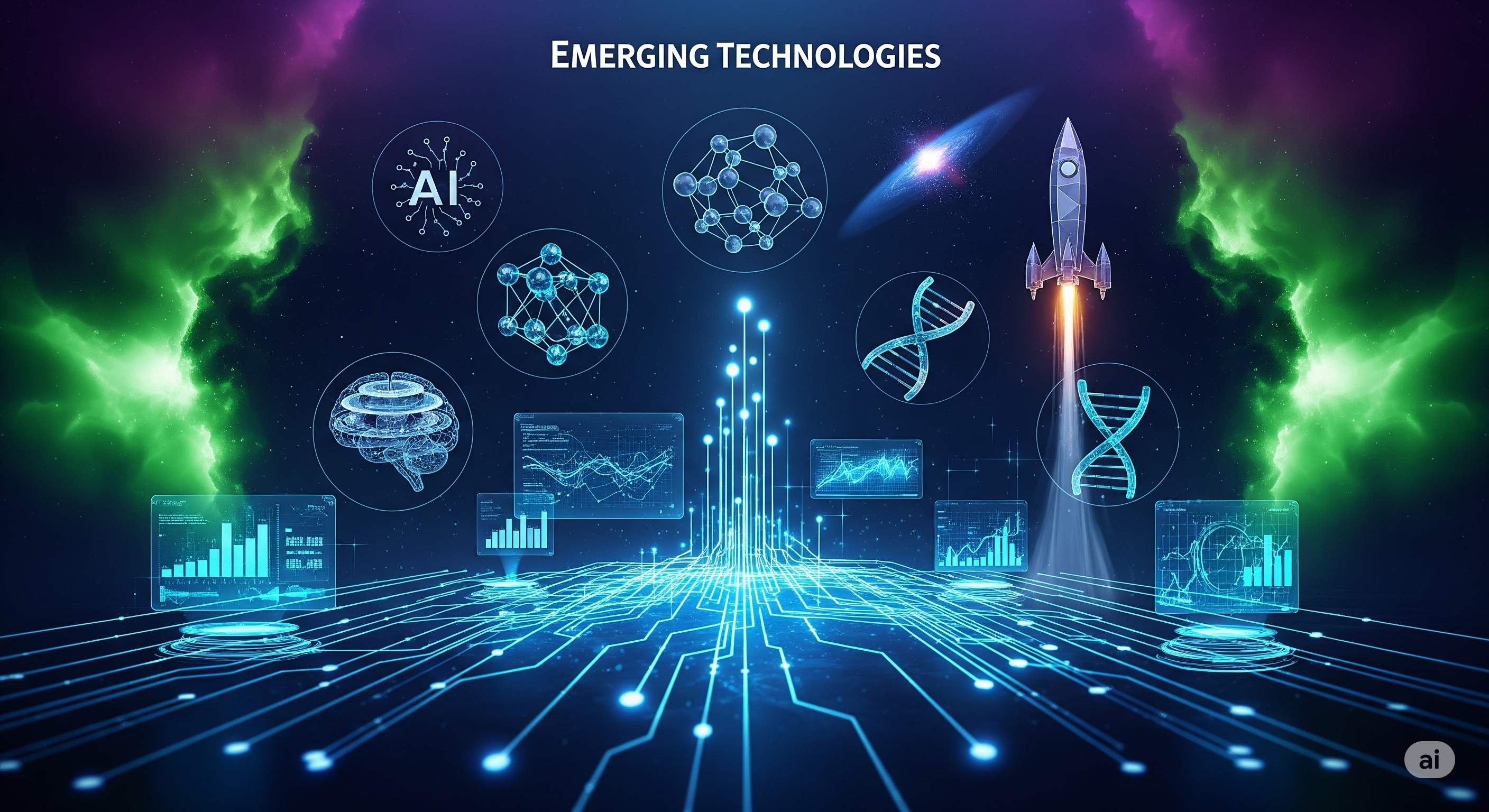
The AI Tsunami: Cloud as the Engine of Intelligent Innovation
The most electrifying development shaking the cloud landscape is undeniably the rise of Artificial Intelligence, particularly Generative AI. From creating stunning art to writing sophisticated code, Generative AI models are revolutionizing how we interact with technology, and the cloud is their indispensable launchpad.
Think of the computational power required to train models with billions of parameters, or to process real-time AI inferences for millions of users simultaneously. This isn't feasible for most organizations to build and maintain on-premises. This is where the cloud steps in. Major cloud providers like AWS, Microsoft Azure, and Google Cloud are locked in an intense race to offer the most sophisticated, accessible, and scalable AI infrastructure and services. They’re investing billions in specialized hardware – think NVIDIA GPUs and custom AI chips – and developing entire suites of services (like AWS Bedrock, Azure OpenAI Service, and Google Cloud Vertex AI) that allow businesses of all sizes to tap into the cutting-edge of AI without becoming AI experts themselves.
This "AI democratization" through the cloud is not just for tech giants. Small startups can now leverage pre-trained models and powerful compute resources to build innovative applications, accelerate research, and automate complex tasks. From intelligent customer service chatbots to personalized marketing campaigns and drug discovery, AI powered by cloud computing is creating a tidal wave of new possibilities, making businesses smarter, faster, and more responsive than ever before. The future of innovation is inextricably linked to the intelligent cloud.
Greener Clouds: Paving the Way for Sustainable Digital Growth
As our digital footprint expands, so too does the environmental impact of the massive infrastructure that supports it. Data centers consume vast amounts of energy, raising critical questions about sustainability. Recognizing this, the cloud industry is making monumental strides towards a greener future, transforming sustainability from a corporate social responsibility initiative into a core business imperative.
Cloud providers are leading the charge, committing to ambitious goals like powering their operations entirely with renewable energy sources, optimizing cooling systems for maximum energy efficiency, and innovating in hardware design to reduce power consumption. For instance, many hyperscalers are actively purchasing renewable energy credits, building new solar and wind farms, and employing advanced AI to manage data center loads and cooling more efficiently than ever before.
For businesses, migrating to the cloud isn't just about agility and cost savings; it's also a powerful step towards achieving their own Environmental, Social, and Governance (ESG) goals. By leveraging shared, highly optimized cloud infrastructure, companies can drastically reduce their individual carbon footprints without having to build and maintain their own energy-intensive data centers. This collective effort in the cloud is creating a ripple effect, driving sustainable practices across the entire digital ecosystem and proving that powerful computing and environmental responsibility can, and must, go hand in hand.
Fortifying the Digital Fortress: Cloud Security in a Shifting Landscape
With increasing sophistication of cyber threats, cloud security remains a paramount concern and a constantly evolving frontier. As more sensitive data and critical applications move to the cloud, the stakes have never been higher.
Cloud providers are responding with multi-layered, robust security frameworks that often surpass what individual organizations can achieve on their own. This includes everything from advanced threat detection and intrusion prevention systems to sophisticated identity and access management (IAM) tools, data encryption at rest and in transit, and continuous compliance with global regulatory standards like GDPR, HIPAA, and ISO 27001. The shared responsibility model inherent in cloud computing means that while providers secure the "cloud itself," customers are responsible for security "in the cloud" – configuring their applications and data correctly.
The emphasis is increasingly on proactive security postures, such as Zero Trust architectures, which assume no user or device can be implicitly trusted, regardless of their location. Moreover, the integration of AI into cloud security is becoming a game-changer, enabling real-time anomaly detection, automated threat responses, and predictive analytics to stay ahead of malicious actors. In an era where data breaches can cripple businesses, the cloud is evolving into a digital fortress, continuously adapting to protect our most valuable assets.
The Rise of the Adaptive Cloud: Multi-Cloud, Hybrid, and Edge
The "one-cloud-fits-all" mentality is rapidly giving way to a more nuanced, adaptive approach to cloud strategy. Businesses are increasingly adopting multi-cloud and hybrid cloud models to maximize flexibility, mitigate vendor lock-in, and leverage best-of-breed services from different providers.
Multi-cloud strategies allow organizations to distribute workloads across multiple public cloud environments, enhancing resilience, optimizing costs, and accessing specialized services unique to each provider. Hybrid cloud, on the other hand, seamlessly integrates on-premises infrastructure with public cloud resources, providing a flexible framework for businesses with specific data residency requirements or legacy systems. The focus here is on seamless interoperability, unified management, and consistent policy enforcement across diverse environments.
Furthermore, the proliferation of IoT devices and real-time data processing needs is driving the growth of edge computing. This involves pushing computing power and data storage closer to the source of data generation, minimizing latency and bandwidth use. The cloud then serves as the central brain, managing, processing, and analyzing aggregated data from countless edge locations. This adaptive cloud continuum – from core cloud to edge – is enabling new possibilities in areas like autonomous vehicles, smart cities, and industrial IoT, creating a truly distributed and intelligent digital fabric.
From Buzzword to Business Imperative: What This Means for You
The latest shifts in cloud computing are more than just technical advancements; they are fundamental drivers of digital transformation and competitive advantage. For businesses, this means re-evaluating cloud strategies, investing in upskilling teams, and actively exploring how AI, sustainability, and hybrid/multi-cloud models can propel innovation and operational efficiency. It's about building resilience, fostering agility, and unlocking unprecedented potential. For individuals, it signals a world where technology is more intuitive, more powerful, and increasingly aligned with global imperatives like environmental responsibility.
The cloud's next chapter is not just about where your data lives, but how intelligence is created, how innovation is powered, and how our digital world becomes more efficient, secure, and sustainable. It's a journey into an exciting, interconnected future.
What are your thoughts on these monumental shifts? Are you ready to embrace the intelligent, sustainable cloud? Share your insights, challenges, and predictions in the comments below, and let's shape the future of cloud computing together!
