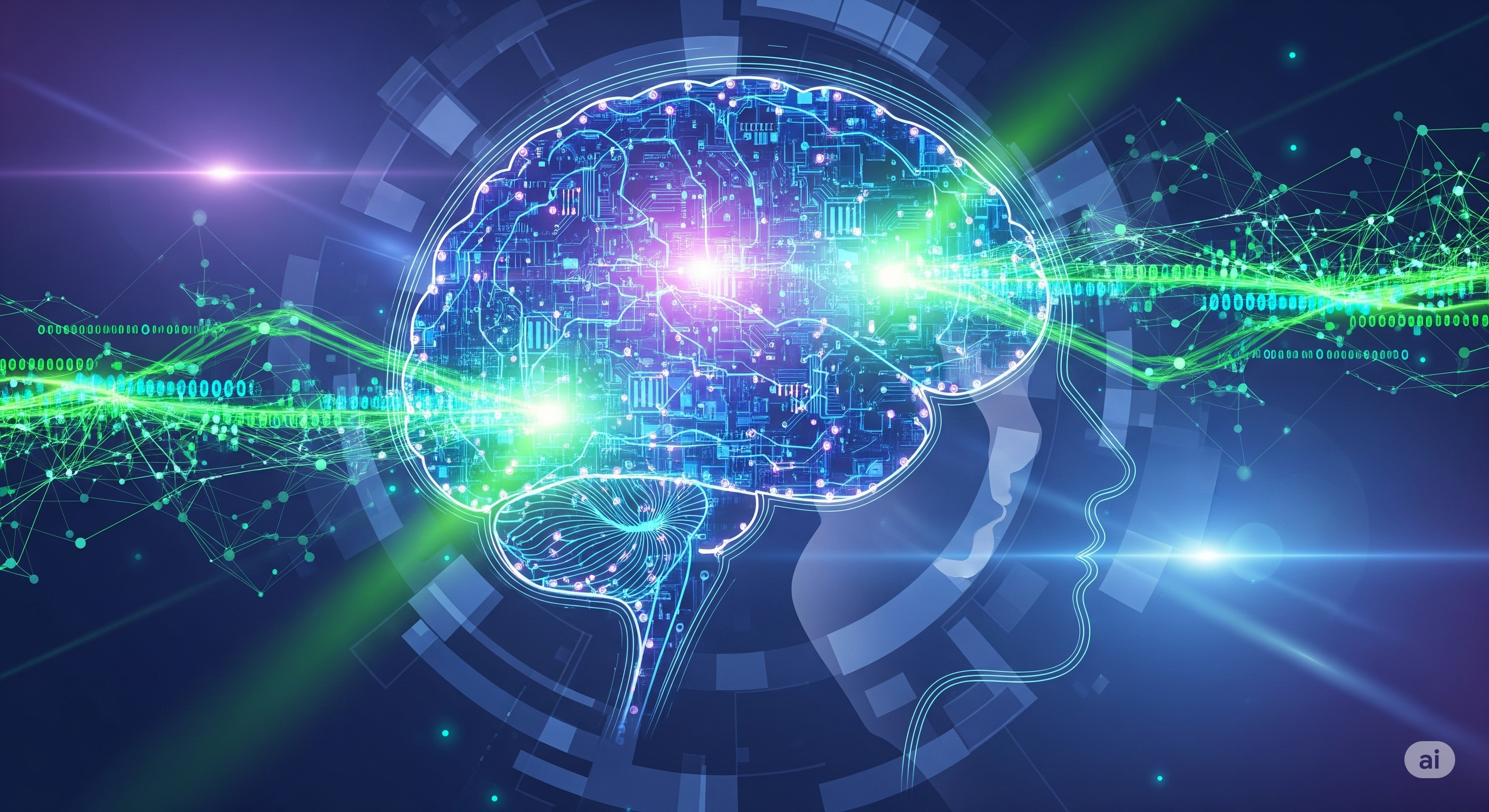
The AI Renaissance: Deep Learning Unlocks Unprecedented Futures
Imagine an artificial intelligence that doesn't just understand the words you type, but simultaneously comprehends the nuances of your voice, the emotions on your face, the context of the environment it sees through a camera, and responds in real-time, fluidly, almost indistinguishably from a human. This isn't a scene from a sci-fi movie anymore. Thanks to monumental breakthroughs in deep learning, particularly with the advent of multimodal AI, this future is not just at our doorstep – it’s walking right in.
For years, deep learning has powered incredible advancements, from recognizing faces in photos to translating languages and generating coherent text. Yet, these capabilities often operated in silos: one model for vision, another for language, another for audio. The latest news, however, paints a picture of unification. Recent public demonstrations of cutting-edge AI models showcase a revolutionary leap: the ability to seamlessly integrate and interpret information from multiple senses – text, audio, images, and even video – in real-time. This multimodal capability isn't just an upgrade; it's a paradigm shift, fundamentally reshaping how we interact with technology and how AI perceives our complex, multi-sensory world.
The Evolution of Understanding: From Siloed Data to Holistic Perception
At its core, deep learning is about training artificial neural networks on vast amounts of data to recognize patterns and make predictions. Historically, these networks were specialized. A Convolutional Neural Network (CNN) might excel at image recognition, while a Recurrent Neural Network (RNN) or Transformer model would dominate natural language processing. Each learned from its specific data domain, developing an isolated expertise.
But the human experience is inherently multimodal. We don't just hear words; we see facial expressions, interpret body language, observe the environment, and integrate all these cues to form a complete understanding. For AI to truly assist and interact with us in a natural, intuitive way, it needed to mimic this holistic perception. The recent deep learning advancements achieve exactly this by developing architectures capable of processing, correlating, and generating across diverse data types simultaneously. This means an AI can now "see" a problem, "hear" your explanation, and "discuss" a solution, all within the same interaction.
Multimodal Magic: What's the Big Deal?
So, what does multimodal AI actually *do*? The "big deal" lies in its ability to bridge previously disparate data streams, creating a richer, more contextual understanding of the world. Consider these groundbreaking capabilities:
* Real-time Conversational Intelligence: Imagine holding up a broken gadget to your phone camera and describing the issue. A multimodal AI could not only identify the gadget and diagnose the problem based on visual cues but also understand your frustrated tone and suggest a repair, perhaps even guiding you step-by-step through a repair video it generates on the fly.
* Contextual Image and Video Analysis: Beyond simply labeling objects, multimodal models can understand the narrative within an image or video. They can describe complex scenes, infer relationships between elements, explain why something is happening, and even predict future events based on visual and auditory cues. Think of an AI that can analyze a medical scan, cross-reference it with a patient's verbal history, and suggest potential diagnoses.
* Enhanced Accessibility: For individuals with visual or hearing impairments, multimodal AI offers transformative potential. An AI could provide real-time audio descriptions of visual scenes, translate sign language into speech, or convert spoken language into visual text with contextual understanding of the speaker's emotional state.
* Creative Augmentation: Artists, designers, and content creators can leverage these tools like never before. An AI could take a rough sketch, a few descriptive words, and an audio clip of mood music, then generate a polished visual scene or an animated sequence that captures the exact desired emotion and aesthetic.
This is no longer about static data processing; it's about dynamic, adaptive, and deeply contextual understanding that was once the exclusive domain of biological intelligence.
Unleashing Unprecedented Potential: Applications Galore
The ripple effects of this deep learning breakthrough are set to redefine countless industries and aspects of daily life.
Revolutionizing Creativity and Content Creation
Multimodal AI is poised to become the ultimate creative partner. From generating highly specific images and videos based on textual and auditory prompts to composing original music tailored to a visual narrative, the possibilities for content creation are exploding. Imagine drafting an entire animated short film with just a few sentences and some artistic direction.
Supercharging Education and Accessibility
Personalized learning will reach new heights. AI tutors can now not only explain complex concepts but also adapt their teaching style based on a student's facial expressions of confusion, vocal tone indicating frustration, and even analyze their written answers in real-time to offer targeted support. For accessibility, real-time, nuanced translation for sensory disabilities becomes a reality, fostering greater inclusivity.
Transforming Healthcare and Scientific Discovery
In medicine, multimodal AI can analyze patient data – from medical images and genetic sequences to spoken symptoms and written health records – to provide more accurate diagnoses, predict disease progression, and assist in drug discovery by simulating molecular interactions visually and computationally. This comprehensive view can save lives and accelerate research.
Enhancing Productivity and Business
From intelligent personal assistants that genuinely understand your needs and context, to highly sophisticated customer service agents that can read both emotional cues and spoken words to provide empathetic and effective support, businesses will experience unprecedented gains in efficiency and customer satisfaction.
The Road Ahead: Challenges and Ethical Considerations
While the promise of multimodal deep learning is immense, so too are the challenges. Ensuring the ethical development and deployment of these powerful tools is paramount. Issues such as data bias, the potential for misuse (e.g., deepfakes), the need for robust security, the carbon footprint of massive AI models, and the profound societal impacts on employment and human interaction demand careful consideration and proactive regulation. As AI becomes more human-like in its interaction, defining clear ethical boundaries and ensuring transparency will be crucial.
The Dawn of a Truly Intelligent Era
The latest breakthroughs in deep learning, particularly in multimodal AI, mark a pivotal moment in the history of artificial intelligence. We are moving beyond tools that merely process information to systems that begin to understand the world through a richer, more integrated lens. This isn't just about making computers smarter; it's about fundamentally changing how we interact with technology, creating interfaces that are more intuitive, empathetic, and powerful than ever before. The future of AI is not just intelligent; it is perceptive, adaptable, and increasingly understanding of the human experience.
What do you envision as the most impactful application of multimodal AI? Share your thoughts in the comments below, and don't forget to spread the word about this incredible leap by sharing this article with your network! The future is now, and it's listening, watching, and learning.