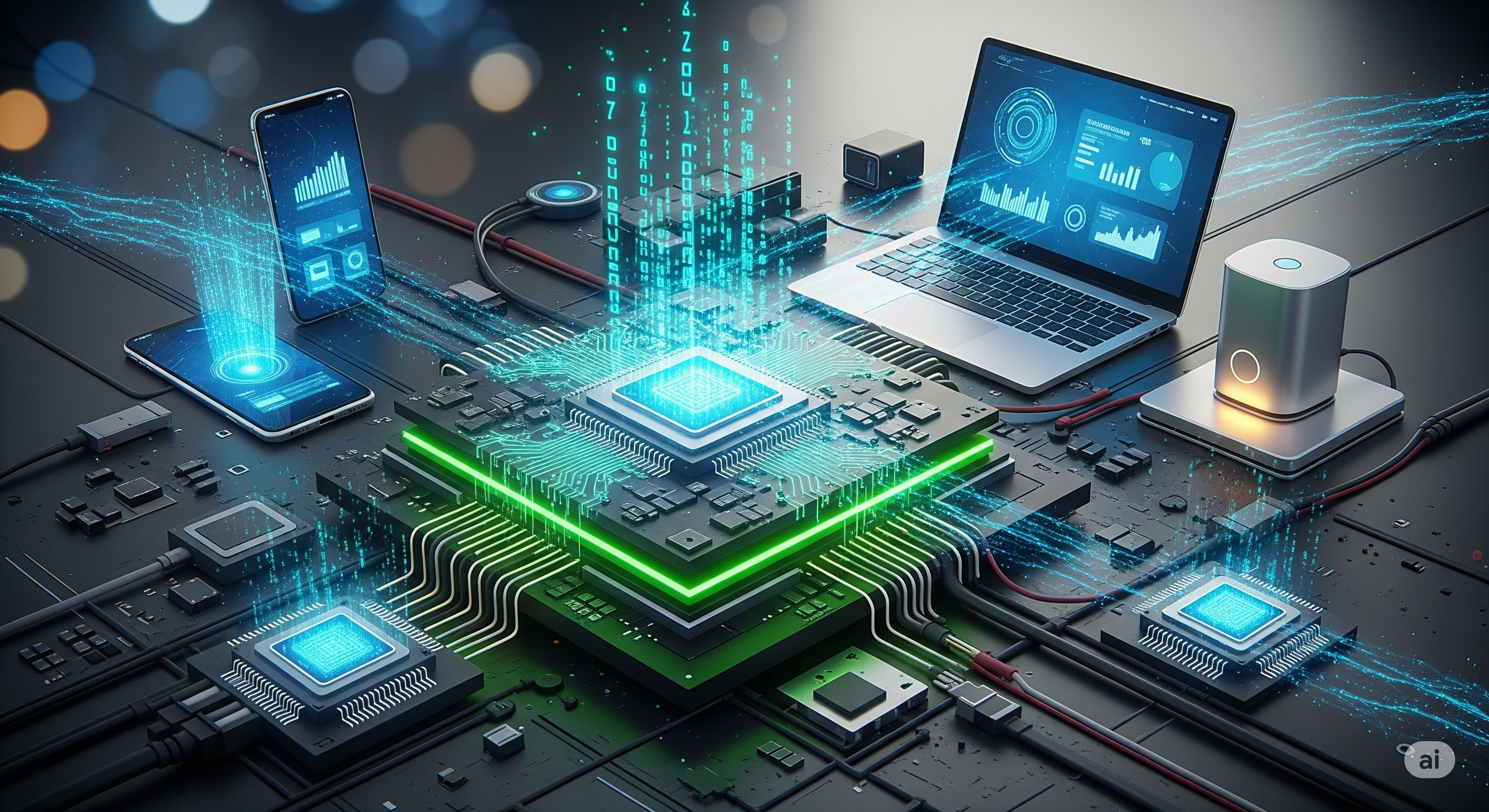
Welcome to the era of AIoT – the powerful fusion of Artificial Intelligence and the Internet of Things. This isn't merely an upgrade; it’s a profound paradigm shift, transforming our smart environments from passively connected networks into intelligently cognizant ecosystems. From the latest advancements in edge computing to breakthroughs in neural networks, AIoT is silently but surely reshaping our homes, cities, and industries. Get ready to explore how your world is becoming smarter, faster, and incredibly intuitive.
What is AIoT and Why is it the Next Big Leap?
At its core, IoT involves a vast network of physical objects embedded with sensors, software, and other technologies, allowing them to connect and exchange data over the internet. AI, on the other hand, empowers machines to learn from data, reason, problem-solve, and even understand language. AIoT combines these forces, embedding AI capabilities directly into IoT devices or integrating AI-powered analytics with data collected from them.
The difference is critical. Traditional IoT might tell you your smart fridge is running low on milk. AIoT, however, would *order* the milk for you, based on your consumption patterns, local store prices, and even predict when you’re likely to run out. This shift from reactive monitoring to proactive, predictive, and autonomous action is driven by several key enablers:
- 5G Connectivity: Ultra-low latency and massive capacity allow for real-time data exchange from countless devices.
- Edge Computing: AI algorithms can now run directly on IoT devices or nearby servers, processing data closer to the source, reducing latency, and enhancing privacy.
- Advanced Sensors: Miniaturized, more precise, and versatile sensors collect richer data for AI to analyze.
- Cloud AI & Machine Learning: Powerful cloud platforms provide the computational backbone for training complex AI models that are then deployed to the edge.
This synergy makes devices not just "smart," but truly intelligent, capable of learning, reasoning, and making decisions that optimize their environment.
Smart Homes That Anticipate Your Every Need
Forget simple automation; AIoT is turning our homes into intuitive living spaces that genuinely understand us. Your AIoT-powered smart home learns your daily routines, preferences, and even your mood, adjusting its environment proactively.
Imagine a climate control system that doesn't just respond to temperature, but understands your individual comfort zones, adapting heating or cooling based on occupancy, weather forecasts, and even your personal activity levels. AI-powered security cameras can now distinguish between a pet and an intruder, sending fewer false alarms and providing more accurate threat assessments through advanced facial recognition and anomaly detection. Your lighting system might adapt based on the time of day, your activity (reading vs. watching a movie), and your personal preferences, creating the perfect ambiance without you lifting a finger. Furthermore, devices like washing machines or refrigerators could use AI to predict maintenance needs, automatically ordering parts or scheduling service before a breakdown occurs, minimizing disruption and extending lifespan. The emerging Matter standard further promises a unified, interoperable ecosystem where all these intelligent devices can communicate seamlessly.
Cognizant Cities: Where Infrastructure Thinks for Itself
Beyond individual homes, AIoT is ushering in an era of truly smart cities – urban environments where infrastructure intelligently manages itself to improve efficiency, safety, and sustainability.
AIoT-powered traffic management systems are a prime example. Instead of fixed timing, traffic lights can dynamically adjust based on real-time traffic flow, pedestrian movement, and even predicted congestion, drastically reducing travel times and carbon emissions. Smart waste bins embedded with sensors notify collection services when they're full, optimizing routes and reducing operational costs. In terms of public safety, AI-powered surveillance can identify suspicious behavior patterns or detect unusual sounds like gunshots, alerting authorities much faster than traditional systems. Environmental monitoring becomes hyper-localized with AIoT sensors measuring air quality, noise pollution, and water purity, providing city planners with actionable data to create healthier urban spaces. These intelligent networks are transforming reactive city management into proactive, data-driven governance.
Industrial IoT (IIoT): The Smart Factory's Brain
In the industrial sector, AIoT is revolutionizing operations, driving unprecedented levels of efficiency, safety, and quality control. This is the realm of Industrial IoT (IIoT), where AI provides the brains for connected machinery and processes.
One of the most impactful applications is predictive maintenance. AI algorithms analyze vast amounts of sensor data from machinery – vibrations, temperature, pressure – to detect subtle anomalies and predict equipment failure *before it happens*. This minimizes costly downtime, extends asset lifespan, and optimizes maintenance schedules, saving millions. AI-powered vision systems are also transforming quality control, detecting defects on assembly lines with speed and accuracy far beyond human capabilities. Furthermore, AIoT is optimizing entire supply chains, from real-time tracking of goods to demand forecasting and inventory management, leading to significant reductions in waste and increased responsiveness. The rise of "digital twins" – virtual replicas of physical assets, processes, or systems – further empowers industries to simulate, analyze, and optimize operations in real-time, all powered by AIoT data.
Navigating the AIoT Frontier: Challenges and Ethical Considerations
While the promise of AIoT is immense, it's crucial to acknowledge the challenges and ethical considerations that accompany such powerful technology. The pervasive collection of data raises significant concerns about data privacy and security. Robust regulatory frameworks, transparent data handling practices, and strong encryption are paramount to protect individual and corporate information.
Cybersecurity also becomes more complex with billions of interconnected devices, each a potential entry point for malicious actors. "Security-by-design" principles and continuous vigilance are essential. Furthermore, the deployment of AI raises questions about algorithmic bias, ensuring fairness and preventing discrimination in decision-making processes. The societal impact, including potential job displacement in certain sectors, necessitates a focus on workforce reskilling and education. Finally, the energy consumption of a vast, intelligently interconnected world needs careful consideration to ensure AIoT contributes to a sustainable future, not detracts from it. Responsible innovation is not just a buzzword; it’s a necessity.
The Future is Intelligently Interconnected
Looking ahead, the evolution of AIoT promises an even more integrated and autonomous world. Expect devices to not only be intelligent but to collaborate seamlessly across diverse environments – your smart car communicating with your smart home, your health wearables advising your smart fridge on dietary needs, and city infrastructure adapting to individual events in real-time. This hyper-personalization, coupled with enhanced predictive capabilities, will make our interactions with technology more intuitive, almost invisible.
AIoT is poised to be the backbone of future innovations, offering profound solutions to global challenges, from climate change and resource scarcity to healthcare and education. While human oversight and ethical guidelines will remain vital, the augmenting power of AIoT will empower us to build a smarter, more efficient, and responsive world than ever before.
The revolution isn't just coming; it’s here, quietly weaving a fabric of intelligence into the very objects that surround us. What are your thoughts on an AI-powered future? How do you see AIoT impacting your daily life or industry? Share your insights in the comments below! And if you found this exploration fascinating, don't forget to share it with your network – let's spark a conversation about the intelligently interconnected world ahead.