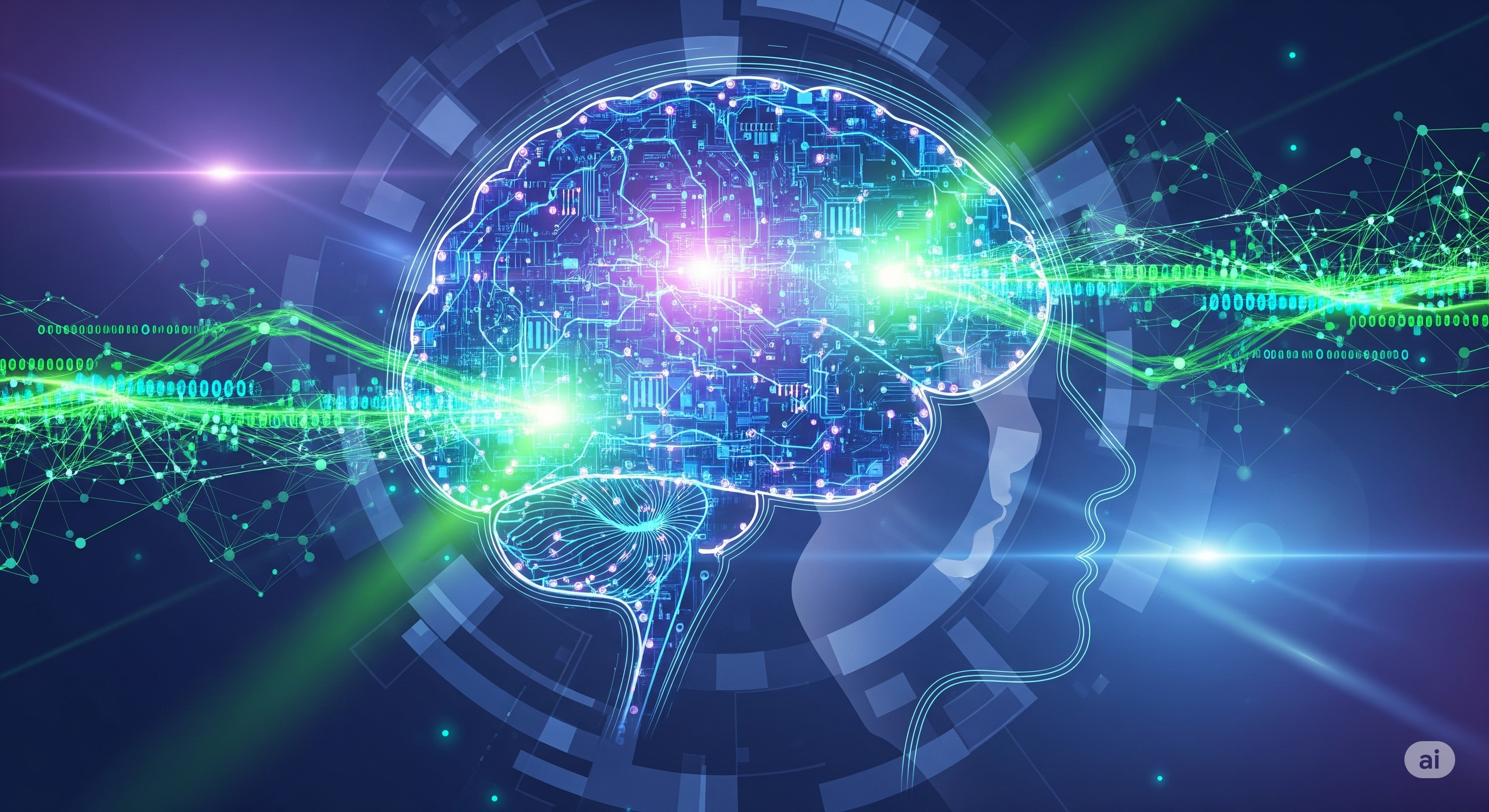
From Pixels to Personalities: How NLP's Agentic Revolution is Remaking AI
In an era where Artificial Intelligence seems to evolve at warp speed, it's easy to get lost in the jargon and the hype. But what if we told you that Natural Language Processing (NLP), the very heart of how machines understand and generate human language, is undergoing its most profound transformation yet? Forget the static chatbots and the basic voice assistants; we’re entering the age of "Agentic AI," where language models aren't just talking to us – they're actively *doing* things, planning, executing, and even reflecting. This isn't just an upgrade; it's a paradigm shift that promises to personalize AI interaction to an unprecedented degree, moving from understanding words to embodying a digital personality capable of genuine agency.
The Evolution of Understanding: Beyond Static Chatbots
For decades, the dream of computers truly understanding human language seemed like science fiction. Early NLP systems were clunky, relying on rigid rule sets or statistical models that often broke down under the nuance and ambiguity of human speech. The breakthrough of neural networks and, more recently, Large Language Models (LLMs) like GPT and Gemini, catapulted NLP into the mainstream. Suddenly, machines could generate coherent text, summarize documents, translate languages, and even engage in surprisingly human-like conversations.
Yet, even these impressive LLMs, in their initial iterations, had limitations. They were primarily reactive, responding to single prompts without long-term memory or the ability to autonomously pursue multi-step goals. They could answer questions, but they couldn't *plan* a project, *manage* complex tasks, or *adapt* to unforeseen challenges without constant human oversight. This is where the concept of "agentic AI" steps in, marking the next giant leap in NLP’s evolution.
Enter the Agents: NLP's New Power Players
The term "Agentic AI" might sound futuristic, but its principles are straightforward and its implications are already being felt.
What is Agentic AI?
At its core, an agentic AI system is an AI that can perceive its environment, formulate goals, make decisions, take actions, and reflect on the outcomes to improve its future performance. In the context of NLP, this means a language model isn't just a powerful text generator; it becomes an *autonomous entity* capable of breaking down complex verbal instructions into actionable steps, interacting with various tools (like web browsers, calendars, or other software APIs), and pursuing objectives over extended periods. Imagine an AI not just writing an email, but *managing your entire inbox* by prioritizing, drafting responses, and scheduling meetings – all based on your preferred communication style and without explicit step-by-step commands.
The 'Loop' of Intelligence
The magic behind agentic NLP lies in its intelligent feedback loops. Rather than a single input-output interaction, agentic systems often follow a sophisticated cycle:
1. Observe: They take in information from the environment (e.g., your verbal request, data from the web, an email notification).
2. Plan: They interpret the observation, identify a goal, and devise a multi-step strategy to achieve it. This involves breaking down complex tasks into smaller, manageable sub-tasks.
3. Act: They execute the planned steps, which might involve calling external tools, writing code, generating text, or initiating communications.
4. Reflect: They evaluate the outcome of their actions against the original goal. Did it work? Was there an error? Could it be done better? This self-correction mechanism is crucial for learning and adapting.
This iterative process allows agentic NLP systems to tackle unprecedented levels of complexity and autonomy, moving beyond mere understanding to active problem-solving.
Key Innovations Fueling the Agentic Leap
Several recent advancements are accelerating the rise of agentic NLP:
* Enhanced Context Windows & Memory: LLMs can now retain much more information over longer conversations, crucial for multi-step planning.
* Sophisticated Tool Use: The ability of LLMs to dynamically select and use external tools (APIs, databases, web search) means they are no longer confined to their internal knowledge base.
* Autonomous Planning & Decomposition: New architectures allow models to autonomously break down high-level goals into granular, executable sub-tasks, a hallmark of true agency.
* Self-Correction & Reflective Learning: Agents are being trained to critically evaluate their own outputs and actions, identifying errors and refining their strategies, much like a human learning from mistakes.
Real-World Impact: Where Agentic NLP Shines
The implications of this shift are profound and touch every facet of our digital lives.
Hyper-Personalized Assistants
Imagine an AI assistant that truly understands your preferences, anticipates your needs, and proactively manages your digital life. Beyond setting alarms, an agentic assistant could book your travel based on your past choices, manage your investments with personalized risk assessment, or even curate learning paths tailored to your unique style and goals.
Business Automation & Efficiency
For businesses, agentic NLP means dynamic customer service agents that resolve complex issues without human intervention, autonomous market research agents that continuously analyze trends, or supply chain agents that optimize logistics in real-time. This translates to significant cost savings, increased efficiency, and unparalleled agility.
Scientific Discovery & Research
In scientific fields, agentic AI can sift through vast databases of research papers, identify potential correlations, propose new hypotheses, and even design experimental protocols. This accelerates discovery by automating labor-intensive preliminary research and idea generation.
Creative Industries
From generating initial story outlines and scripts to designing interactive game environments or crafting personalized marketing campaigns, agentic NLP empowers creatives by serving as an intelligent co-creator, handling the heavy lifting of content generation and iterative refinement.
The Road Ahead: Challenges and Opportunities
While the promise of agentic NLP is immense, it also brings significant challenges. Ethical considerations around autonomy, accountability, potential biases encoded in training data, and the need for robust control mechanisms are paramount. We must ensure these powerful agents operate transparently and align with human values. Security implications, too, are a major concern, as autonomous agents could be susceptible to novel forms of attack.
Despite these hurdles, the opportunities for innovation, problem-solving, and personalization are limitless. The agentic revolution is not just about making AI smarter; it's about making it a true partner, capable of extending human capabilities in ways we're only just beginning to imagine.
Join the Revolution
The transformation from static text generation to proactive, intelligent agents represents a pivotal moment in the history of AI. Natural Language Processing is no longer just about understanding words; it’s about empowering machines to understand our intentions, act on them, and profoundly reshape our interactions with technology.
What possibilities do you envision with agentic NLP? How do you see these personalized AI companions changing your daily life or professional landscape? Share your thoughts and predictions in the comments below! Don't forget to like this article and share it with anyone curious about the cutting edge of AI – let's explore this exciting future together.
