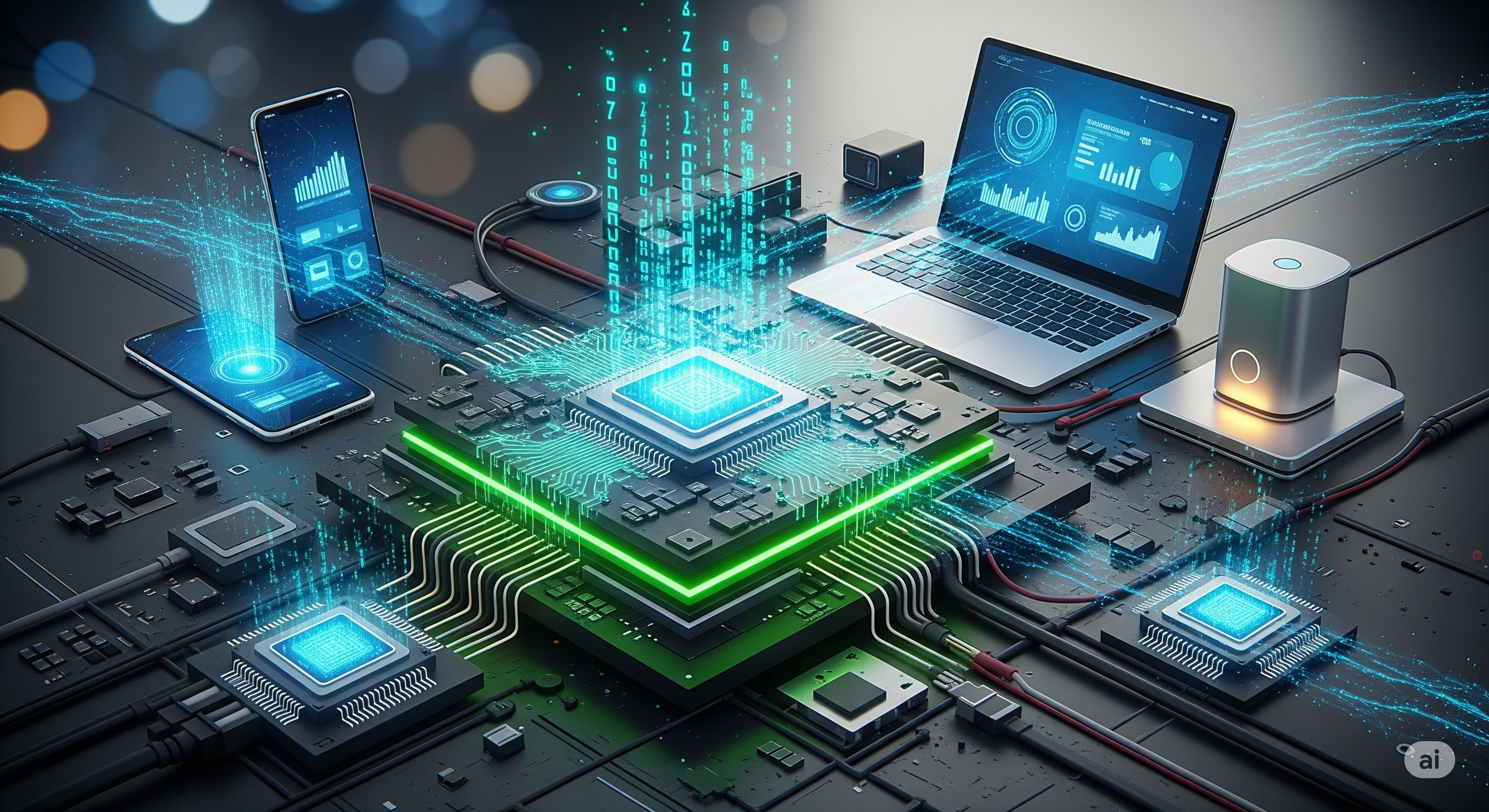
But what if these devices didn't just react? What if they could anticipate your needs, learn your habits, and proactively make decisions that enhance your comfort, safety, and efficiency without you lifting a finger? Enter the era of AIoT – the powerful fusion of Artificial Intelligence (AI) and the Internet of Things. This isn't just about connecting devices; it's about giving them a brain, enabling them to understand, reason, and act with unprecedented intelligence. The AIoT revolution is here, and it’s poised to transform every facet of our existence, making our connected world not just smart, but truly intuitive and even sentient.
The Brain Behind the Brawn: What is AIoT?
At its core, IoT is about connectivity. Billions of devices, sensors, and machines collect vast amounts of data from our physical world. AI, on the other hand, is about intelligence – algorithms that can learn from data, identify patterns, make predictions, and even generate creative solutions.
AIoT combines these two forces. It embeds AI capabilities directly into IoT devices or integrates them deeply into the data processing streams originating from these devices. This means your smart speaker isn't just following commands; it's learning your preferences for music and news, adjusting its responses based on context. Your security camera isn't merely recording motion; it's distinguishing between a falling leaf and an intruder, sending you alerts only for genuinely concerning events.
This shift moves IoT from being merely "reactive" to becoming "predictive" and "proactive." AIoT devices don't just execute predefined rules; they analyze real-time data, recognize complex patterns, infer intent, and make intelligent decisions autonomously. This intelligence can be processed either in the cloud for deep learning or right on the device itself, known as "Edge AI," for faster, more secure, and more efficient operations.
From Smart Homes to Intuitive Living: Your World, Anticipated
The most tangible impact of AIoT for many will be within their homes. Imagine a home that knows you better than you know yourself.
#### The Home That Knows You Better Than You Know Yourself
Your AIoT-powered smart home goes beyond simple automation. Your thermostat, leveraging AI, doesn't just stick to a schedule; it learns your thermal comfort zones throughout the day, factoring in external weather, your family's presence, and even your personal calendar to optimize energy use and ensure perfect comfort upon your arrival. Your kitchen appliances might recommend recipes based on your dietary preferences and the expiring contents of your smart fridge, even ordering missing ingredients automatically.
Security systems become genuinely intelligent. Instead of merely alerting you to motion, AI-powered cameras can differentiate between pets, family members, and unknown visitors, flagging only suspicious activities. Voice assistants become more conversational and proactive, anticipating your needs before you explicitly state them, like suggesting traffic updates before your morning commute or reminding you of an upcoming appointment. This isn't science fiction; these capabilities are rapidly becoming standard, moving us towards a truly symbiotic relationship with our living spaces.
Beyond the Walls: How AIoT is Reshaping Industries and Cities
The impact of AIoT extends far beyond the confines of our homes, revolutionizing industries, transforming urban landscapes, and even enhancing public health.
#### Industrial IoT (IIoT): The Era of Predictive Power
In manufacturing and industrial settings, AIoT is ushering in an era of unprecedented efficiency and safety. Machines equipped with AIoT sensors can monitor their own performance in real-time, detecting subtle anomalies that indicate impending failure. This "predictive maintenance" prevents costly downtime, extends equipment lifespan, and significantly reduces operational expenses. AI-powered vision systems on production lines can instantly identify defects with far greater accuracy and speed than human inspection, ensuring higher quality control and less waste. The entire supply chain benefits from intelligent tracking and optimization, leading to smarter logistics and inventory management.
#### Smart Cities: Intelligence at Scale
For urban centers, AIoT is the backbone of truly smart cities. Traffic management systems, powered by AI, can analyze real-time traffic flow, pedestrian movement, and public transport schedules to dynamically optimize traffic lights, reroute vehicles to avoid congestion, and even predict future bottlenecks. Smart waste management systems use AIoT sensors in bins to signal when they're full, optimizing collection routes and reducing fuel consumption and emissions. Public safety is enhanced through AI-powered anomaly detection in surveillance, helping authorities respond more effectively to incidents. From energy grids to public lighting, AIoT is creating more sustainable, efficient, and livable urban environments.
#### Healthcare: Precision and Proactivity
In healthcare, AIoT is transforming patient care. Wearable devices, once simple fitness trackers, now leverage AI to continuously monitor vital signs, analyze health trends, and detect early warning signs of chronic conditions or acute events, alerting both patients and medical professionals. Smart hospitals use AIoT for asset tracking, patient flow optimization, and even predictive staffing, ensuring resources are deployed effectively. This shift allows for more personalized and proactive healthcare, moving towards preventing illness rather than just treating it.
The Engine Room: Why AIoT is Surging Now
The rapid advancement of AIoT isn't coincidental; it's the result of several converging technological breakthroughs:
#### Data, Processing, and Connectivity: The Perfect Storm
First, the sheer volume of data generated by billions of IoT devices provides the rich fuel that AI algorithms need to learn and improve. Second, advancements in AI algorithms and machine learning techniques, coupled with powerful, affordable processing capabilities (both in the cloud and at the edge), make it feasible to process this data intelligently. Third, the rollout of high-speed, low-latency connectivity technologies like 5G and Wi-Fi 6 provides the robust network infrastructure necessary for devices to communicate and transmit data efficiently. This perfect storm of data availability, processing power, and connectivity is enabling AIoT to flourish at an unprecedented pace.
Navigating the Future: Challenges and the Path Forward
While the promise of AIoT is immense, its widespread adoption also brings critical challenges that must be addressed.
#### The Imperative of Security and Privacy
With billions of intelligent devices collecting sensitive data about our lives, security and privacy become paramount. Each connected device represents a potential entry point for cyber threats. Robust encryption, secure authentication protocols, and ongoing vulnerability management are essential. Furthermore, strict regulatory frameworks and ethical guidelines are needed to manage the vast amounts of personal data collected, ensuring transparency and user control.
#### Ethical AI and Trust
As AIoT devices gain more autonomy, ethical considerations come to the forefront. How do we ensure AI algorithms are unbiased and fair in their decision-making? What level of human oversight is necessary? Building public trust in AIoT systems requires transparency, explainability (understanding why an AI made a particular decision), and mechanisms for accountability. The societal impact, including potential job displacement in certain sectors and the creation of new roles, also requires thoughtful planning.
#### Interoperability and Standardization
For AIoT to reach its full potential, seamless communication between devices from different manufacturers is crucial. Initiatives like the Matter standard, which aims to create a universal language for smart home devices, are vital steps towards overcoming current fragmentation and fostering a truly integrated AIoT ecosystem.
Conclusion: The Dawn of a Truly Intelligent Connected World
The evolution from IoT to AIoT marks a profound leap forward in how we interact with technology and how technology interacts with our world. It's about moving beyond mere connectivity to true intelligence, where devices anticipate, learn, and act proactively to enhance our lives in countless ways. From personalized smart homes to hyper-efficient industries and responsive smart cities, the AIoT revolution is not just a trend; it's the foundational next step in our technological journey.
The future powered by AIoT promises unprecedented convenience, efficiency, and safety. While challenges regarding security, privacy, and ethics must be navigated carefully, the potential for a truly intelligent connected world is within our grasp.
What are your thoughts on a future where your devices anticipate your every need? Do you embrace this vision, or do you have concerns? Share your perspective in the comments below, and don't forget to share this article with friends and colleagues to spark a broader conversation about the AIoT revolution!
