Is Your Smart Home Reading Your Mind? How AI is Revolutionizing Intuitive Living
Published on March 8, 2026
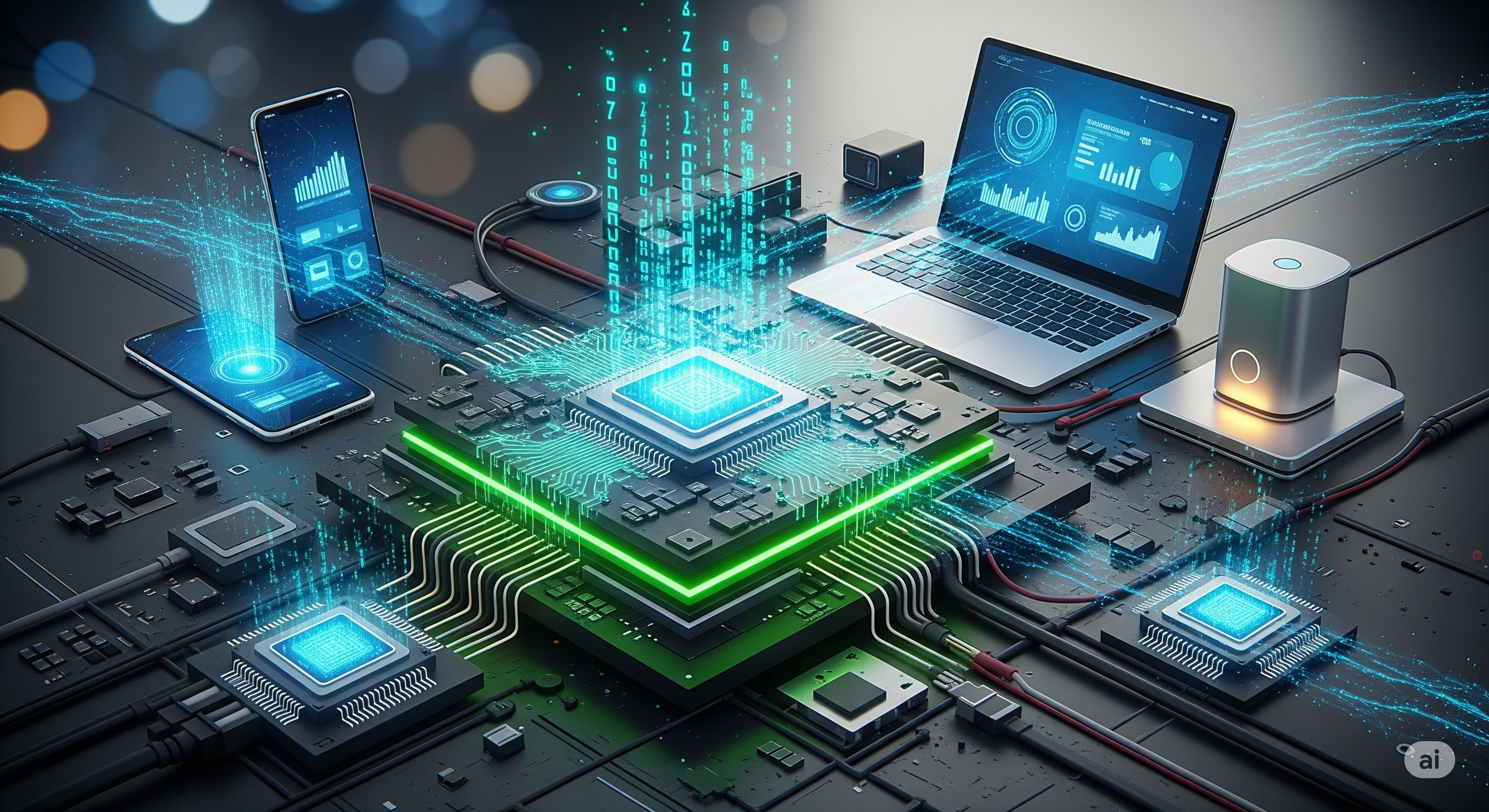
Remember when "smart home" simply meant turning lights on and off with an app, or perhaps asking a voice assistant for the weather? That era is rapidly becoming a quaint relic of the past. Today, a silent, profound revolution is unfolding within our homes, powered by Artificial Intelligence (AI) and harmonized by standards like Matter. We’re moving beyond mere convenience to an entirely new paradigm: truly intuitive living, where our homes don’t just respond to commands, but learn our preferences, anticipate our needs, and even make proactive decisions on our behalf. It’s no longer just smart; it's becoming genuinely genius.
Imagine stepping into a home that subtly adjusts its lighting to match your mood, tunes the temperature to your ideal comfort zone before you even realize you’re cold, and ensures your morning coffee is brewing the moment your alarm sounds. This isn't science fiction anymore. It's the rapidly evolving reality of AI-powered smart homes, poised to redefine our relationship with our living spaces. But how exactly is AI orchestrating this transformation, and what does it mean for the future of our connected lives?
H2: The Dawn of the Proactive Smart Home: From Reactive to Predictive
For years, smart home technology was largely reactive. You issued a command, and a device responded. While impressive at first, this interaction model had its limitations. AI is now bridging the gap between simple commands and genuine intelligence, allowing our homes to move from being mere responders to active participants in our daily lives.
H3: Beyond Simple Commands: AI's New Role
The latest advancements in AI are enabling smart home devices to gather and process vast amounts of data from various sensors – motion, light, temperature, humidity, and even sound. This data isn't just stored; it's analyzed in real-time by sophisticated algorithms to identify patterns, understand context, and infer user preferences.
Consider your smart thermostat. Instead of just setting a schedule, an AI-powered system learns your daily routines, factoring in external weather forecasts, your home’s insulation, and even your personal metabolic rate (if integrated with wearables). It can then proactively adjust the heating or cooling to ensure optimal comfort precisely when you need it, optimizing energy consumption along the way. Your smart lighting system might not just turn on; it could transition from a bright, invigorating morning light to a warm, relaxing evening glow, adjusting intensity and color temperature based on the time of day, natural light levels, and whether you're working, reading, or watching a movie.
Security systems are also benefiting immensely. AI can differentiate between a pet and an intruder, reduce false alarms by learning normal household activities, and even identify unusual sounds or movements that warrant attention, sending rich, contextual alerts rather than just a generic "motion detected."
H3: Matter: The Foundation for AI's Grand Vision
While AI provides the intelligence, a unified language is essential for that intelligence to orchestrate a symphony of devices from different manufacturers. This is where Matter comes in. Matter is the new open-source connectivity standard designed to create seamless interoperability across virtually all smart home devices, regardless of brand or ecosystem.
Before Matter, an AI system might struggle to command a Philips Hue lightbulb, a Nest thermostat, and a Samsung smart appliance simultaneously and cohesively. Matter provides that universal translator, allowing devices to "speak" to each other effortlessly. This foundation is crucial for AI, as it enables the algorithms to pull data from, and send commands to, a vastly wider array of devices. Without Matter simplifying the communication layer, AI's potential in the smart home would be significantly constrained, limited to siloed ecosystems. Together, Matter provides the unified stage, and AI performs the integrated, intelligent show.
H2: Personalization at Its Peak: Your Home, Tailored by AI
The true magic of AI in the smart home lies in its capacity for deep personalization. Your home will no longer just be a collection of smart gadgets; it will become a dynamic, evolving environment uniquely tailored to you and your family.
H3: Learning Your Habits, Anticipating Your Needs
AI thrives on data, and your daily life provides an abundance of it. By observing patterns – when you wake up, when you leave for work, your preferred temperature for sleeping, the music you listen to while cooking – AI builds a comprehensive profile of your preferences and habits. This learning isn't static; it adapts to changes in your routine, holidays, or even seasonal shifts.
Imagine your home intuitively recognizing that it's movie night. The AI could dim the lights, close the smart blinds, adjust the thermostat, and even suggest appropriate snacks from your smart fridge. Or, upon detecting that you've just returned from a run, it could automatically lower the blinds in your living room, activate a cool fan, and play your recovery playlist, all without a single voice command. This level of anticipatory action elevates convenience to an art form.
H3: The Smart Home as Your Digital Butler
The vision of a digital butler is rapidly materializing. Your AI-powered smart home can become an incredibly efficient household manager, handling routine tasks and complex scenarios with ease. Heading out? Your home can confirm all doors are locked, lights are off, and the thermostat is set to an energy-saving mode. Coming home? It can pre-warm the oven if it knows you're about to cook, or have your favorite podcast ready to play.
Beyond daily routines, AI can contribute to wellness. Integrated with smart beds or wearables, it can monitor sleep patterns, suggest optimal wake-up times, or even adjust bedroom conditions (temperature, humidity, light) for a better night's rest. Air quality sensors combined with AI can proactively activate purifiers or notify you when ventilation is needed.
H2: Addressing the Elephant in the Room: Privacy, Security, and Control
As our homes become more intelligent and connected, concerns around privacy and security are naturally amplified. This is an area where innovation is paramount, and thankfully, significant strides are being made.
Manufacturers are increasingly focusing on "edge computing," where AI processing happens directly on the device rather than sending all data to the cloud. This significantly reduces the amount of personal data transmitted over the internet, enhancing privacy. Furthermore, robust encryption protocols are standard for data in transit and at rest.
Crucially, users are being given more granular control over their data and device settings. Clear consent mechanisms, transparent data usage policies, and easy-to-manage privacy controls are becoming non-negotiable features. The goal is to create an intuitive smart home that serves you, without compromising your digital autonomy. The user remains firmly in charge, able to override suggestions, adjust learning parameters, or pause data collection at any time.
H2: The Future is Now: What's Next for Smart Home AI?
The journey towards the truly intelligent home is just beginning. We can anticipate AI becoming even more sophisticated, capable of understanding complex human emotions and nuances in voice commands. Imagine a conversational AI assistant that understands not just what you say, but how you say it, adapting its responses and actions accordingly.
Future iterations might include self-healing smart homes, where AI can detect and even proactively troubleshoot minor issues with connected devices, reporting serious problems before they become critical. Seamless integration with broader smart city initiatives could see your home communicating with local energy grids for optimized consumption, or even alerting you to traffic patterns based on your usual commute and real-time conditions. The line between our living spaces and the surrounding world will become increasingly blurred, creating a truly interconnected existence.
Conclusion
The smart home is no longer just about convenience; it’s about a deeper, more symbiotic relationship with our living environment. Thanks to the relentless march of AI innovation and the unifying power of standards like Matter, our homes are transitioning from responsive gadgets to predictive partners, anticipating our desires and enhancing our well-being in ways we’ve only dreamed of. This revolution promises unprecedented levels of comfort, efficiency, and personalized living. The future of intelligent living isn't just at our doorstep; it's already inside, quietly learning, adapting, and making our lives genuinely smarter.
What are your thoughts on an AI-powered home? Are you excited by the prospect of intuitive living, or do you have concerns about privacy and control? Share your dreams (or insights!) in the comments below! Don't forget to share this article with fellow tech enthusiasts and spark a conversation about the future of our homes!

Turn Your Images into PDF Instantly!
Convert photos, illustrations, or scanned documents into high-quality PDFs in seconds—fast, easy, and secure.
Convert Now