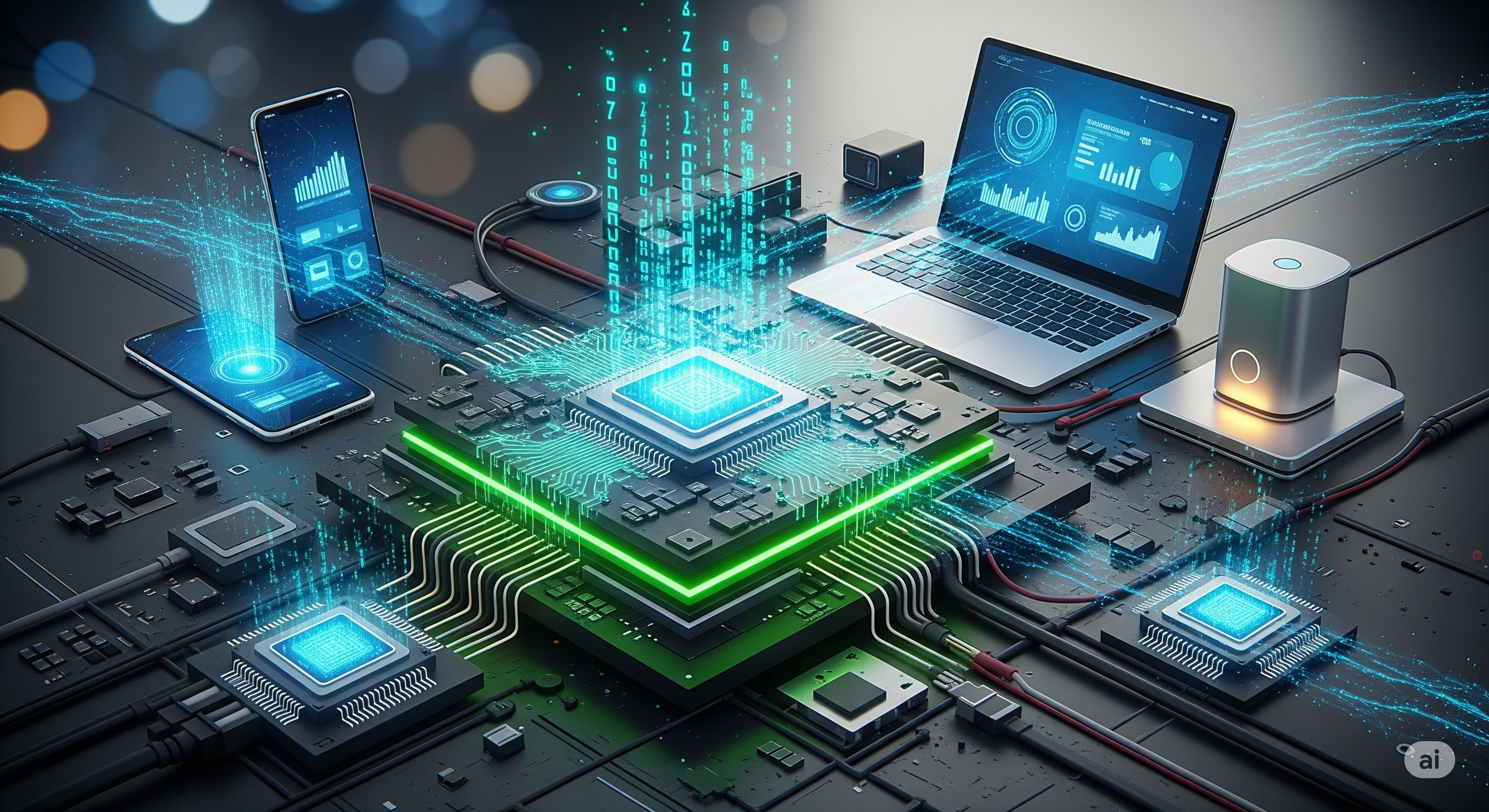
The latest advancements aren't just incremental; they represent a fundamental shift. We're moving beyond simple automation to proactive intelligence, where devices don't just respond to commands, but anticipate them. This isn't science fiction anymore; it's the cutting edge of technology shaping our future, from the smallest sensors in your home to the sprawling networks of smart cities. This article will delve into what AIoT is, its transformative power across various sectors, the crucial technologies driving it, and the challenges we must navigate as we embrace this hyper-intelligent future.
What Exactly is AIoT? The Marriage of Minds and Machines
At its core, IoT refers to the network of physical objects embedded with sensors, software, and other technologies for the purpose of connecting and exchanging data with other devices and systems over the internet. These are the "things" – your smart bulbs, security cameras, industrial sensors, and wearable tech. They gather an incredible amount of raw data.
Artificial Intelligence (AI), on the other hand, empowers machines to simulate human intelligence. It’s the capability for systems to learn, reason, solve problems, perceive, and understand language. AI transforms raw data into actionable insights and intelligent decisions.
When you merge these two colossal technologies, you get AIoT. The "things" collect the data, and AI provides the "brain" to process, analyze, and interpret that data, enabling the devices to learn from their environment, adapt to changing conditions, and perform tasks with minimal human intervention. Imagine a smart home not just adjusting temperature, but learning your daily routine, predicting when you’ll arrive home, and optimizing energy usage based on real-time weather forecasts and electricity prices. This is AIoT in action.
The Transformative Power of AIoT: From Homes to Industries
The impact of AIoT is far-reaching, promising to redefine efficiency, convenience, and safety across virtually every sector.
Smarter Homes, Healthier Lives
In our homes, AIoT is ushering in an era of personalized environments. Beyond basic automation, AI-powered smart devices can learn individual preferences for lighting, temperature, and entertainment, creating truly adaptive living spaces. Smart security systems can differentiate between pets and intruders, while predictive maintenance for appliances can warn you of potential issues before they become costly breakdowns. In healthcare, AIoT wearables monitor vital signs, track activity, and even detect falls, sending alerts to caregivers, enabling proactive care for the elderly and those with chronic conditions, often through non-invasive and continuous monitoring. The new Matter standard, supported by major tech giants, is also simplifying connectivity, making it easier for diverse smart home devices to communicate seamlessly, further accelerating AIoT adoption in our living spaces.
Smart Cities: AIoT as the Urban Operating System
For urban environments, AIoT is the backbone of truly smart cities. Traffic management systems use AI to analyze real-time data from countless sensors, optimizing signal timings to reduce congestion and emissions. Smart waste management systems deploy AI-powered sensors in bins to signal when they need emptying, optimizing collection routes and reducing operational costs. AIoT can enhance public safety through intelligent surveillance, predict energy consumption patterns to optimize grid efficiency, and monitor air and water quality to promote sustainability. These interconnected systems work together to create more livable, efficient, and sustainable urban landscapes.
Industry 4.0: The AI-Powered Factory Floor
In manufacturing and industrial settings, AIoT is fueling the fourth industrial revolution (Industry 4.0). Predictive maintenance, a cornerstone of AIoT in industry, uses AI to analyze sensor data from machinery, anticipating equipment failures before they occur. This drastically reduces downtime, extends asset lifespans, and saves significant costs. AIoT also powers quality control systems that can detect defects with greater precision and speed than human inspection, optimizes supply chain logistics, and enables collaborative robots (cobots) to work alongside human operators, enhancing productivity and safety.
The Engine Room: Edge AI and 5G's Role
Two critical technologies are acting as catalysts for the rapid expansion and capabilities of AIoT: Edge AI and 5G connectivity.
Traditionally, IoT devices would send all their collected data to a centralized cloud for processing. While effective for some applications, this approach introduces latency, consumes significant bandwidth, and raises privacy concerns, especially for time-sensitive decisions.
Edge AI addresses these challenges by bringing AI processing closer to the data source – directly to the IoT device or a local gateway (the "edge" of the network). This means that critical decisions can be made instantaneously, without the round trip to the cloud. For instance, an autonomous vehicle needs to react in milliseconds, not seconds; edge AI enables this. It reduces network traffic, enhances data privacy by processing sensitive information locally, and improves system reliability by decreasing dependence on cloud connectivity.
5G connectivity provides the high-speed, low-latency, and massive connection density required for a fully realized AIoT ecosystem. Its lightning-fast speeds ensure that even when data does need to travel to the cloud or between edge devices, it does so almost instantly. Its ultra-low latency is crucial for real-time applications like autonomous vehicles or remote surgery. And its ability to connect millions of devices per square kilometer makes massive IoT deployments – think smart cities with billions of sensors – not just feasible, but highly efficient. Together, Edge AI and 5G are laying the robust infrastructure necessary for the AIoT revolution to flourish.
Navigating the Future: Challenges and Opportunities
While the promise of AIoT is immense, its widespread adoption also presents significant challenges that must be addressed carefully.
Security and Privacy
With billions of interconnected devices collecting vast amounts of data, cybersecurity becomes paramount. Each device can be a potential entry point for malicious actors. Protecting sensitive personal and industrial data from breaches, ensuring the integrity of AI algorithms, and preventing unauthorized access are critical. Robust encryption, secure protocols, and ongoing vulnerability management are essential. Furthermore, the ethical implications of AI analyzing and making decisions based on personal data raise profound privacy concerns that necessitate clear regulations and transparent data governance.
Interoperability and Standardization
The sheer diversity of IoT devices, platforms, and communication protocols often leads to fragmentation. Different manufacturers might use proprietary systems, making it difficult for devices from various brands to communicate seamlessly. Efforts like the Matter standard are aimed at solving this by creating a universal language for smart devices, but true widespread interoperability remains a significant hurdle.
Ethical AI and Data Governance
As AI systems become more autonomous, ensuring they are fair, unbiased, and transparent in their decision-making is crucial. Who is accountable when an AIoT system makes an error? How can we prevent algorithmic bias, especially when training data reflects societal prejudices? Establishing clear ethical guidelines for AI development and robust frameworks for data governance are vital to building public trust and ensuring AIoT benefits all.
The Human Element: Jobs and Adaptation
While AIoT promises to automate many tasks, it also creates new opportunities. The focus shifts from repetitive tasks to roles requiring creativity, critical thinking, and advanced technical skills in areas like AI development, data science, cybersecurity, and system maintenance. Societies and workforces must adapt through education and reskilling initiatives to harness the full potential of AIoT while mitigating potential job displacement.
Embrace the Intelligent Future
The convergence of AI and IoT is not merely an upgrade; it's a paradigm shift towards a truly intelligent, predictive, and proactive world. From optimizing energy grids and revolutionizing healthcare to creating responsive homes and efficient factories, AIoT is poised to redefine how we live, work, and interact with our environment. The journey ahead will require careful navigation of security, privacy, and ethical considerations, but the opportunities for innovation and positive societal impact are boundless.
Are you ready for your world to get smarter? How do you envision AIoT transforming your daily life or industry in the next decade? Share your thoughts, predictions, and concerns in the comments below, and let's discuss the future of intelligence in our connected world!