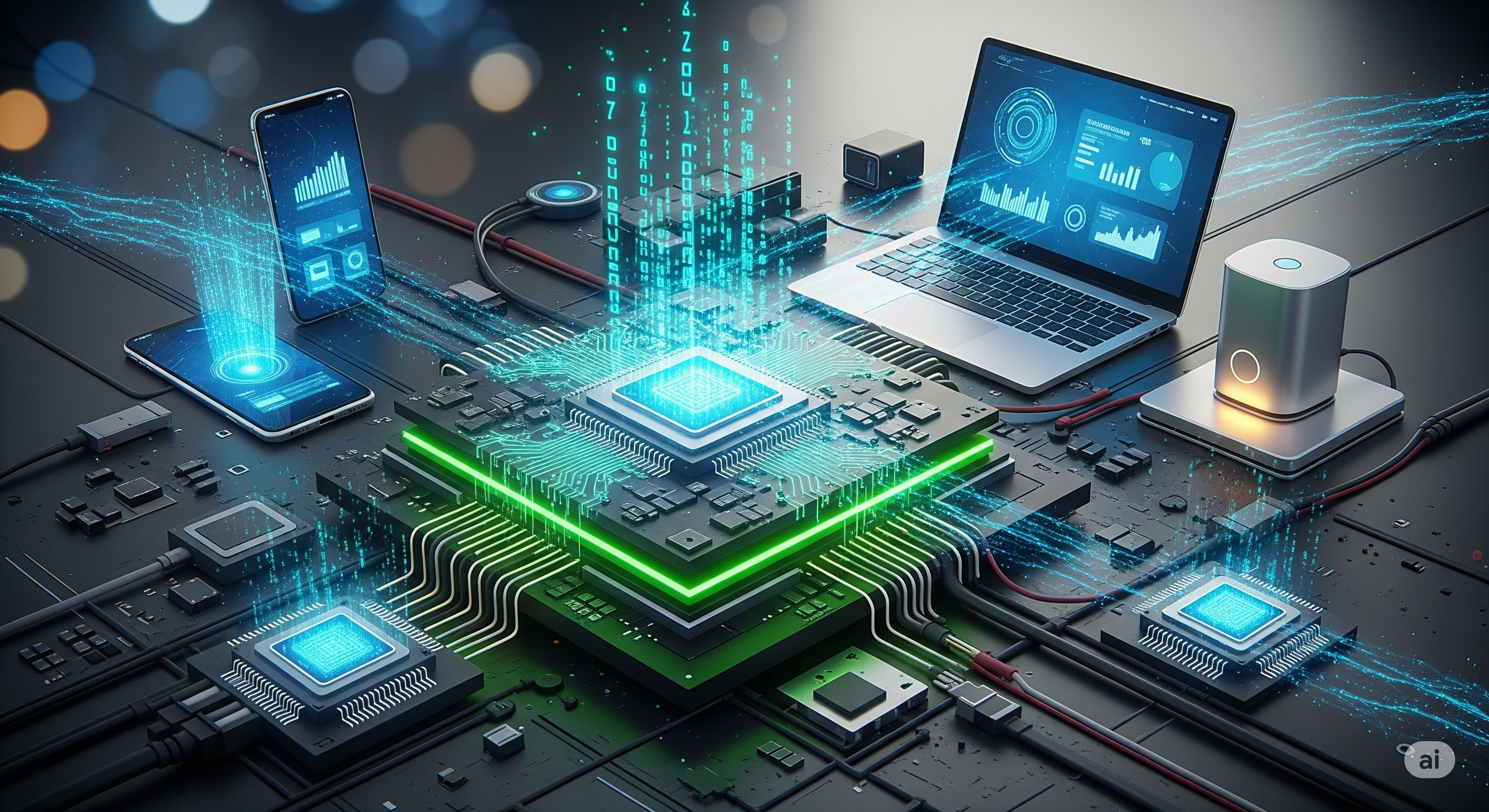
Enter Artificial Intelligence (AI). The latest wave of advancements in AI, from sophisticated machine learning algorithms to the nascent power of generative AI, is not just complementing IoT; it’s fundamentally transforming it. This powerful synergy, often dubbed AIoT, is the quiet revolution that’s happening right now, evolving our connected devices from mere data conduits into proactive, intelligent agents. This isn't just an upgrade; it’s the dawn of a truly smart, responsive, and intuitive ecosystem that promises to redefine how we live, work, and interact with our world.
From Data Dumps to Intelligent Decisions: The AIoT Evolution
For years, IoT devices excelled at one thing: data collection. Billions of sensors worldwide tirelessly gathered information on temperature, motion, location, usage patterns, and more. This deluge of raw data was a treasure trove, but often an overwhelming one. Companies grappled with massive datasets, struggling to extract meaningful insights in real-time. The promise of predictive maintenance, personalized experiences, or truly autonomous systems often hit a wall due to the sheer volume and complexity of the information.
This is where AI steps in as the ultimate game-changer. AI algorithms, particularly machine learning (ML) and deep learning, are adept at processing vast quantities of data, identifying hidden patterns, making predictions, and even learning from experience. When integrated with IoT, AI provides the cognitive layer that translates raw sensor data into actionable intelligence. Instead of just knowing a machine’s temperature, AI can predict when it’s likely to fail. Instead of just monitoring traffic, AI can optimize flow in real-time to prevent congestion. This evolution moves IoT beyond simple automation and remote control towards genuine autonomy, predictive capability, and personalized experiences, marking a significant leap forward in the digital transformation journey.
Where AIoT is Making Waves: Real-World Transformations
The impact of AIoT is not confined to futuristic concepts; it's already creating tangible value across diverse sectors. Its ability to infuse intelligence directly into connected devices is unlocking unprecedented efficiencies and opportunities.
Smart Homes & Cities: Beyond Basic Automation
In our homes, AIoT is elevating convenience. Imagine a home that doesn't just respond to commands but anticipates your needs. AI-powered smart thermostats learn your preferences and optimize energy consumption based on occupancy patterns and even local weather forecasts, not just fixed schedules. Smart security systems, bolstered by AI, can differentiate between a pet and an intruder, drastically reducing false alarms. For smart cities, AIoT is a cornerstone for optimizing everything from traffic flow and public transport to waste management and energy grids. AI can analyze data from thousands of street sensors to dynamically adjust traffic lights, guide autonomous vehicles, and even detect infrastructure faults before they become critical.
Industrial IoT (IIoT): Predictive Powerhouses
In manufacturing and industrial settings, AIoT (often called IIoT for Industrial Internet of Things) is revolutionizing operational efficiency. Predictive maintenance, a holy grail for industries, is now a reality. AI analyzes data from machinery sensors to foresee potential equipment failures, allowing for timely interventions that minimize downtime and maintenance costs. Digital twins, virtual replicas of physical assets or processes, are further enhanced by AI. These AI-powered digital twins can simulate various scenarios, optimize factory layouts, test new production lines, and even train personnel in a risk-free virtual environment, leading to massive gains in productivity and safety.
Healthcare (IoMT): A New Era of Wellness
The healthcare sector is witnessing a profound transformation through AIoT, or the Internet of Medical Things (IoMT). Wearable devices and remote patient monitoring systems, powered by AI, can continuously track vital signs, activity levels, and sleep patterns. AI algorithms can then analyze this data to detect early signs of chronic conditions, predict health emergencies, and provide personalized health insights, empowering patients and enabling proactive care. This not only improves patient outcomes but also significantly reduces the burden on healthcare systems.
Sustainability: Greening Our Future with AIoT
AIoT is also emerging as a critical tool in the global fight against climate change. By providing granular data and intelligent analysis, it enables unprecedented levels of energy efficiency across buildings, transportation, and industrial processes. Smart grids, powered by AIoT, can optimize energy distribution, integrate renewable sources more effectively, and reduce waste. In agriculture, AI-powered sensors monitor soil conditions, crop health, and weather patterns, allowing for precision farming that optimizes water usage, fertilizer application, and yield, thereby reducing environmental impact.
The Engine Room: Key Technologies Powering AIoT
The seamless integration of IoT and AI relies on several cutting-edge technologies that form its essential backbone.
Edge AI and Federated Learning
One of the most significant advancements is Edge AI. Instead of sending all data to the cloud for processing, Edge AI allows computations to happen directly on IoT devices or at network edge nodes. This dramatically reduces latency, enhances data privacy by processing sensitive information locally, and minimizes bandwidth usage. Furthermore, techniques like federated learning allow AI models to be trained across multiple decentralized edge devices without centralizing raw data, enhancing both privacy and efficiency.
Generative AI's Emerging Role
While still in its early stages of integration with IoT, generative AI holds immense potential. It could be used to simulate complex environments for testing new IoT solutions, generate synthetic data for training more robust AI models, or even help in designing new IoT devices and interfaces by understanding user needs from contextual data. Imagine an AI that can design an optimal smart home layout based on your family's daily routines!
5G/6G & Cloud Computing
High-speed, low-latency connectivity provided by 5G and the upcoming 6G networks is crucial for AIoT, enabling instantaneous communication between billions of devices and supporting complex real-time AI analytics. Meanwhile, robust cloud computing platforms provide the scalable infrastructure needed for storing massive IoT datasets and running sophisticated AI models that require significant computational power.
Security & Privacy: The Ongoing Challenge and AI's Role
As AIoT expands, so do concerns about security and privacy. Billions of connected devices present a vast attack surface. However, AI itself is proving to be a powerful ally. AI-powered security systems can detect anomalies, identify cyber threats in real-time, and even predict potential vulnerabilities within an IoT network, creating more resilient and secure ecosystems. Nevertheless, the ethical deployment of AI and stringent privacy regulations remain paramount to build trust in this connected future.
What's Next? The Road Ahead for AIoT
The journey of AIoT is far from over; it’s only just beginning. We can expect even greater interoperability between devices, facilitated by standards like Matter, and more sophisticated predictive and prescriptive capabilities as AI models become increasingly advanced. Personalized experiences will become the norm, not the exception, subtly adapting to our preferences and evolving needs. Ethical considerations, data governance, and robust cybersecurity frameworks will continue to be central to responsible AIoT development. As these intelligent systems learn and evolve, they promise to unlock solutions to some of humanity's most pressing challenges, from sustainable living to enhanced well-being.
The convergence of AI and IoT is not just a technological trend; it's a fundamental shift towards a world that is truly intelligent, responsive, and intuitively connected. It’s an evolution that promises to make our environments more efficient, our decisions more informed, and our lives demonstrably better.
What are your thoughts on this intelligent revolution? How do you envision AIoT impacting your daily life or industry? Share your insights and join the conversation about the future of our connected world!
