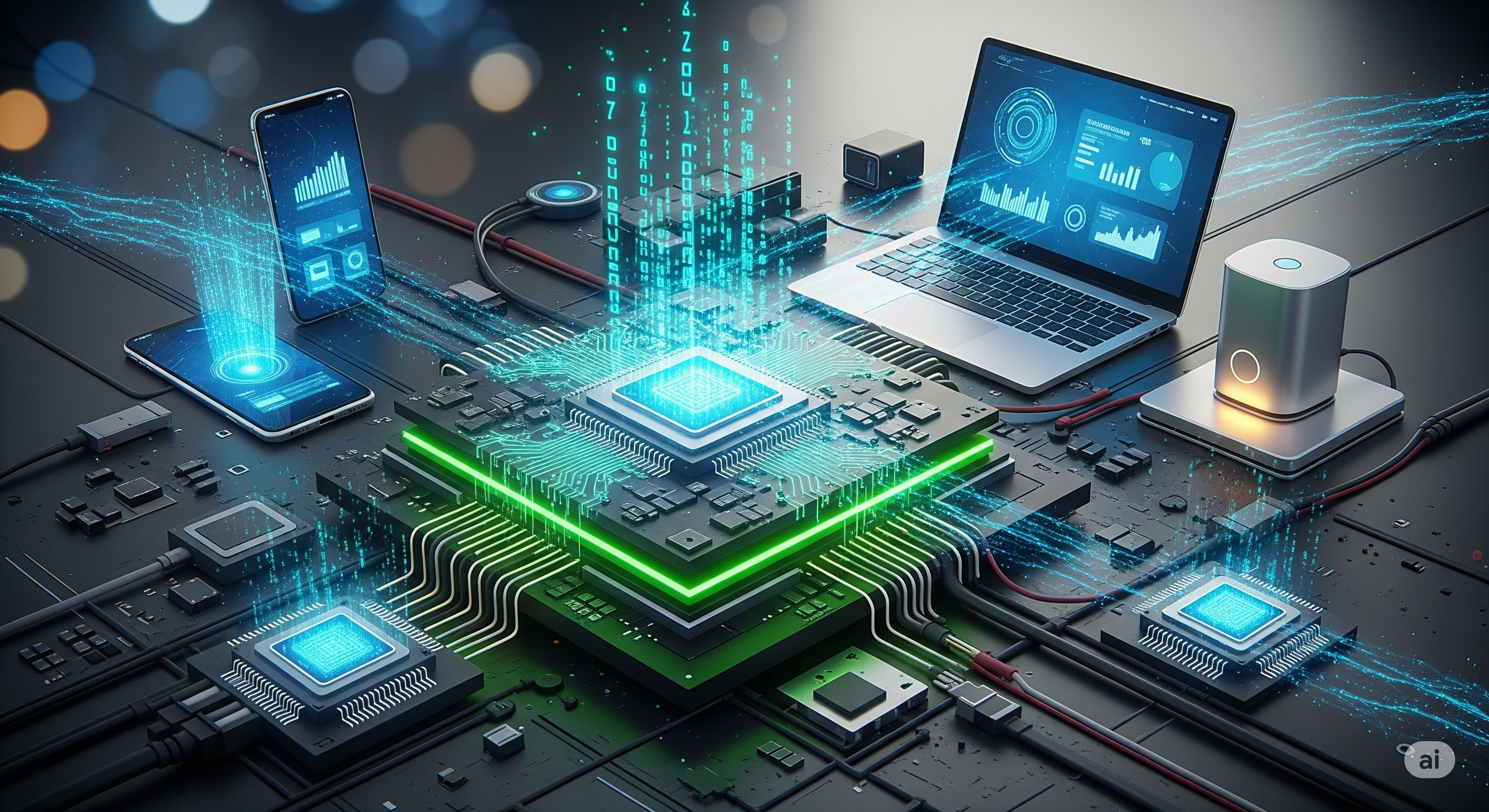
Forget simple connectivity; we're now entering the era of truly intelligent environments. This isn't a future vision; it's happening right now, driven by groundbreaking advancements in Artificial Intelligence (AI), the rise of edge computing, and a collective push towards more sustainable and integrated digital ecosystems. Prepare to understand how your world is getting smarter, faster, and surprisingly, more human-centric.
The Dawn of AIoT: Where Intelligence Meets Connectivity
For years, IoT devices have been excellent data collectors. Your smart thermostat gathered temperature patterns, your fitness tracker logged steps, and your security camera streamed video. But much of this data simply sat there, waiting to be analyzed elsewhere or reacting to simple, pre-programmed rules. Enter AI.
The marriage of AI and IoT, often termed AIoT, fundamentally changes the game. AI doesn't just collect data; it *understands* it, *learns* from it, and *acts* upon it autonomously. Imagine a smart home that doesn’t just turn off lights when you leave but learns your routines, predicts your needs, and proactively adjusts heating, lighting, and security to optimize comfort, energy, and safety – all without a single command from you.
In industrial settings, AIoT is powering predictive maintenance, allowing machines to diagnose and even fix potential problems *before* they occur, drastically reducing downtime and costs. In healthcare, intelligent IoT devices are delivering personalized care, monitoring vital signs, detecting anomalies, and even dispatching emergency services, making health management more proactive and precise than ever before. This leap from reactive to predictive, from data collection to intelligent action, is the core of AIoT's transformative power.
Edge of Innovation: Why Processing Data Locally is a Game Changer
While AI gives IoT its brain, edge computing provides the nervous system. Traditionally, data from IoT devices would travel all the way to a central cloud server for processing. This journey, while fast, still introduces latency – a slight delay that can be critical for real-time applications.
Edge computing flips this model by bringing the computational power closer to the source of the data – right to the "edge" of the network. This means AI algorithms can run directly on smart devices themselves, or on small local servers. The benefits are profound:
* Real-time Decision Making: Critical applications like autonomous vehicles, industrial robots, or immediate security threat detection can't afford delays. Edge computing enables instant analysis and response.
* Enhanced Security and Privacy: Processing data locally reduces the need to send sensitive information to the cloud, minimizing exposure and improving privacy.
* Reduced Bandwidth and Cost: Less data needs to be transmitted over networks, saving bandwidth and associated costs, especially for large-scale IoT deployments.
Think of a smart city surveillance camera powered by AI at the edge. Instead of streaming endless hours of video to a central server, the camera itself can analyze footage, identify anomalies (like an unattended package or a fallen person), and alert authorities *instantly*. This isn't just faster; it's a fundamental shift in how IoT networks operate, making them more resilient, efficient, and responsive.
Beyond Convenience: IoT's Impact on Sustainability and Society
The impact of intelligent IoT extends far beyond personal convenience. It's becoming a cornerstone for addressing some of humanity's most pressing challenges, particularly in sustainability and public welfare.
Greener Future with Smart Tech
AIoT is a powerful tool in the fight against climate change. Smart grids leverage real-time data to optimize energy distribution, integrating renewable sources more efficiently and reducing waste. Smart buildings dynamically adjust lighting, heating, and cooling based on occupancy and weather, slashing energy consumption. In agriculture, precision farming with IoT sensors and AI-driven insights allows farmers to use water, fertilizer, and pesticides far more judiciously, conserving resources and boosting yields while minimizing environmental impact. Smart waste management systems use IoT to optimize collection routes, reducing fuel consumption and emissions.
Smarter Living, Healthier Lives
The Internet of Medical Things (IoMT) is revolutionizing healthcare. Wearable devices continuously monitor vital signs, detecting early warning signs of illness. Remote patient monitoring systems allow doctors to keep tabs on chronic conditions from afar, improving access to care and reducing hospital readmissions. For an aging global population, smart home IoT solutions offer independence and safety, detecting falls, reminding individuals to take medication, and alerting caregivers to potential issues. Smart cities use IoT to manage traffic flow, monitor air quality, and improve public safety, creating healthier, more livable urban environments for everyone.
The Matter Standard: Finally, True Smart Home Interoperability?
One of the biggest frustrations for smart home enthusiasts has been fragmentation. Different brands, different ecosystems, different protocols – a tangled mess of devices that often refused to communicate with each other. This complexity has been a significant barrier to mainstream adoption and truly seamless smart living.
Enter Matter, a new universal standard for smart home devices, backed by tech giants like Apple, Google, Amazon, and Samsung, among hundreds of others. Launched recently, Matter aims to solve this interoperability nightmare. It's a common language that allows smart devices from different manufacturers to communicate effortlessly with each other, regardless of their brand or underlying technology.
This is huge. For consumers, it means simpler setup, greater flexibility in choosing devices, and a truly unified smart home experience. No more worrying if your new smart bulb will work with your existing hub; if it's Matter-certified, it just works. This move toward standardization could be the catalyst that unlocks the next wave of IoT adoption, making the "smart home" a truly accessible and integrated reality for millions.
The Road Ahead: Challenges and Opportunities
While the future of AI-powered IoT is incredibly bright, it's not without its challenges. Security remains paramount; as more devices connect, the potential attack surface grows. Privacy concerns also loom large, necessitating robust regulations and transparent data handling practices. Ethical considerations for AI, ensuring fairness and accountability, will also be crucial. And addressing the digital divide, ensuring equitable access to these transformative technologies, is a societal imperative.
However, the opportunities far outweigh the obstacles. AIoT is poised to drive unprecedented innovation, create new industries, and solve complex global problems in health, environment, and urban development. It's a field ripe for talent, entrepreneurship, and continued scientific breakthroughs.
The silent revolution of IoT, supercharged by AI and refined by edge computing and standards like Matter, is no longer just about connecting devices. It's about empowering them with intelligence, enabling them to learn, adapt, and predict, ultimately creating a world that is not just smart, but truly intelligent, responsive, and intuitive.
What smart device or AIoT application are you most excited to see come to fruition? How do you envision this intelligent revolution changing your daily life in the next five years? Share your thoughts and predictions in the comments below! Let's shape the conversation around this incredible future, together.
