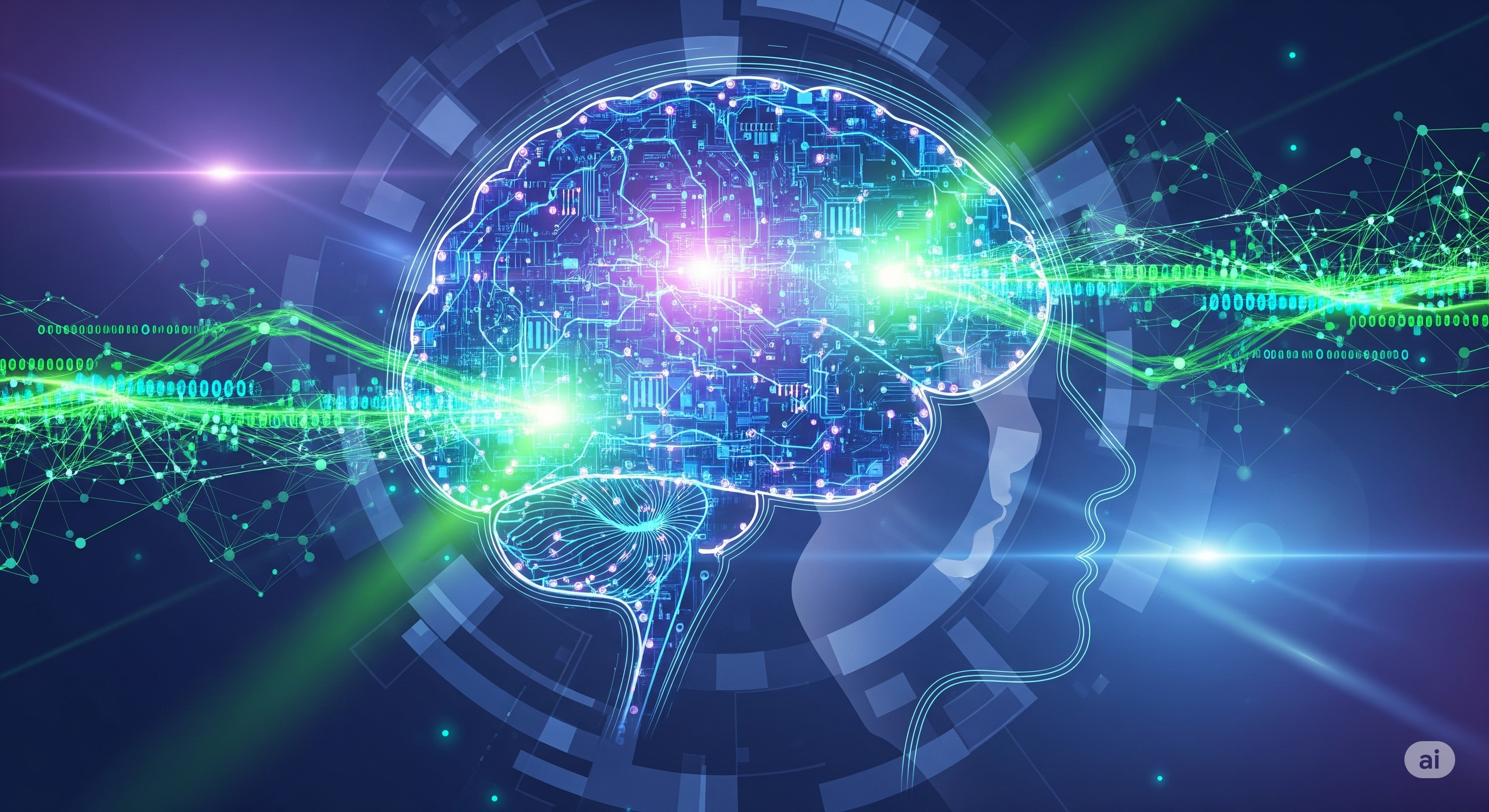
The Unseen Architect: What Exactly Are Neural Networks?
Before we marvel at their latest feats, let’s quickly demystify neural networks. Inspired by the human brain, these systems consist of interconnected "neurons" (mathematical functions) arranged in layers. Each neuron processes input and passes it on to the next layer. Through a process called "training," where they analyze vast amounts of data, neural networks learn to recognize patterns, make predictions, and generate outputs. The more data they process and the more sophisticated their architecture, the more intelligent and capable they become. For years, the mantra was "bigger is better" – larger networks with more parameters often yielded superior performance. But a significant shift is underway, one that prioritizes not just scale, but unparalleled efficiency and multimodal intelligence.
Beyond Brute Force: The Era of Smarter, Leaner Neural Networks
The latest news in neural network research signals a departure from the "bigger is always better" philosophy. While massive models like GPT-3 and its successors captivated the world, researchers are now pioneering methods to make AI brains not just larger, but fundamentally smarter, more efficient, and incredibly versatile.
From Massive Models to Mighty Miniatures: Efficiency Redefined
One of the most exciting recent developments is the push towards highly efficient neural network architectures. Imagine having a supercomputer's power in a device that sips energy and responds in milliseconds. This is becoming a reality thanks to innovations like:
* Mixture-of-Experts (MoE) Models: Instead of one giant network doing everything, MoE models comprise several "expert" subnetworks. When a query comes in, a "router" mechanism intelligently activates only the relevant experts to handle the task. This dramatically reduces computational cost and increases efficiency, allowing models with billions of parameters to operate as if they were much smaller, delivering faster inference and training times. It’s like having a team of specialists rather than one generalist trying to do it all.
* Quantization and Pruning: These techniques optimize neural networks by reducing their precision (quantization) or removing less critical connections (pruning) without significantly impacting performance. This allows models to run on less powerful hardware, opening up possibilities for AI to be integrated directly into everyday devices, from smartphones to smart home gadgets, expanding AI's reach beyond the cloud.
* Smaller, Specialized Architectures: Researchers are designing compact, specialized neural networks tailored for specific tasks, achieving impressive results with a fraction of the parameters of their larger counterparts. This focus on "fit-for-purpose" design means we can deploy powerful AI solutions for niche applications without the astronomical computational overhead.
These advancements are not just theoretical; they are leading to faster, more accessible, and more environmentally friendly AI, democratizing access to cutting-edge capabilities and accelerating innovation across industries.
Learning Like Humans: The Rise of Multimodal AI
Perhaps the most human-like leap in neural networks is the rapid evolution of multimodal AI. Our brains don't just process text, or just images, or just sounds – we integrate all these senses seamlessly to understand the world. Next-gen neural networks are now mirroring this ability.
Recent breakthroughs allow neural networks to process and understand information from multiple modalities simultaneously – text, images, video, audio, and even sensor data. Models can now:
* See and Describe: Take an image, and the AI can not only identify objects within it but also describe the scene, the actions taking place, and even infer emotions or context.
* Hear and Interpret: Understand spoken language, recognize different voices, and even interpret the emotional tone of a speaker.
* Generate Across Modalities: Imagine an AI that can take a textual prompt and generate a coherent story, along with accompanying images, music, and even short video clips – all created from its integrated understanding.
This multimodal capability makes AI significantly more powerful and intuitive. It means AI can better understand the nuances of human communication and the complexities of the real world, leading to more natural interactions and richer experiences. This is the future of human-computer interaction, where AI truly sees, hears, and understands us in a holistic way.
Real-World Impact: Where We're Seeing the Transformation
These neural network advancements are not confined to research labs; they are actively reshaping our world in tangible ways.
Powering Breakthroughs in Science and Medicine
In scientific discovery, neural networks are accelerating the pace of innovation. They are now capable of:
* Drug Discovery: Identifying potential drug candidates and predicting their efficacy with unprecedented speed, vastly shortening the R&D cycle for new medicines.
* Material Science: Designing new materials with specific properties, opening doors for advancements in everything from sustainable energy to aerospace.
* Climate Modeling: Creating more accurate and detailed climate simulations, helping us understand and combat environmental challenges.
* Personalized Medicine: Analyzing patient data (genomics, medical history, imaging) to recommend highly personalized treatments and predict disease progression.
Revolutionizing Our Daily Lives
Beyond grand scientific endeavors, next-gen neural networks are enhancing our everyday experiences:
* Hyper-Personalized Content: From entertainment recommendations to tailored news feeds, AI understands our preferences with greater precision.
* Creative Tools: Empowering artists, designers, and writers with AI assistants that can generate text, images, music, and even video based on simple prompts.
* Assistive Technologies: Creating more intuitive and effective tools for people with disabilities, from advanced hearing aids to AI-powered navigation for the visually impaired.
* Smart Automation: Making homes, vehicles, and industries more intelligent and efficient, reacting to real-world conditions with human-like adaptability.
The Road Ahead: Challenges and Ethical Considerations
While the future powered by advanced neural networks is incredibly promising, it's crucial to acknowledge the challenges. Issues of AI safety, bias in data leading to biased outcomes, the vast energy consumption of training large models, and the ethical implications of autonomous decision-making remain paramount. Researchers and policymakers are working hand-in-hand to ensure that these powerful technologies are developed and deployed responsibly, for the benefit of all humanity.
The Future is Thinking: Join the Conversation
The evolution of neural networks is nothing short of extraordinary. From their humble beginnings to their current state of sophisticated efficiency and multimodal understanding, these AI brains are rapidly approaching capabilities once thought impossible. They are no longer just tools but intelligent collaborators, pushing the boundaries of what's achievable across every sector. We're witnessing a pivotal moment where AI isn't just getting bigger, but genuinely smarter, more intuitive, and deeply integrated into the fabric of our existence.
What do you think about these incredible advancements in neural networks? Which breakthroughs excite you the most, or perhaps give you pause? Share your thoughts in the comments below, and let's discuss how this rapidly evolving technology will shape our collective future! Don't forget to share this article with your friends and colleagues to keep the conversation going!
