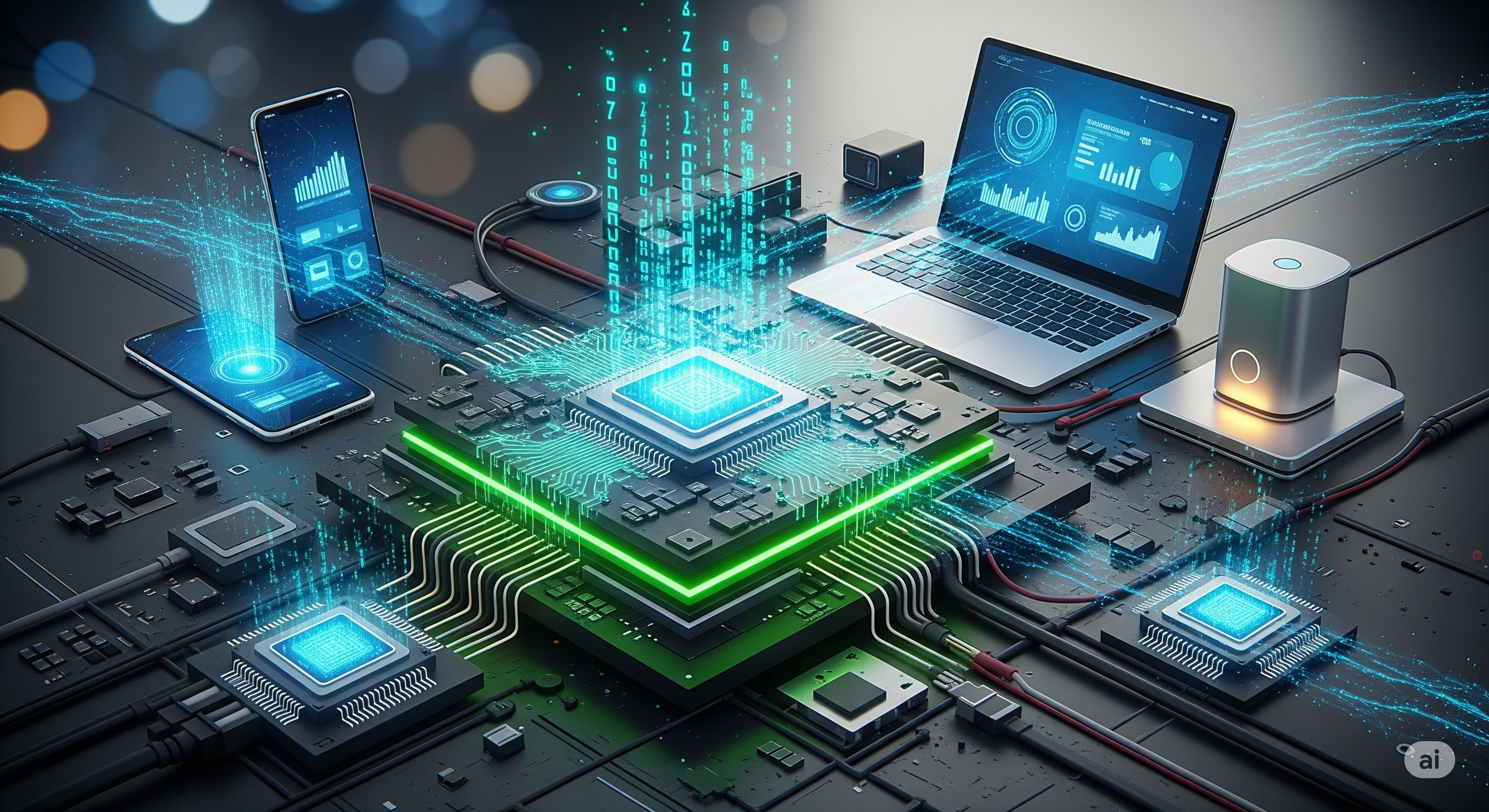
The Quiet Revolution: IoT's Evolving Landscape
The Internet of Things, at its core, is a network of physical objects embedded with sensors, software, and other technologies for the purpose of connecting and exchanging data with other devices and systems over the internet. What began as simple connectivity – turning lights on with an app – has quietly evolved into an intricate ecosystem of billions of connected devices. These devices are constantly collecting data, from temperature readings in a smart home to complex diagnostics in an industrial factory. The early promise of IoT was automation and data collection; the new promise, driven by recent technological leaps, is intelligence, foresight, and transformative action. We're moving beyond simple data capture to a realm where devices understand, predict, and even learn from their environment. Analysts project the global IoT market to continue its exponential growth, indicating that the future will indeed be hyper-connected, and the foundational pillars for this future are AI and Edge Computing.
AI and Edge Computing: The Brains Behind the Brawn
For IoT to truly deliver on its grandest promises, it needs more than just connectivity; it needs intelligence and speed. This is where the powerful combination of Artificial Intelligence and Edge Computing comes into play, transforming raw data into actionable insights and creating a new paradigm for how smart devices operate.
Bringing Intelligence Closer: The Edge Advantage
Traditional IoT often relies on sending vast amounts of data to centralized cloud servers for processing. While effective, this approach faces significant hurdles: latency (delays in data transmission), bandwidth constraints (especially for real-time applications), and security risks (data traveling long distances). Edge Computing addresses these challenges by bringing computation and data storage closer to the source of the data – literally to the 'edge' of the network, whether that's directly on the IoT device itself or a local gateway.
Imagine a self-driving car. It can't afford a millisecond's delay sending data to the cloud to decide if it should brake. Edge computing enables real-time decision-making, allowing devices to analyze data locally and react instantly. This not only dramatically reduces latency but also minimizes the amount of data sent to the cloud, conserving bandwidth and enhancing data security and privacy by processing sensitive information closer to its origin. For applications ranging from industrial automation and healthcare monitoring to smart city infrastructure, the speed and efficiency of edge computing are indispensable.
AI's Unleashed Potential in IoT
If Edge Computing provides the necessary speed and efficiency, Artificial Intelligence provides the brainpower. AI transforms the deluge of data collected by IoT devices into meaningful, actionable intelligence. Machine learning algorithms, increasingly deployed directly at the edge, allow devices to learn from patterns, make predictions, and even automate complex tasks without human intervention.
Consider predictive maintenance in an industrial setting: IoT sensors monitor machinery for vibrations, temperature, and performance metrics. AI algorithms analyze this data, identify subtle anomalies, and predict potential equipment failures *before* they occur, allowing for timely intervention and preventing costly downtime. In smart homes, AI analyzes behavioral patterns to optimize energy consumption, adjust lighting, and personalize environmental controls. From enhancing security through intelligent anomaly detection to creating highly responsive and intuitive user experiences, AI is the engine that converts raw IoT data into unprecedented levels of automation, personalization, and efficiency.
Building Tomorrow: IoT's Impact on Sustainability and Smart Cities
The synergy of AI and Edge Computing is not merely about making devices smarter; it's about fundamentally reshaping our environments, leading the charge toward a more sustainable planet and truly intelligent urban centers.
Green IoT: Powering a Sustainable Future
The climate crisis demands innovative solutions, and IoT is emerging as a critical tool in the fight for sustainability. "Green IoT" refers to the application of IoT technologies to monitor, manage, and reduce environmental impact across various sectors.
* Energy Management: Smart grids, powered by IoT sensors and AI, can monitor energy demand and supply in real-time, optimizing distribution, integrating renewable sources, and reducing waste. In buildings, IoT sensors track occupancy, temperature, and light levels, allowing AI-driven building management systems to intelligently adjust HVAC and lighting, leading to significant energy savings and a reduced carbon footprint.
* Waste Management: Smart bins equipped with fill-level sensors can communicate with waste management systems, enabling optimized collection routes and schedules, reducing fuel consumption and operational costs.
* Precision Agriculture: IoT sensors monitor soil moisture, nutrient levels, and crop health, allowing farmers to apply water and fertilizers precisely where and when needed, minimizing resource waste and maximizing yields.
* Environmental Monitoring: Networks of IoT sensors can track air quality, water pollution, and wildlife movements, providing critical data for environmental protection and policy-making.
By providing unprecedented visibility and control, Green IoT empowers industries and individuals to make more informed, environmentally conscious decisions, driving us toward a truly sustainable future.
Smart Cities 2.0: The Digital Twin Revolution
The concept of a "Smart City" has been evolving for years, but with the advent of AI-powered IoT and Edge Computing, it's undergoing a dramatic transformation. At the forefront of this evolution is the "Digital Twin" – a virtual replica of a physical object, process, or system. In the context of a city, a digital twin can be a comprehensive, real-time virtual model of an entire urban area.
IoT sensors spread across a city (traffic lights, public transport, utility infrastructure, environmental monitors) feed real-time data into this digital twin. AI algorithms then process this data, enabling city planners and administrators to:
* Optimize Urban Planning: Simulate the impact of new developments, infrastructure changes, or policy decisions before they are implemented in the physical world.
* Manage Traffic: Analyze traffic patterns, predict congestion, and dynamically adjust traffic signals or reroute public transport to improve flow and reduce emissions.
* Monitor Infrastructure: Track the health of bridges, roads, and utility pipes, predicting maintenance needs and preventing catastrophic failures.
* Enhance Public Safety: Simulate emergency scenarios, optimize resource deployment, and respond more effectively to critical events.
Digital Twins offer a proactive, data-driven approach to city management, moving beyond reactive solutions to create more resilient, efficient, and livable urban environments.
Beyond the Hype: Challenges and the Path Forward
While the potential of AI-powered IoT is immense, it's crucial to acknowledge the challenges that accompany such profound technological shifts. Cybersecurity remains a paramount concern; with billions of connected devices, the attack surface expands exponentially, demanding robust encryption, authentication, and continuous threat monitoring. Data privacy is another critical issue, as vast amounts of personal and sensitive data are collected and processed, necessitating stringent regulations and ethical guidelines for data usage. Furthermore, interoperability among diverse devices and platforms continues to be a hurdle, though initiatives like the Matter standard are making strides in the smart home sector. Addressing these challenges requires collaborative efforts from governments, industry leaders, and citizens to build secure, ethical, and open IoT ecosystems.
Conclusion
The fusion of AI and Edge Computing is not just an incremental upgrade for IoT; it's a paradigm shift. We are moving from a world of disconnected devices to a deeply intelligent, responsive, and self-optimizing ecosystem. From ensuring our planet's health through 'Green IoT' initiatives to crafting the resilient and efficient 'Smart Cities' of tomorrow, the Internet of Things is proving to be far more than a buzzword – it's the foundational layer of our future. As these technologies mature, their impact will touch every facet of our lives, promising unprecedented convenience, safety, and sustainability. The journey has only just begun, and its trajectory is excitingly unpredictable. What future IoT application are you most excited to see? Share your thoughts below and join the conversation on how we can collectively shape this hyper-connected world!
