The AI Tsunami: How Generative AI is Fundamentally Reshaping Data Science Forever
Published on July 12, 2026
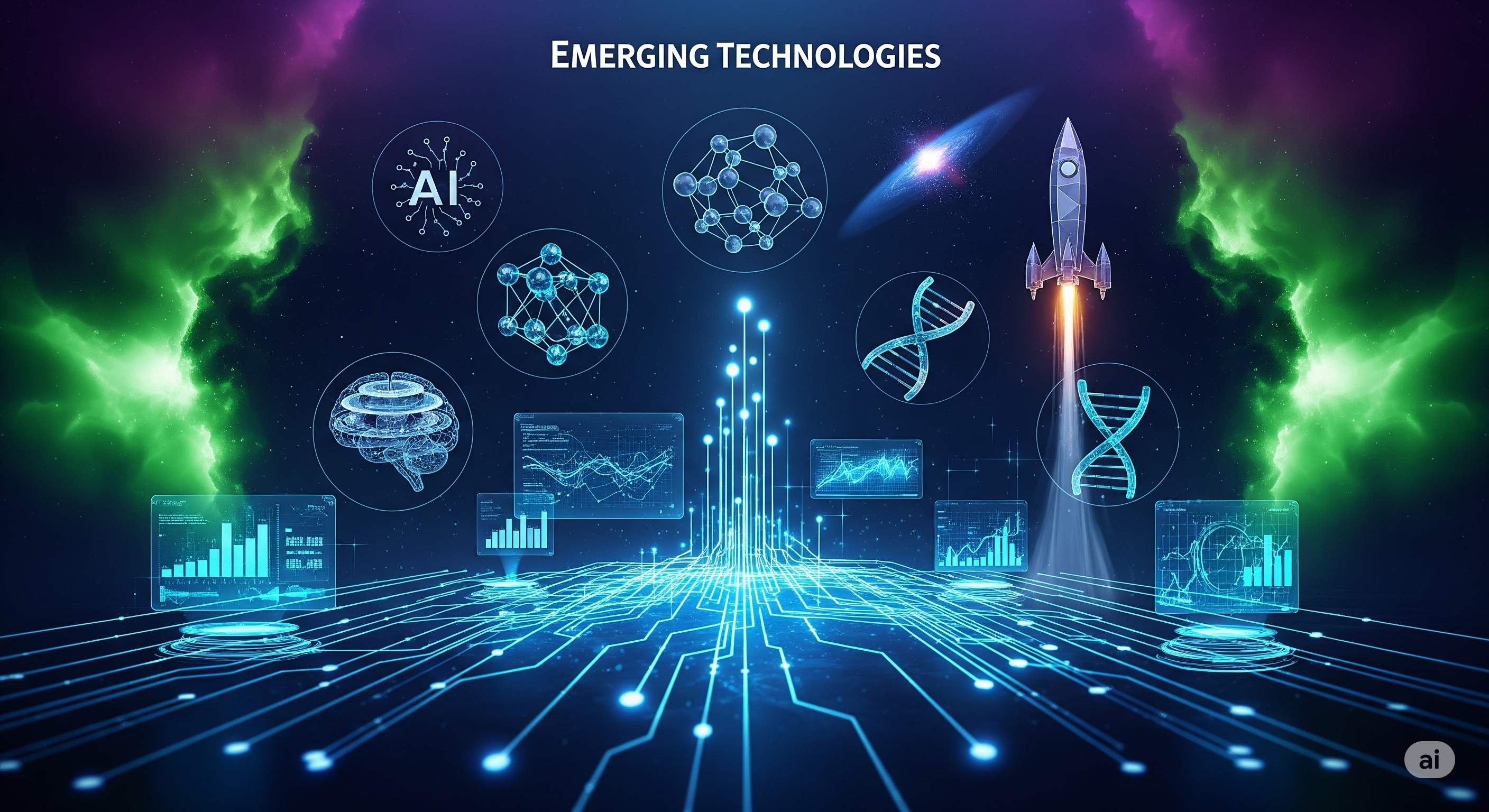
A seismic shift is underway in the world of technology, and its epicenter is Generative Artificial Intelligence. What began as an intriguing technological curiosity has rapidly evolved into a force fundamentally reshaping industries, and none more directly than Data Science itself. For years, data scientists have been at the forefront of harnessing data to build predictive models and extract insights. But the advent of Large Language Models (LLMs) and other generative AI technologies isn't just providing new tools; it's transforming the very nature of the role, the required skill sets, and the ethical considerations that define the field.
Forget the simplistic notion that AI will merely automate away jobs. Instead, we’re witnessing a profound metamorphosis, a shift from traditional machine learning paradigms to an era where AI doesn't just assist data scientists but becomes an integral, intelligent partner. This article dives deep into how this AI revolution is impacting data science, exploring the evolving roles, the paramount importance of data quality, the rising ethical imperative, and the crucial skills needed to thrive in this thrilling new landscape.
H2: The Seismic Shift: LLMs as More Than Just Fancy Autocomplete
The widespread adoption of Generative AI, particularly powerful LLMs like GPT-4 and others, marks a pivotal moment. These aren't just sophisticated algorithms for generating text or images; they are intelligent systems that can understand context, infer meaning, and even "reason" in novel ways. For data scientists, this means a paradigm shift in how problems are approached and solutions are built.
H3: From Model Builders to AI Architects: The Evolving Role
Traditionally, a significant portion of a data scientist's work involved building machine learning models from the ground up, meticulously selecting features, engineering pipelines, and tuning hyperparameters. While these skills remain valuable, the focus is increasingly shifting. With pre-trained foundational models readily available, the new frontier involves leveraging these immense capabilities. Data scientists are evolving into "AI architects" – orchestrating complex workflows, fine-tuning existing models with proprietary data, and designing intelligent agents that interact with and leverage these powerful LLMs.
This evolution brings new challenges and exciting opportunities. Instead of just coding algorithms, professionals are now engaging in "prompt engineering" – crafting precise instructions and queries to elicit desired outputs from generative models. Understanding how these models think, what their limitations are, and how to best steer their creativity is becoming a core competency.
H3: Supercharging Workflows: Automation and Augmentation
One of the most immediate impacts of Generative AI on data science is its ability to automate and augment mundane, repetitive tasks. Imagine LLMs generating initial data cleaning scripts, suggesting feature engineering strategies, explaining complex code, or even drafting documentation and reports. This isn't science fiction; it's happening now.
This augmentation frees up data scientists from tedious manual labor, allowing them to focus on higher-value activities: strategic problem-solving, designing experiments, interpreting complex results, and communicating insights. It supercharges productivity, enabling smaller teams to tackle bigger challenges and accelerating the pace of innovation within organizations pursuing digital transformation.
H2: The New Frontier: Data-Centricity and the Ethical Imperative
While LLMs are impressive, they are not magic. Their performance, particularly when fine-tuned or used in retrieval-augmented generation (RAG) contexts, is profoundly dependent on the quality and relevance of the data they interact with. This brings data quality and AI ethics to the absolute forefront of the future of data science.
H3: Why Data Quality Just Became Even More Critical
The age-old adage "Garbage In, Garbage Out" (GIGO) has gained an entirely new dimension with Generative AI. If the data used to fine-tune an LLM is biased, incomplete, or irrelevant, the model's outputs will reflect those flaws, potentially amplifying misinformation or propagating harmful stereotypes. For Big Data initiatives, this means an increased emphasis on robust data governance, meticulous data curation, and thoughtful data labeling strategies. Data scientists must become even more vigilant guardians of data integrity, understanding not just *what* the data says, but *how* it was collected, *who* it represents, and *what biases* it might inherently carry.
H3: Navigating the Ethical Minefield: Bias, Fairness, and Explainability
The ethical considerations surrounding AI tools have never been more pressing. LLMs, trained on vast swathes of internet data, inevitably inherit societal biases present in that data. Ensuring fairness, detecting and mitigating bias, and striving for explainability (XAI) in these complex, black-box models are no longer niche concerns but critical responsibilities for every data professional.
Data scientists must not only possess the technical prowess to build and deploy AI systems but also the ethical acumen to assess their societal impact. Understanding the implications of their work, engaging in responsible AI practices, and advocating for transparent and fair AI development are paramount.
H2: Future-Proofing Your Data Science Career: Essential Skills for the AI Age
The rapid evolution of Generative AI demands a continuous evolution of skills. Those who embrace this change will not only survive but thrive, leading the next wave of AI innovation.
H3: Beyond Traditional ML: Prompt Engineering & Model Orchestration
While a strong foundation in statistics, programming (Python, R), and traditional machine learning remains crucial, new competencies are rapidly gaining prominence. Prompt engineering is a prime example – the art and science of communicating effectively with LLMs to achieve desired results. Beyond prompts, understanding API integrations, working with vector databases, and orchestrating complex multi-agent AI systems are becoming invaluable. The ability to design and manage entire AI ecosystems, rather than just isolated models, is the hallmark of the modern data scientist.
H3: Critical Thinking, Domain Expertise, and Adaptability
Perhaps the most critical skills in the AI age are those that are uniquely human: critical thinking, problem-solving, creativity, and deep domain expertise. AI can generate code, analyze patterns, and even draft hypotheses, but it cannot yet replicate human intuition, nuanced judgment, or the ability to ask the truly novel questions.
Data scientists with a strong understanding of the business context or scientific domain they operate in will be indispensable. Their ability to contextualize AI outputs, validate assumptions, and translate complex technical insights into actionable business strategies will differentiate them. Moreover, an unwavering commitment to lifelong learning and adaptability will be key to navigating this fast-paced technological frontier.
Conclusion: Embrace the Revolution, Shape the Future
The Generative AI revolution is not just a technological upgrade; it's a fundamental redefinition of Data Science. It presents an exhilarating period of transformation, offering unprecedented opportunities for innovation, efficiency, and impact. Far from rendering data scientists obsolete, it elevates their role, pushing them towards more strategic, creative, and ethically significant work.
To remain at the cutting edge, data professionals must actively engage with these new AI tools, deepen their understanding of ethical considerations, prioritize data quality, and continually evolve their skill sets. This isn't just about keeping up; it's about leading.
What are your thoughts on this profound shift? How do you see your role evolving with Generative AI? Share your insights and join the conversation below! Let’s collectively shape the future of data science in this exciting new era.

Turn Your Images into PDF Instantly!
Convert photos, illustrations, or scanned documents into high-quality PDFs in seconds—fast, easy, and secure.
Convert Now