The AIoT Revolution: Unlocking the Future of Connected Intelligence
Published on December 4, 2025
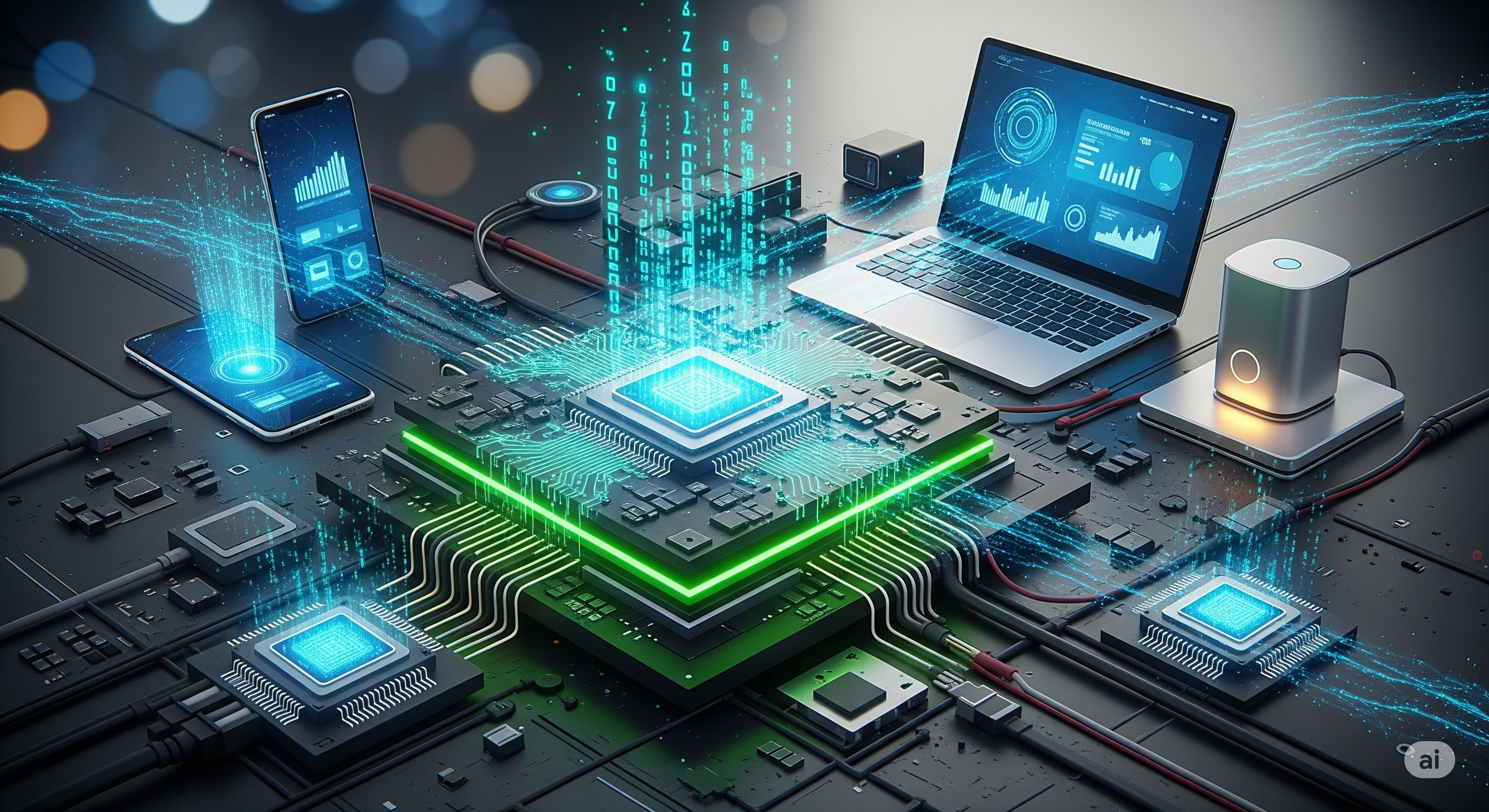
Welcome to the future, where the line between the physical and digital worlds isn't just blurring – it's practically invisible. We’re talking about the Internet of Things (IoT), that vast network of interconnected devices that silently powers our smart homes, streamlines our commutes, and even monitors our health. For years, IoT has been a buzzword, steadily integrating itself into the fabric of daily life. But what if those connected devices weren't just reacting to our commands, but anticipating our needs, learning from our habits, and optimizing everything around us autonomously? Enter the Artificial Intelligence of Things (AIoT) – the latest, most transformative evolution of IoT, poised to redefine our world as we know it.
This isn't just about smarter gadgets; it’s about a fundamental shift in how technology interacts with our environment, our industries, and our very existence. The integration of Artificial Intelligence (AI) with IoT is creating a powerful synergy, turning vast streams of data into actionable insights, enabling predictive capabilities, and fostering unprecedented levels of automation. Prepare to dive deep into the AIoT revolution, exploring its incredible potential, the challenges it presents, and why you’re already an integral part of this connected future.
H2: The Dawn of AIoT: Intelligence Meets Connectivity
At its core, AIoT marries the pervasive connectivity of IoT with the advanced analytical power of AI. Imagine billions of sensors, cameras, and devices collecting data – from temperature fluctuations in a smart factory to traffic patterns in a bustling city, or even your own sleep cycles. Traditionally, this data might be sent to a distant cloud for processing. With AIoT, that data isn't just collected; it's instantly analyzed, interpreted, and acted upon, often right where it's generated. This infusion of intelligence transforms mere connectivity into true understanding, enabling devices to make decisions, learn from experiences, and adapt without constant human intervention.
The implications are staggering. Smart homes are evolving into intuitive living spaces that adjust lighting based on your mood, manage energy consumption with remarkable efficiency, and even predict potential appliance failures. In healthcare, AIoT powers next-generation remote patient monitoring, allowing for early detection of health issues and personalized treatment plans, moving beyond reactive care to proactive wellness management. This isn't science fiction; it's the intelligent backbone of our increasingly automated world.
H3: Smarter Than Ever: Real-World AIoT Applications Taking Hold
The impact of AIoT is already visible across various sectors, demonstrating tangible benefits and pushing the boundaries of what’s possible:
* Industrial IoT (IIoT) & Predictive Maintenance: Factories are leveraging AIoT to monitor machinery in real-time. Sensors collect data on vibration, temperature, and performance, which AI algorithms analyze to predict equipment failures *before* they occur. This drastically reduces downtime, extends asset lifespan, and optimizes operational efficiency, saving millions in maintenance costs.
* Smart Cities & Urban Planning: From intelligent traffic lights that adapt to real-time congestion to smart waste management systems that optimize collection routes based on bin fill levels, AIoT is making urban environments more efficient, sustainable, and livable. AI-powered surveillance systems can also enhance public safety and emergency response.
* Agriculture & Precision Farming: AIoT sensors monitor soil conditions, crop health, and weather patterns, providing farmers with precise data to optimize irrigation, fertilization, and pest control. This leads to higher yields, reduced resource consumption, and more sustainable farming practices.
* Retail & Personalized Experiences: AIoT devices in stores can track customer movement, analyze purchasing habits, and provide highly personalized recommendations, enhancing the shopping experience and boosting sales. Imagine smart shelves that dynamically adjust pricing or alert staff to low stock.
H2: Edge Computing: Bringing Power Closer to You
A critical enabler for the AIoT revolution is Edge Computing. While cloud computing still plays a vital role, sending all the massive amounts of data generated by billions of IoT devices to a centralized cloud for processing isn’t always efficient, especially for time-sensitive applications. Edge computing brings data processing and AI capabilities closer to the data source – "to the edge" of the network.
Think of autonomous vehicles, which need to make split-second decisions based on real-time sensor data. Waiting for data to travel to a distant cloud and back is simply not an option. Edge computing allows these vehicles to process data locally, dramatically reducing latency and improving responsiveness. This decentralization also enhances security by minimizing data transmission across public networks and allows for continued operation even with intermittent connectivity. For AIoT, edge computing means faster insights, more reliable operations, and a robust framework for an increasingly intelligent, distributed network.
H3: Unlocking Real-Time Insights
The power of edge computing in AIoT isn’t just about speed; it's about unlocking new possibilities. In remote industrial sites, edge AI can analyze video feeds for safety compliance or detect anomalies in machinery without constant internet access. In smart homes, personal data can be processed locally, enhancing privacy while still delivering intelligent features. This localized intelligence is what allows AIoT to deliver on its promise of truly smart, responsive, and secure environments.
H2: Beyond Convenience: IoT's Impact on Sustainability and Society
While the convenience factor of AIoT is undeniable, its potential to address pressing global challenges is perhaps its most profound aspect. Smart grids, powered by AIoT, can optimize energy distribution, integrate renewable sources more efficiently, and reduce waste. Environmental monitoring systems can track air and water quality, detect pollution sources, and provide critical data for conservation efforts.
AIoT also holds immense promise for improving societal well-being. From accessible smart devices for people with disabilities to intelligent public transportation systems that reduce congestion and emissions, the technology can foster more inclusive and sustainable communities. However, realizing this potential requires careful consideration of ethical implications and equitable access.
H2: Navigating the Future: Security, Privacy, and Ethical Considerations
As AIoT weaves itself deeper into our lives, concerns around data security, privacy, and ethical AI become paramount. Billions of connected devices generate an unprecedented volume of personal and operational data, making them attractive targets for cyberattacks. Robust security protocols, end-to-end encryption, and stringent data governance frameworks are non-negotiable.
Privacy is another critical aspect. Who owns the data collected by your smart devices? How is it used? Clear regulations, transparent data policies, and user control over personal information are essential to building trust. Furthermore, as AI systems become more autonomous, ethical considerations regarding bias, accountability, and the potential impact on employment demand ongoing dialogue and proactive policy development. The future of AIoT must be built on a foundation of trust, security, and human-centric design.
H2: The Road Ahead: What's Next for Our Connected World?
The AIoT revolution is still in its early stages, with innovations emerging at a breathtaking pace. We can anticipate even deeper integration with emerging technologies like 5G and 6G, which will provide the ultra-fast, low-latency connectivity necessary for widespread AIoT deployment. The concept of Digital Twins – virtual replicas of physical assets, processes, or systems – will become more sophisticated, powered by AIoT data, enabling hyper-realistic simulations for design, optimization, and predictive analysis across industries.
The interplay between AIoT and the nascent Metaverse also holds intriguing possibilities, blurring the lines between physical and virtual realities. Imagine interacting with digital twins of your smart home or city within a virtual space, making changes that manifest in the real world. The future of AIoT is not just about connecting devices; it’s about creating an intelligent, responsive, and increasingly empathetic ecosystem that mirrors and augments human capabilities.
H2: Conclusion: Your Role in the Connected Revolution
From the subtle intelligence optimizing your home to the vast networks streamlining entire cities, the AIoT revolution is well underway, fundamentally reshaping our world in ways both seen and unseen. It promises a future of unprecedented efficiency, convenience, and sustainability, but also demands our vigilance in addressing its inherent challenges.
The Internet of Things, infused with the power of Artificial Intelligence, is not just a technological advancement; it's a paradigm shift that will touch every aspect of our lives. Are you ready to embrace the possibilities? What AIoT innovations excite you the most, and what concerns do you have about this increasingly intelligent, connected future? Share your thoughts in the comments below, and help us continue this vital conversation about the technology that’s defining tomorrow! If you found this article insightful, don't forget to share it with your network and spark more discussion.

Turn Your Images into PDF Instantly!
Convert photos, illustrations, or scanned documents into high-quality PDFs in seconds—fast, easy, and secure.
Convert Now