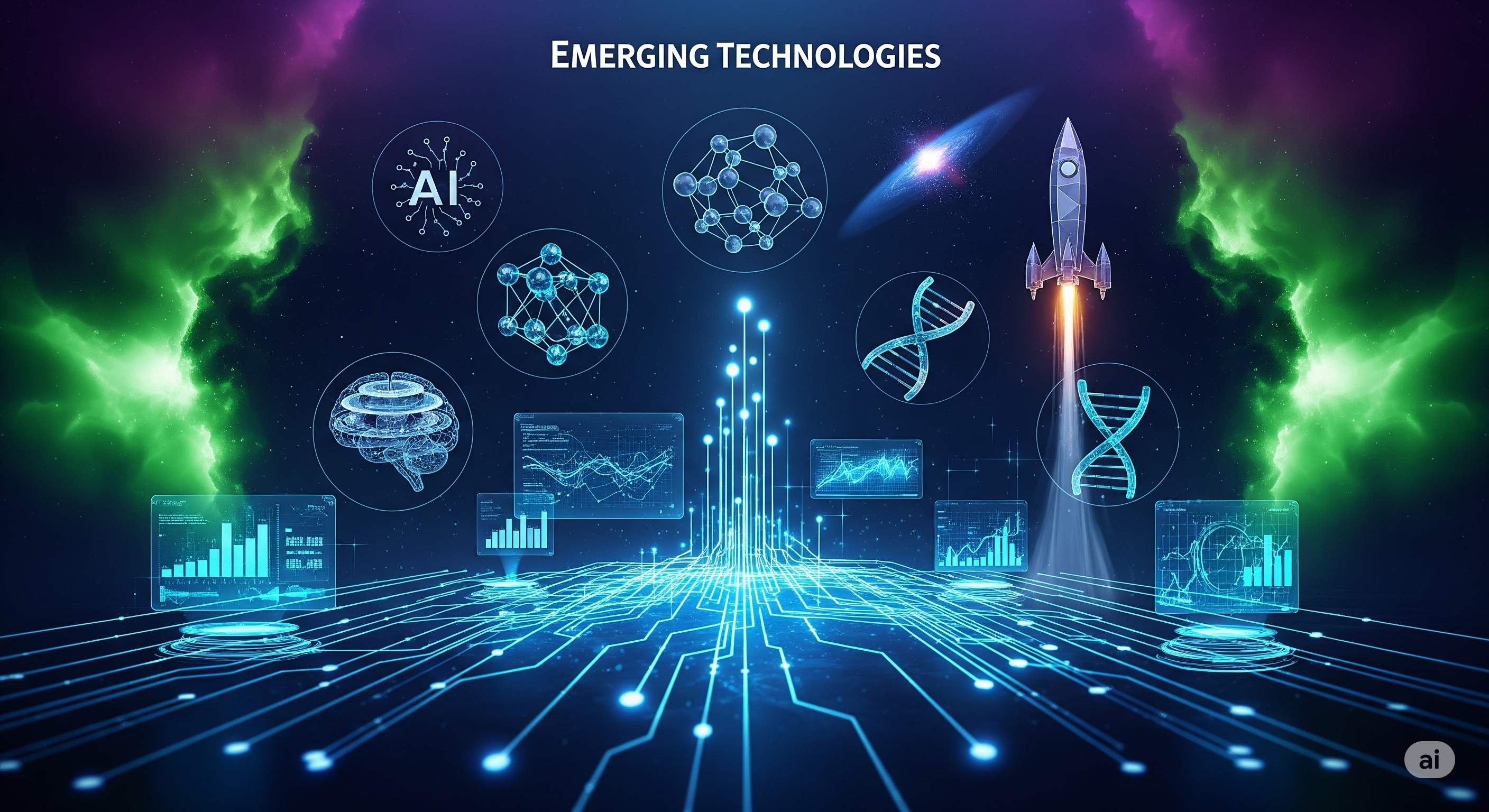
The latest wave of advancements, particularly in Generative AI, has fundamentally transformed our relationship with Big Data. AI is no longer just a tool for analysis; it's becoming the brain that makes sense of the brawn, turning raw, unstructured data into actionable intelligence, creative solutions, and unprecedented foresight. This synergy isn't just a technological upgrade; it's a fundamental shift reshaping industries, economies, and our everyday lives.
The Unseen Architect: How Big Data Powers the AI Revolution
At its core, Big Data is characterized by the five Vs: Volume, Velocity, Variety, Veracity, and Value. Imagine the sheer *Volume* of information generated globally every second, the lightning *Velocity* at which it flows, the incredible *Variety* of formats (text, images, video, sensor data), the challenges in confirming its *Veracity* or accuracy, and the immense *Value* it holds.
For Artificial Intelligence, Big Data isn't just a fuel; it's the very air it breathes and the food it consumes to learn. Modern AI models, especially large language models (LLMs) and deep learning networks, require gargantuan datasets to train effectively. They scour billions of text documents, images, and videos to recognize patterns, understand context, and learn to generate human-like responses or perform complex tasks. Without Big Data, AI would remain a theoretical concept, unable to develop the sophistication we see today.
Conversely, AI elevates Big Data from a mere collection of facts to a dynamic engine of insight. Where human analysts might take weeks to find correlations in massive datasets, AI algorithms can pinpoint anomalies, predict trends, and uncover hidden relationships in mere seconds. This symbiotic relationship is the engine driving the current technological revolution.
Beyond the Hype: Real-World Impacts & Transformative Use Cases
The fusion of AI and Big Data is not confined to research labs; it’s making tangible impacts across every sector:
Healthcare Transformed
Big Data, from electronic health records and genomic sequences to wearable device data, is overwhelming to process manually. AI, however, can analyze this information to identify early disease indicators, personalize treatment plans, accelerate drug discovery by simulating molecular interactions, and even predict patient outcomes, paving the way for truly precision medicine.
Retail Reimagined
From hyper-personalized shopping recommendations to dynamic pricing strategies and optimized supply chains, AI leverages customer browsing history, purchase patterns, and social media sentiment (Big Data) to create unparalleled retail experiences. Generative AI can even craft tailored marketing copy and product descriptions, directly impacting sales and customer loyalty.
Finance Fortified
The financial industry generates enormous transactional data. AI, fueled by this Big Data, is a formidable weapon against fraud, detecting suspicious patterns in real-time. It's also used for highly accurate risk assessment, algorithmic trading, and enhancing customer service through intelligent chatbots that can instantly access and process vast amounts of account information.
Smart Cities and Infrastructure
Big Data from traffic sensors, public transport, utility grids, and environmental monitors allows AI to optimize urban planning, manage traffic flow in real-time, predict energy demand, and monitor infrastructure for preventative maintenance, making cities more efficient and sustainable.
These examples only scratch the surface. From climate modeling and scientific research to advanced robotics and autonomous vehicles, Big Data is the canvas, and AI is the artist, continually painting a clearer, more insightful picture of our world.
Navigating the Data Frontier: Challenges and Ethical Imperatives
While the potential of AI and Big Data is immense, their convergence also presents significant challenges and ethical dilemmas that demand careful consideration.
Data Privacy and Security
The more data collected, the greater the risk of privacy breaches. Ensuring the security and ethical use of personal data, especially sensitive information, is paramount. Regulatory frameworks like GDPR and CCPA are steps in the right direction, but constant vigilance and robust anonymization techniques are crucial to protect individuals.
Bias and Fairness
AI models learn from the data they're fed. If that data is biased – reflecting societal inequalities or historical prejudices – the AI will perpetuate and even amplify those biases. Addressing this requires diverse, representative datasets and rigorous evaluation of AI outcomes to ensure fairness and prevent discrimination in areas like hiring, lending, or criminal justice.
Data Governance and Quality
The adage "garbage in, garbage out" has never been more relevant. The effectiveness of AI hinges on the quality and integrity of the Big Data it processes. Robust data governance strategies, data cleaning processes, and transparent data lineages are essential to ensure AI insights are reliable and trustworthy.
The Environmental Footprint
Processing and storing Big Data, and training complex AI models, consume vast amounts of energy. The environmental impact of massive data centers and computational demands is a growing concern, pushing for more energy-efficient AI algorithms and sustainable data infrastructure.
Addressing these challenges isn't just a technical task; it's a societal responsibility that requires collaboration between technologists, policymakers, ethicists, and the public.
The Road Ahead: What's Next for Big Data and AI?
The evolution of Big Data and AI is relentless, promising even more transformative advancements on the horizon:
Real-time Intelligence and Edge AI
The demand for instantaneous insights will drive further innovation in real-time analytics. Coupled with edge AI, where data is processed closer to its source (e.g., on smart devices, industrial sensors), this will enable immediate decision-making and action, reducing latency and bandwidth strain.
Data Fabrics and Data Mesh Architectures
As data sources multiply and become more fragmented, sophisticated data fabric and data mesh architectures will become essential. These frameworks create a unified, easily accessible, and governed data ecosystem, allowing AI models to draw insights from diverse sources more efficiently.
Augmented Data Management
AI will increasingly assist data professionals in their tasks, from automated data cleaning and cataloging to intelligent data preparation and feature engineering. This "augmented" approach will free up human experts to focus on higher-level strategic analysis and innovation.
Ethical AI and Explainable AI (XAI)
Greater emphasis will be placed on developing ethical AI frameworks and building explainable AI systems. Understanding *why* an AI made a particular decision will be crucial, especially in critical applications, fostering trust and accountability.
The Human Element
Amidst all the technological advancements, the human role remains irreplaceable. Data scientists, AI ethicists, domain experts, and creative thinkers will be critical in guiding AI development, interpreting its outputs, and ensuring its responsible deployment for the betterment of humanity.
A Future Forged in Data and Intelligence
The convergence of Big Data and AI is no longer a futuristic concept; it is our present reality, rapidly accelerating towards a future limited only by our collective imagination and ethical commitment. This powerful synergy is unlocking capabilities once thought impossible, from predicting global trends to creating personalized experiences on an unprecedented scale.
As we stand on the precipice of this data-driven revolution, it's vital to embrace its potential while proactively addressing its complexities. The future isn't just about collecting more data or building smarter algorithms; it's about using these tools wisely, ethically, and for the benefit of all.
What are your thoughts on how AI and Big Data are shaping our future? Share your insights and join the conversation.
