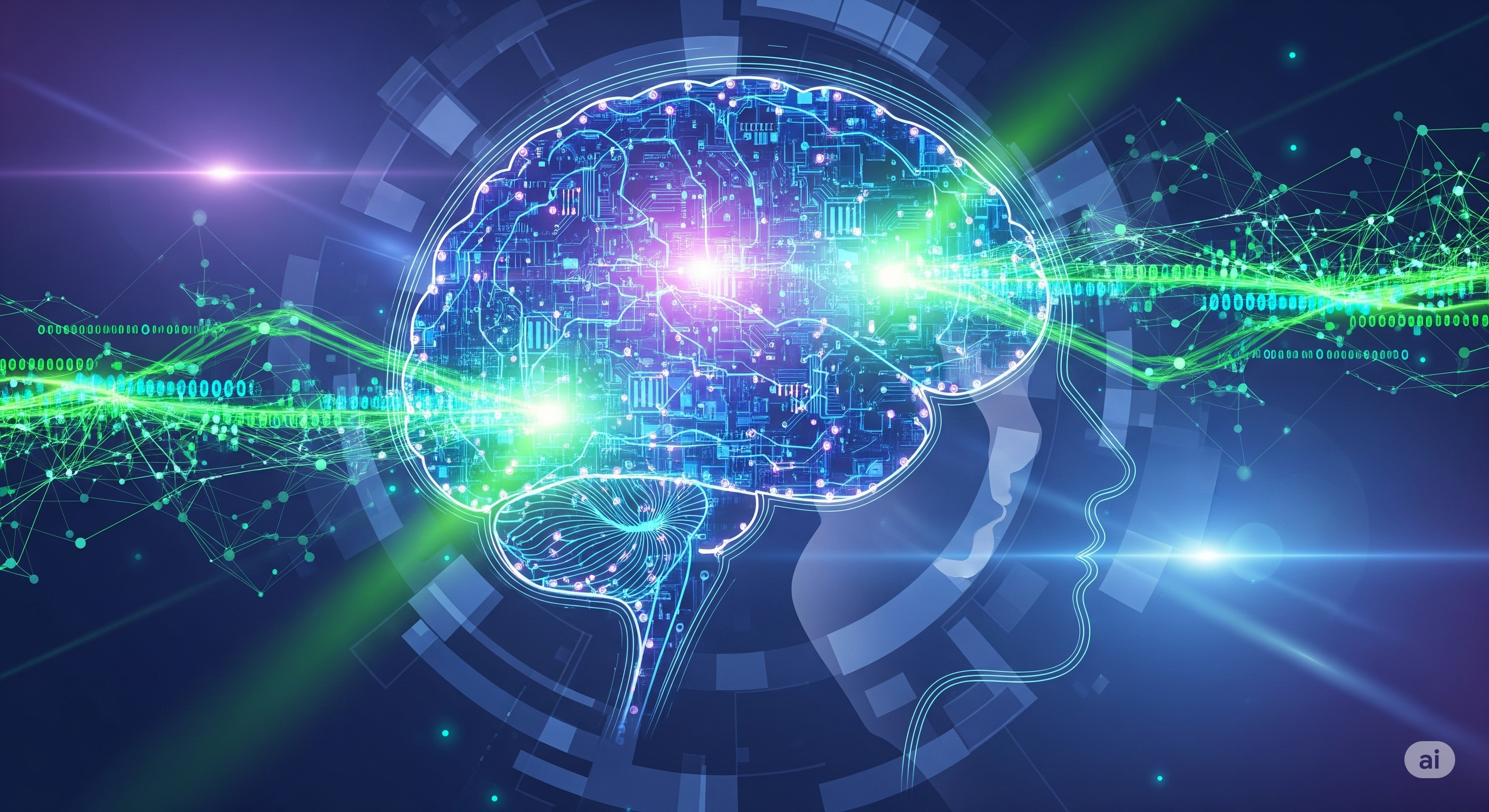
This isn't about a single breakthrough, but a rapid, compounding surge of innovation across the entire field. The latest generation of neural networks is learning faster, understanding deeper, and creating with a sophistication that was unimaginable just a few years ago. But what exactly are these digital brains, and what do their recent leaps mean for you, your job, and the very fabric of society?
Unpacking the Brain of AI: What Exactly Are Neural Networks?
At their core, neural networks are computational systems inspired by the structure and function of the human brain. Imagine a vast web of interconnected "neurons" (nodes) organized into layers. Each connection has a "weight," which determines the strength of the signal passed between neurons. When fed data (like images, text, or sound), these networks learn by adjusting these weights, gradually recognizing patterns and making decisions or predictions.
This "learning" process, often called Deep Learning, allows neural networks to excel at complex tasks that were once exclusively human domains, such as recognizing faces, understanding natural language, or even driving cars. They are the foundational technology powering virtually every modern Artificial Intelligence marvel, from your smartphone's voice assistant to the recommendation engine on your favorite streaming service. Understanding their basic premise is key to grasping the magnitude of their current evolution.
Beyond the Hype: The Latest Neural Network Breakthroughs
The current wave of innovation is pushing neural networks into territories once considered science fiction. Here are some of the most impactful recent advancements:
Multimodal Mastery: AI That Sees, Hears, and Speaks
One of the most exciting frontiers is the development of multimodal AI, where neural networks can simultaneously process and generate different types of data – text, images, audio, and video. Gone are the days when an AI could only understand words or only recognize pictures. Today, advanced neural networks can interpret complex visual scenes described in text, generate realistic video clips from a simple prompt, or even create a musical score to accompany a narrative. This integration of senses allows for far more intuitive, human-like interactions with AI, leading to comprehensive understanding and creative outputs that were previously impossible. Imagine an AI that not only understands your spoken question but can also analyze a diagram you're pointing to and explain it in a conversational manner.
The Rise of Autonomous AI Agents
Another monumental leap is the emergence of autonomous AI agents. These aren't just intelligent tools; they are neural networks capable of independently setting goals, breaking them down into sub-tasks, executing plans, and even learning from their own experiences to improve future performance. Picture an AI personal assistant that doesn't just book a flight, but researches destinations, compares prices, arranges local transport, and anticipates your dietary preferences – all with minimal human oversight. These agents are poised to automate complex workflows across industries, transforming from mere digital assistants into intelligent, collaborative "digital colleagues."
The Quest for Efficiency and Personalization
While much attention goes to massive models, a significant push in neural network research is towards greater efficiency and personalization. Researchers are developing smaller, more powerful models that can run on "edge devices" – your smartphone, smart home devices, or even wearables – without needing constant cloud connectivity. This Edge AI ensures faster responses, enhanced privacy, and personalized experiences tailored to individual users. Coupled with advancements in federated learning, where models learn from decentralized data, this means AI can be more deeply integrated into our daily lives, offering customized intelligence right where and when you need it.
Accelerating Scientific Discovery
Perhaps one of the most profound impacts of evolving neural networks is their role in accelerating scientific discovery. From predicting protein structures with unprecedented accuracy (as seen with AlphaFold) to rapidly screening potential drug candidates, neural networks are compressing decades of traditional research into mere months or weeks. They're being deployed to model complex climate systems, discover new materials, and even optimize fusion reactions. This "AI for science" revolution holds the key to solving some of humanity's grandest challenges at speeds previously thought impossible.
The Human Impact: How Neural Networks Are Reshaping Your World
The ripple effect of these neural network advancements is already touching every facet of human existence, and it’s only just beginning:
* Work & Economy: While some jobs will be automated, new roles centered around AI development, management, and ethical oversight are emerging. Productivity will soar, and existing professionals will find powerful AI tools augmenting their capabilities.
* Education: Personalized learning paths, AI tutors providing instant feedback, and accessible knowledge will transform education, making learning more adaptive and engaging for everyone.
* Creativity: Artists, writers, musicians, and designers are finding neural networks to be powerful collaborators, breaking creative barriers and opening up entirely new forms of expression and media.
* Healthcare: Faster and more accurate diagnostics, personalized treatment plans based on individual genomic data, and accelerated drug discovery promise a future of proactive and highly effective medicine.
* Daily Life: From smarter homes that intuitively anticipate your needs to enhanced personal assistants that truly understand context, AI is making our daily lives more efficient, convenient, and connected.
Of course, this rapid evolution also brings challenges – ethical considerations around bias, privacy, job displacement, and the need for robust regulatory frameworks. But the overwhelming narrative is one of immense potential.
The Road Ahead: Navigating the Neural Network Frontier
The journey of neural networks is far from over. The pursuit of Artificial General Intelligence (AGI) – AI that can perform any intellectual task a human can – remains a driving, albeit distant, goal. In the nearer term, we can expect continued focus on making neural networks even more robust, interpretable (so we understand *how* they make decisions), and energy-efficient. Their integration into every layer of our digital and physical infrastructure will only deepen, making them an inseparable part of how we live, work, and interact with the world.
We are truly in an "awakening" period for neural networks. These digital brains are not just getting smarter; they are evolving in ways that promise to unlock new possibilities for human ingenuity, scientific progress, and societal well-being. The pace is breathtaking, and the implications are profound.
What are your thoughts on this neural network revolution? How do you envision AI shaping your daily life in the next decade? Share your insights and predictions in the comments below, and don't forget to share this article with those curious about the future!
