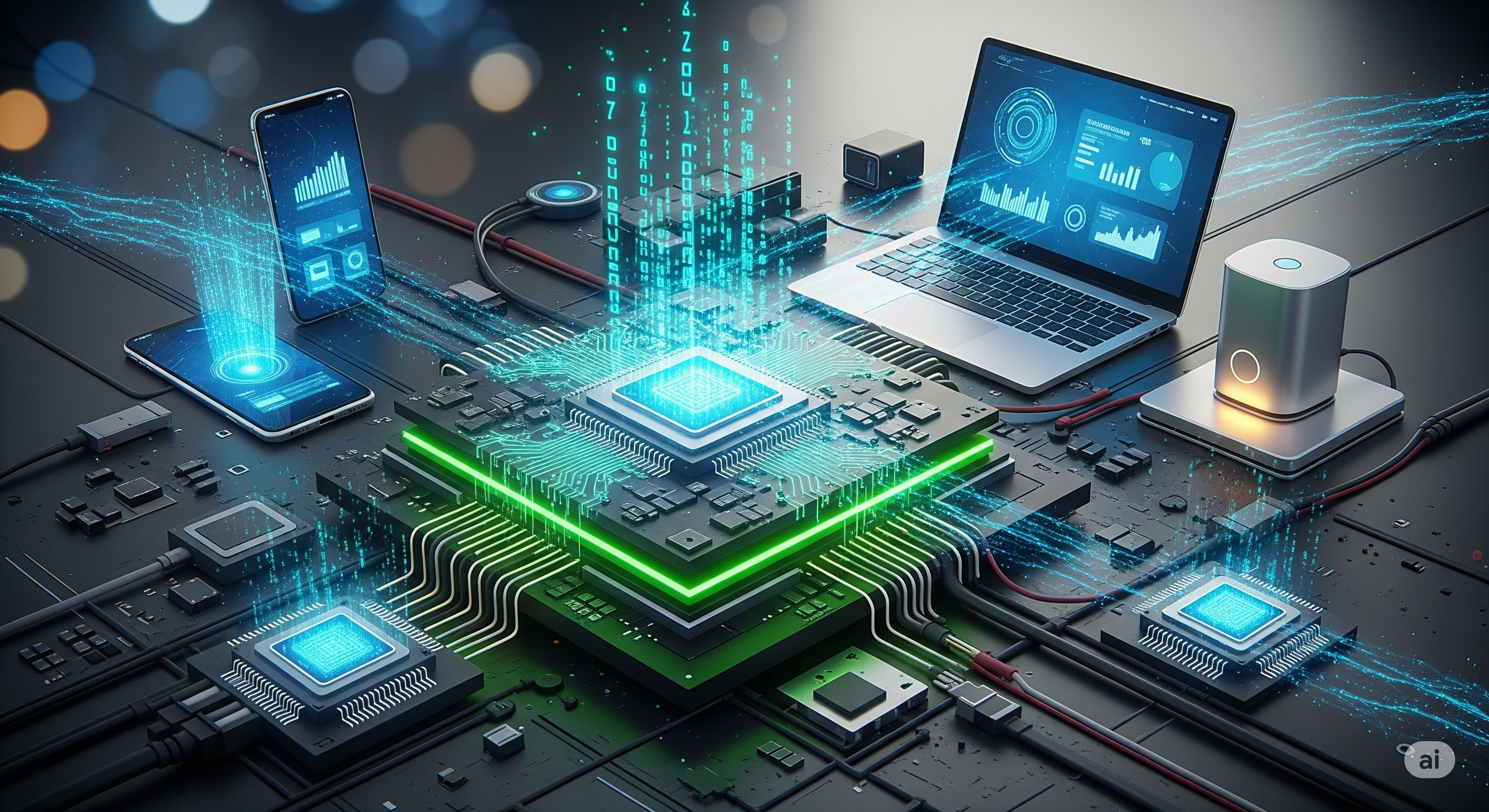
The Dawn of True IoT Intelligence: Beyond Connectivity
For a long time, IoT was primarily about connectivity and data collection. Smart devices sent streams of information to the cloud, where powerful servers crunched the numbers and sent back instructions. While effective, this model had limitations: latency, bandwidth dependency, and potential privacy concerns. Enter AI and Edge Computing – the dynamic duo poised to unlock the IoT's dormant potential.
AI & Machine Learning: The Brains Behind the Things
AI and Machine Learning (ML) are the vital intelligence infusion for IoT. They transform raw data into actionable insights, enabling devices to not just *report* conditions but to *understand* them, *predict* future events, and *make decisions* autonomously.
Imagine a smart thermostat that doesn't just adjust based on a schedule or your manual input, but learns your family's routines, anticipates weather changes, and even detects when a window is open to optimize energy usage without explicit programming. In industrial settings, AI-powered IoT sensors can analyze vibration patterns in machinery, predicting failures days or weeks in advance, preventing costly downtime and enabling proactive maintenance. AI allows IoT devices to move beyond simple automation to sophisticated self-regulation and optimization.
Edge Computing: Intelligence Where It Matters Most
If AI is the brain, Edge Computing is the nervous system, bringing that intelligence closer to the source of data – the "edge" of the network. Instead of sending all data to a distant cloud for processing, edge devices process data locally, in real-time.
This shift has profound implications. For critical applications like autonomous vehicles or real-time medical monitoring, milliseconds matter. Edge computing eliminates latency, ensuring instant responses. It also enhances privacy by processing sensitive data on-site, reducing the need to transmit everything to the cloud. Furthermore, it conserves bandwidth, which is crucial for remote or constrained environments, and improves reliability, as devices can continue functioning even if cloud connectivity is temporarily lost. The combination of AI and Edge means that IoT devices are not just "smart," but they are *autonomously intelligent* right where they are needed most.
From Smart Devices to Autonomous Ecosystems
This synergy of AI and Edge computing is not just making individual devices smarter; it's creating entire ecosystems that are self-sufficient, interconnected, and dynamically adaptive. We're moving beyond isolated smart gadgets to genuinely intelligent environments.
Smart Homes That Anticipate, Not Just Respond
The modern smart home is rapidly evolving. We're seeing systems that learn your sleep patterns to gradually adjust lighting and temperature, ensuring optimal waking. Smart refrigerators can track inventory and suggest recipes or grocery orders. Security cameras, armed with AI at the edge, can differentiate between pets, known family members, and potential intruders, reducing false alarms and enhancing safety. Your home won't just be smart; it will be a personalized, anticipatory assistant, optimizing comfort, security, and energy efficiency seamlessly.
Industrial IoT (IIoT) Reimagined: Self-Optimizing Factories
In manufacturing and logistics, the impact is even more transformative. IIoT sensors integrated with AI and edge analytics are powering self-optimizing factories. Robots equipped with edge AI can learn from their movements, improving efficiency and collaborating more effectively. Predictive maintenance evolves into *prescriptive* maintenance, where systems not only identify potential failures but also suggest and even initiate the necessary repairs or adjustments. Supply chains become more resilient and adaptive, with real-time data from sensors across warehouses and transportation optimizing routes and inventory levels. The factory of the future isn't just automated; it's an intelligent, self-managing entity.
Smart Cities: Living, Breathing Digital Organisms
Urban environments are perhaps where the scale of this transformation becomes most apparent. Smart cities are leveraging AI and edge IoT to tackle some of humanity's biggest challenges. AI-powered traffic lights can adapt to real-time traffic flow, reducing congestion and emissions. Smart waste bins signal when they need emptying, optimizing collection routes. Environmental sensors, processing data at the edge, can monitor air and water quality in real-time, alerting authorities to anomalies. These systems don't just collect data; they analyze, predict, and trigger responsive actions, making cities safer, more efficient, and more sustainable for their inhabitants.
Navigating the Future: Opportunities and Challenges
The rise of truly intelligent, autonomous IoT presents a landscape brimming with opportunities, but also requires careful navigation of new challenges.
The Untapped Potential: New Industries, New Experiences
Beyond our current understanding, this intelligent IoT wave will unlock entirely new industries and services. In healthcare, personalized wellness monitoring and remote diagnostics will become even more precise and proactive. In agriculture, smart farms will optimize yields with unprecedented accuracy, conserving resources. The ability for devices to learn and act locally will drive innovation in areas we can barely imagine today, creating value and improving quality of life across the globe.
Securing the Intelligent Frontier
With great intelligence comes great responsibility. The proliferation of powerful, autonomous IoT devices heightens the stakes for cybersecurity and privacy. As devices make more decisions independently, ensuring their integrity and preventing malicious manipulation becomes paramount. Robust security-by-design principles, advanced encryption, and ongoing vigilance against evolving threats will be crucial. Ethical AI considerations – ensuring fairness, transparency, and accountability in algorithmic decision-making – will also need to be at the forefront of development.
Bridging the Digital Divide: Accessibility and Equity
As these intelligent IoT systems become more integrated into our lives, it's vital to address the potential for a widening digital divide. Ensuring that the benefits of this technological revolution are accessible and equitable for all, regardless of socio-economic status or geographical location, will be a significant societal challenge that requires concerted effort from governments, industries, and communities.
Your Future is Actively Learning
The age of truly intelligent IoT is not a distant sci-fi fantasy; it's unfolding around us, right now. The convergence of AI and Edge Computing is transforming our homes, our workplaces, and our cities into dynamic, learning environments that anticipate our needs and react with newfound autonomy. This shift promises unparalleled efficiency, comfort, and safety, painting a vivid picture of a future where our environments are not just connected, but genuinely intelligent partners in our daily lives.
What intelligent IoT innovations are you most excited (or concerned) about? Share your thoughts and join the conversation about shaping our actively learning future!