The Unthinkable Just Became Reality: Welcome to the Multi-Sensory AI Era
The world of Artificial Intelligence moves at a blistering pace, but even seasoned tech enthusiasts are reeling from the latest seismic shifts. For years, Generative AI captivated us with its ability to conjure text from thin air, create stunning images from simple prompts, and even compose music. We thought we understood its capabilities, marveling at its rapid evolution. But recent breakthroughs have obliterated previous benchmarks, introducing a new breed of AI that doesn't just generate, but *perceives* and *understands* across multiple senses – simultaneously and in real-time. This isn't merely an upgrade; it's a profound paradigm shift, redefining what’s possible in human-computer interaction and beyond.
Imagine an AI that doesn't just process your typed words, but can hear the nuance in your voice, see the emotion in your facial expression, interpret the objects in your environment, and respond contextually across all these modalities. This isn't science fiction anymore. The multi-sensory Generative AI revolution is here, and it's set to transform every aspect of our digital and physical lives.
What is Multi-Sensory Generative AI and Why Now?
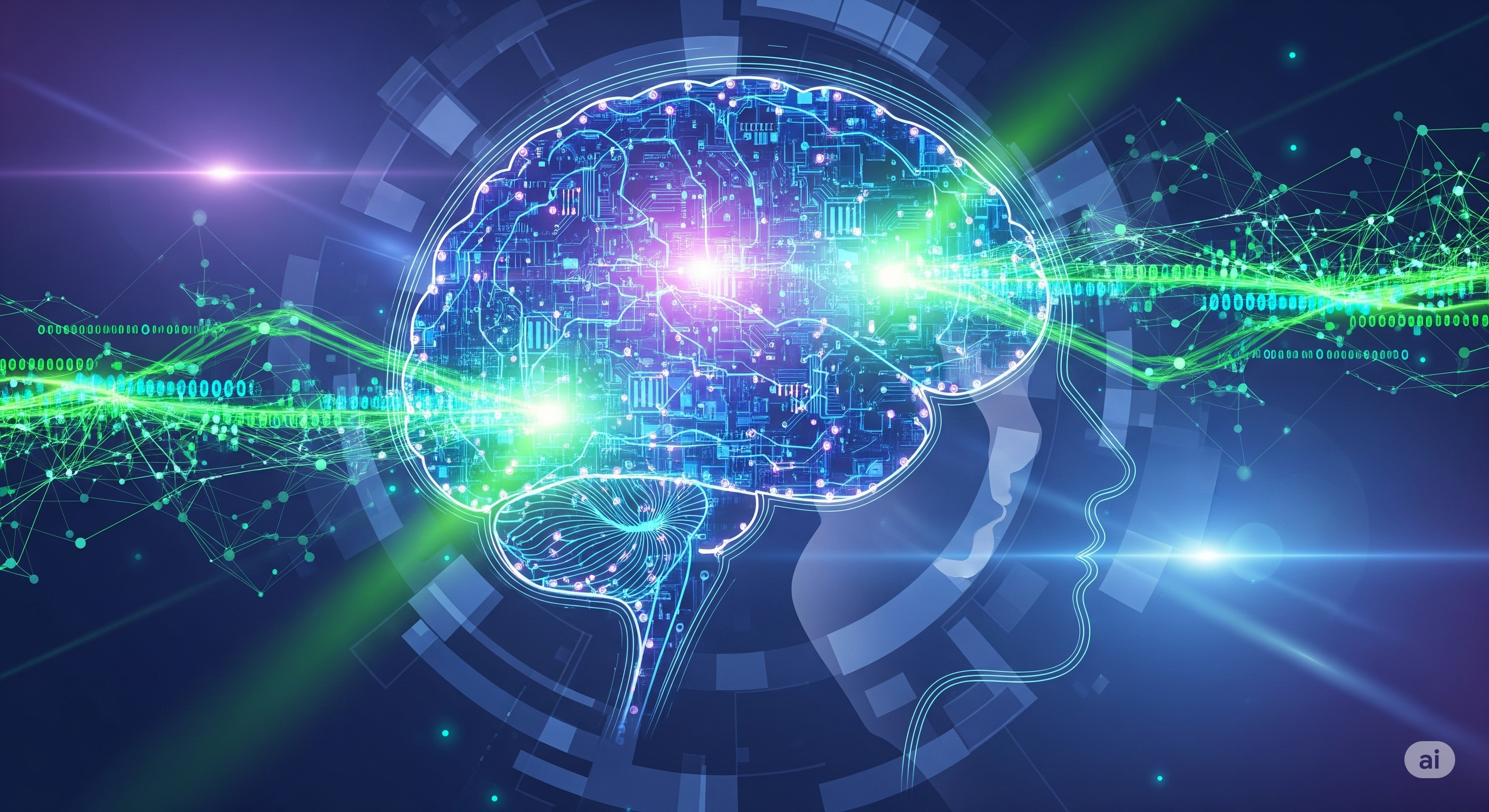
At its core, multi-sensory Generative AI refers to models capable of processing, integrating, and generating content across various data types – including text, audio, images, video, and even 3D models – all within a unified framework. Instead of separate models for text-to-image or speech-to-text, these advanced systems can handle a symphony of inputs and outputs, leading to unprecedented levels of comprehension and creation.
Why are we seeing this monumental leap now? Several factors have converged to make this possible. First, the sheer scale of modern AI models has reached new heights, allowing them to learn incredibly complex patterns and relationships across diverse datasets. Second, advancements in transformer architectures, originally designed for language processing, have proven remarkably adaptable to other data types, facilitating cross-modal learning. Third, the exponential growth in computational power (think specialized AI chips and cloud infrastructure) provides the necessary muscle to train and run these behemoths. Finally, the availability of vast, diverse, and meticulously labeled multi-modal datasets has been crucial in teaching these AIs to connect the dots between what they see, hear, and read.
The immediate implications are staggering. We're moving beyond AI that merely *creates* based on a single prompt, to AI that *understands* the complex interplay of human communication and the real world, generating responses that are not just accurate, but deeply contextual and incredibly natural. Think of real-time conversations where the AI not only understands your words but also your tone, pauses, and even what you're pointing at, responding with voice, text, or even generating a relevant image or video clip instantly.
The Game-Changing Implications: Who Benefits and How?
The advent of multi-sensory Generative AI unlocks a universe of possibilities across virtually every sector.
Reshaping Creativity and Entertainment
Artists, filmmakers, musicians, and game developers are on the cusp of an unparalleled creative explosion. Imagine generating entire animated scenes from a narrative script, complete with character dialogue, sound effects, and musical scores. Video game environments could dynamically adapt based on player voice commands or even emotional cues. Personalized content creation, from bespoke movies to unique musical compositions tailored to individual tastes, will become accessible on an unprecedented scale, democratizing creative expression and amplifying human ingenuity.
Revolutionizing Communication and Education
Human-AI interaction is becoming indistinguishable from human-human interaction. Virtual assistants will transcend their current roles, becoming true conversational partners capable of understanding complex queries, body language, and context in real-time. In education, multi-sensory AI tutors could offer highly personalized learning experiences, adapting explanations to a student's visual, auditory, and kinesthetic preferences, and even detecting when a student is struggling by analyzing their facial expressions or tone of voice. Language barriers will continue to crumble as AI effortlessly translates and interprets across modalities.
Powering Innovation in Business and Industry
From product design to customer service, businesses stand to gain immense efficiencies and open new avenues for innovation. AI could assist designers by interpreting spoken design briefs and sketching out 3D models, or helping architects visualize complex structures based on verbal descriptions and environmental analyses. In customer service, multi-modal AI agents could understand a customer's frustration from their voice, see the faulty product they're holding up to the camera, and offer an immediate, empathetic, and visually guided solution. Data analysis will become richer, as AI connects numerical data with visual trends and verbal feedback from reports, providing holistic insights.
Accessibility and Inclusivity
Perhaps one of the most heartwarming applications lies in accessibility. Multi-sensory AI can act as a powerful bridge for individuals with disabilities. Imagine an AI describing a visual scene in rich detail for the visually impaired, or converting complex auditory information into tactile feedback. Real-time translation of sign language into spoken words, or vice-versa, will foster greater inclusion and understanding, breaking down communication barriers that currently exist.
Navigating the New Frontier: Ethical Questions and the Path Forward
As with any transformative technology, multi-sensory Generative AI brings its own set of challenges and ethical considerations. Concerns around deepfakes, bias amplification, privacy, intellectual property, and job displacement require serious attention. The ability to generate hyper-realistic audio and video, indistinguishable from reality, necessitates robust ethical guidelines and protective measures.
The path forward demands a multi-stakeholder approach. Developers must prioritize ethical AI design, incorporating safeguards against misuse and ensuring transparency. Policymakers need to establish flexible yet firm regulations that encourage innovation while protecting society. And as users, we must cultivate critical media literacy, learning to discern AI-generated content and advocating for responsible AI development. The conversation around "responsible AI" has never been more critical.
Your Role in the AI Renaissance: Don't Just Watch, Participate!
This isn't just a technological marvel; it's a cultural and societal inflection point. The multi-sensory AI revolution isn't something that will happen *to* us; it's something we're actively building and experiencing *with* it. Now is the time to engage, to experiment, and to learn. Many of these tools are becoming accessible to the public, offering a glimpse into the future. Explore them, push their boundaries, and imagine how they can solve problems in your own life or industry.
The Future is Now (And It's Multi-Sensory)
We stand at the precipice of an era where AI doesn't just process information; it understands our world in a richer, more human-like way, enabling a new wave of creation and interaction. The fusion of sight, sound, and language in Generative AI represents a monumental leap, one that promises to redefine our relationship with technology and unlock unimaginable potential.
What are your thoughts on this multi-sensory AI revolution? How do you envision it impacting your life or profession in the next five years? Share your predictions, experiments, and concerns in the comments below. Let's collectively navigate this exciting new frontier and shape the future of Generative AI together!