The NLP Revolution: Decoding How AI is Learning to Speak Our Language (And Why It Matters to You)
Published on February 19, 2026
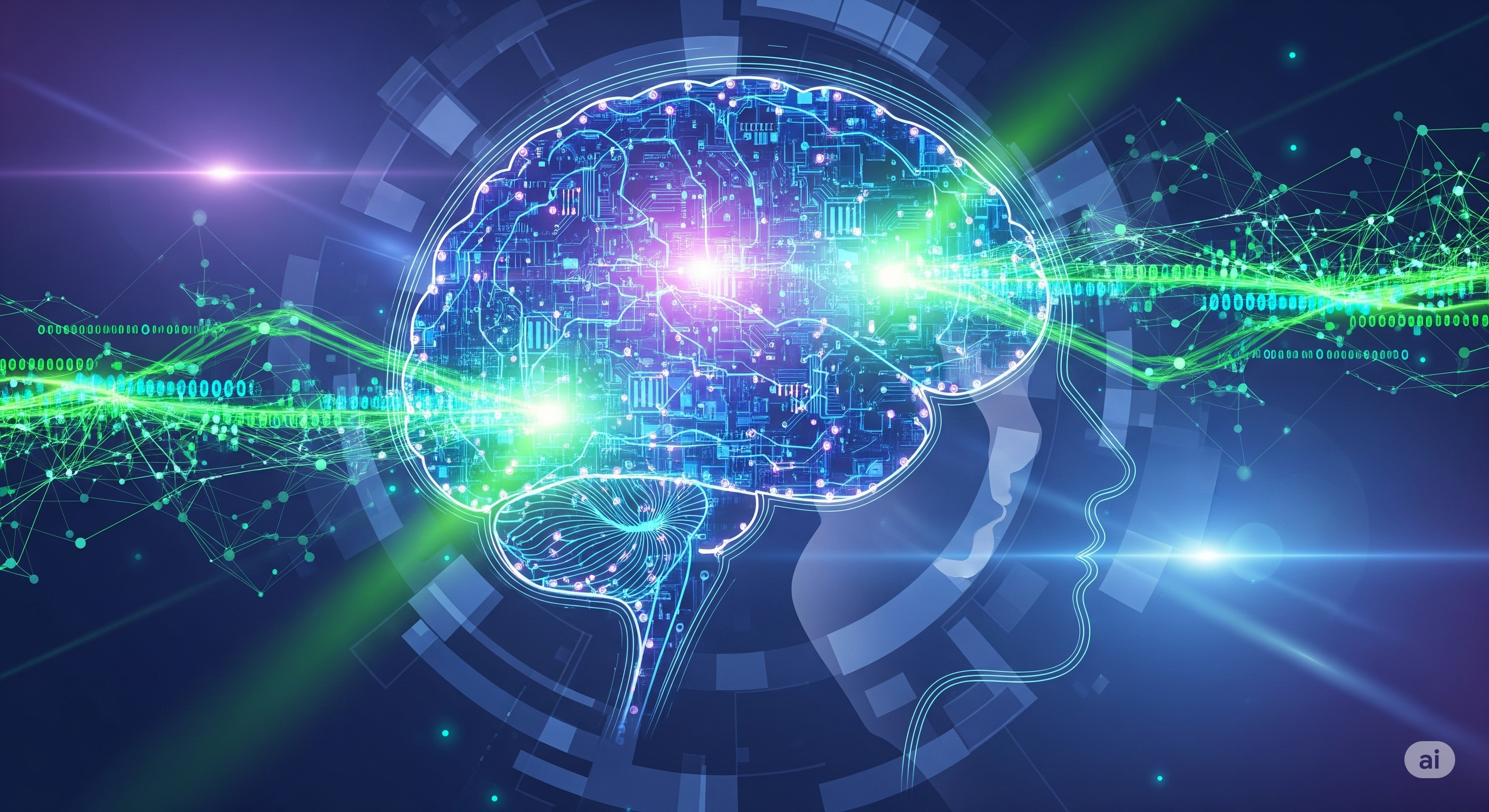
Remember when your phone barely understood "call mom," and chatbots were a frustrating loop of pre-programmed answers? Fast forward to today, and the world of Natural Language Processing (NLP) has undergone a seismic shift. Far from being a niche academic pursuit, NLP, the branch of Artificial Intelligence (AI) that allows computers to understand, interpret, and generate human language, is now at the forefront of technological innovation. It’s silently reshaping our daily interactions, driving breakthroughs across industries, and prompting crucial conversations about the future of human-AI collaboration. This isn't just about advanced chatbots; it's about AI learning the very fabric of human communication, a leap that promises to redefine our digital and real-world experiences.
H2: Beyond Basic Bots: The Dawn of Deep Language Understanding
For decades, NLP struggled with the nuances, ambiguities, and sheer complexity of human language. Early systems relied on rigid rules and keyword matching, leading to often comical misunderstandings. The game-changer arrived with deep learning, specifically the advent of transformer models and their progeny, Large Language Models (LLMs). These neural networks, trained on colossal datasets of text and code, can now identify patterns, context, and even subtle sentiments with astonishing accuracy.
The initial buzz around LLMs like GPT-3 and its successors highlighted their ability to generate remarkably coherent and creative text. However, the latest advancements push far beyond mere text generation. We're witnessing a move towards more specialized, efficient, and deeply integrated NLP capabilities that are less about generating generic content and more about profound understanding and targeted application.
H3: Specialization and Efficiency: Smaller, Smarter Models
The era of "one-size-fits-all" giant LLMs is giving way to a new trend: specialization. Developers are increasingly fine-tuning these powerful models for niche domains like healthcare, legal tech, finance, and scientific research. Imagine an AI that can analyze complex medical reports for diagnostic insights or sift through thousands of legal documents to identify precedents in seconds. This fine-tuning allows models to gain expert-level proficiency in specific vocabularies and contexts, vastly increasing their utility and accuracy in critical fields.
Simultaneously, there’s a strong push for efficiency. The computational cost and energy consumption of training and running enormous LLMs are significant. This has spurred innovation in developing smaller, more efficient language models (sometimes dubbed "tiny LLMs") that can run on consumer devices or edge computing environments. This "democratization" of advanced NLP means sophisticated language understanding isn't just for tech giants; it's becoming accessible to a broader range of businesses and developers, fostering innovation and reducing barriers to entry. Open-source initiatives are also playing a crucial role, providing foundational models that the global community can build upon, accelerating progress and diversification.
H2: NLP's Growing Reach: From Code to Creativity and Commerce
The impact of these advancements is reverberating across virtually every sector. NLP is no longer confined to helpdesks and translation apps; it's becoming an invisible engine powering critical functions.
H3: Bridging Human-Computer Interaction: The most visible impact is in how we interact with technology. Voice assistants like Alexa and Google Assistant are becoming more natural and capable, understanding complex commands and engaging in more fluid conversations. Customer service is being revolutionized by AI-powered chatbots and virtual agents that can resolve intricate queries, freeing human agents for more complex tasks. Even search engines are evolving, using NLP to understand the *intent* behind our queries rather than just matching keywords, delivering more relevant results.
H3: Unleashing Creative and Productive Potential: Generative AI, a core component of modern NLP, is transforming creative fields. Writers can use AI to brainstorm ideas, overcome writer’s block, or even draft initial content. Marketers leverage it for compelling ad copy and personalized campaigns. Programmers are experiencing a revolution with tools like GitHub Copilot, which uses NLP to suggest code snippets, complete functions, and even debug, significantly boosting productivity and enabling developers to focus on higher-level problem-solving.
H3: Revolutionizing Industries: Beyond consumer-facing applications, NLP is driving profound changes in core industries. In medicine, it assists in analyzing patient records, transcribing doctor's notes, and even identifying potential drug interactions. In finance, NLP models analyze news articles and social media sentiment to predict market trends. Legal professionals use it for due diligence, contract analysis, and e-discovery, drastically reducing the time and cost associated with these tasks.
H2: The Ethical Tightrope: Navigating Bias, Misinformation, and Responsible AI
While the capabilities of modern NLP are awe-inspiring, they also come with significant responsibilities and challenges. One of the most pressing concerns is bias. Since LLMs learn from vast amounts of existing text, they can inadvertently absorb and perpetuate societal biases present in that data, leading to unfair or discriminatory outputs. Addressing this requires rigorous dataset curation, model auditing, and ongoing research into bias detection and mitigation strategies.
Another challenge is misinformation and "hallucinations." LLMs can sometimes generate plausible-sounding but entirely false information, or "hallucinate" facts and sources. This risk is amplified with the rise of deepfakes and AI-generated content that can be difficult to distinguish from human-created material. The development of robust detection mechanisms and educational initiatives for media literacy are crucial.
The conversation around ethical AI is therefore paramount. Researchers and developers are working on explainable AI (XAI) to understand *how* models arrive at their conclusions, and on building in stronger safety guardrails to prevent harmful or unethical uses. The goal is to develop AI that is not only powerful but also fair, transparent, and aligned with human values.
H2: What's Next? The Future of Human-AI Collaboration
The future of NLP is not about AI replacing humans, but about unprecedented human-AI collaboration. We can expect to see:
* Multimodal NLP: Models that can seamlessly understand and generate content across text, images, audio, and video, leading to truly holistic AI assistants.
* Personalized AI: Language models that learn and adapt to an individual user's style, preferences, and context over time, becoming truly indispensable personal assistants.
* Proactive and Predictive AI: Systems that can anticipate needs, provide information before it's explicitly requested, or even identify potential problems based on language analysis.
* Enhanced Reasoning: Continued advancements in AI's ability to perform complex reasoning tasks, solve novel problems, and even contribute to scientific discovery through language.
We are just beginning to scratch the surface of what's possible when AI truly learns to speak our language. The journey will undoubtedly have its complexities and ethical debates, but the potential for positive transformation is immense.
Conclusion: Your Voice in the NLP Revolution
From the mundane to the miraculous, Natural Language Processing is rapidly evolving, embedding itself deeper into the fabric of our digital existence. It's empowering individuals, revolutionizing industries, and pushing the boundaries of what we thought computers could achieve. The conversation around ethical development, bias mitigation, and responsible deployment is as critical as the technological advancements themselves.
As NLP continues its exponential growth, it will increasingly shape how we learn, work, and communicate. What excites you most about the future of AI and language? How has advanced NLP already impacted your daily life, perhaps in ways you didn't even realize? Share your thoughts, predictions, and concerns in the comments below, and help us continue this vital discussion about the NLP revolution.

Turn Your Images into PDF Instantly!
Convert photos, illustrations, or scanned documents into high-quality PDFs in seconds—fast, easy, and secure.
Convert Now