The Silent Revolution: Edge Computing, AI, and 5G Are Making Our World Smarter, Faster, Now
Published on November 16, 2025
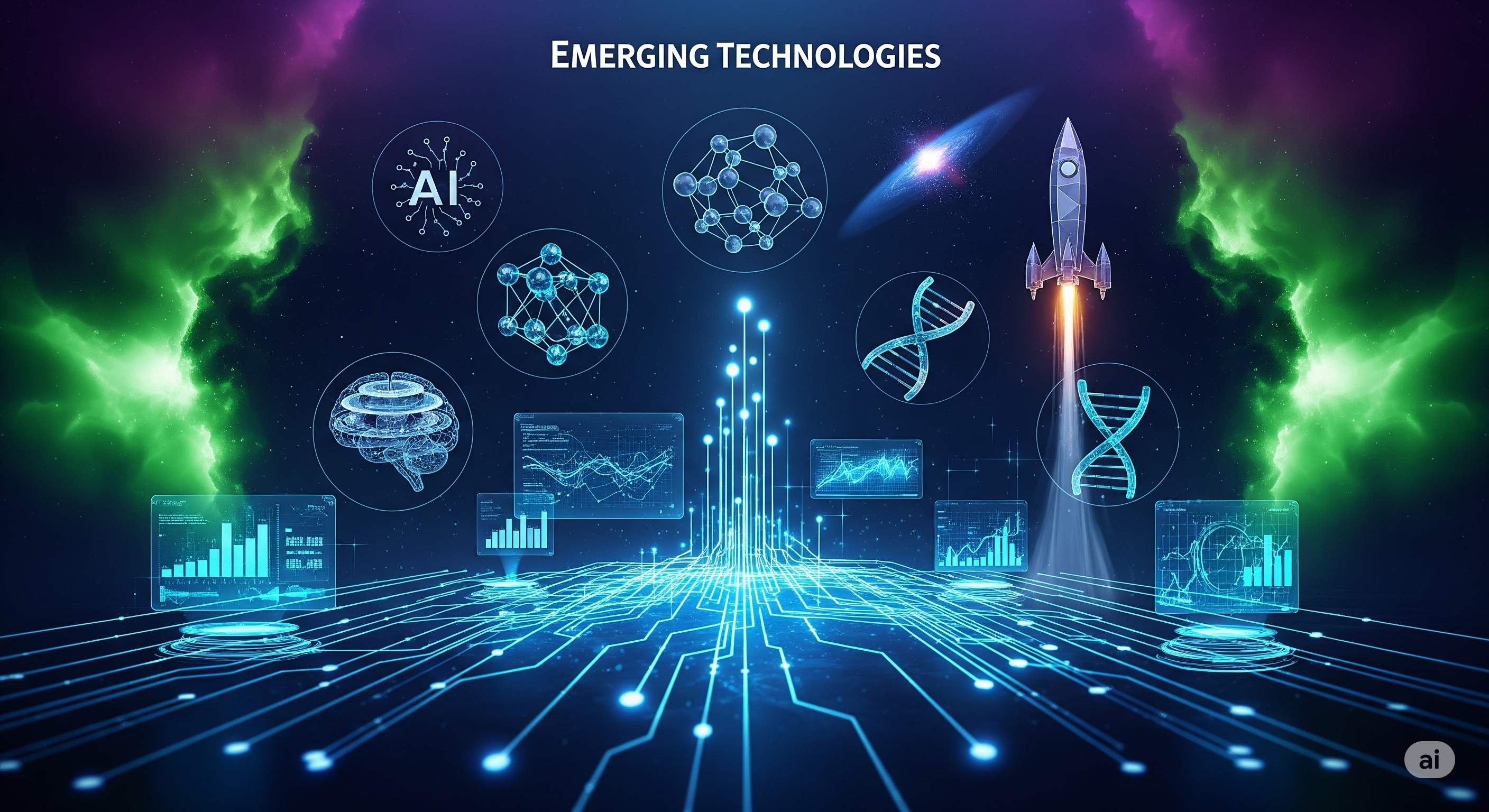
The digital world is awash with data – from billions of IoT sensors, smart devices, and interconnected machines. Sending all this data back to distant centralized data centers (the cloud) for processing creates bottlenecks, latency issues, and security concerns. Enter edge computing: the game-changer that processes data right at the "edge" of the network, closer to the source.
H1: The Edge is Calling: Why Decentralization is the New Frontier
At its core, edge computing is about decentralization. Instead of relying solely on powerful, distant cloud servers, it distributes computing capabilities to local devices and mini-data centers situated near data sources. Think of it like this: if the cloud is a massive central library, the edge is a network of smaller, specialized local libraries, each containing exactly the information needed for immediate queries in its vicinity.
Why is this shift happening now? The sheer volume, velocity, and variety of data being generated today are overwhelming traditional cloud models for certain applications. For tasks requiring immediate action, like an autonomous vehicle navigating city streets or a robotic arm performing precision surgery, even a few milliseconds of delay (latency) can be critical. Processing data at the edge drastically reduces this latency, conserves network bandwidth, enhances data privacy by keeping sensitive information localized, and can even cut down on operational costs associated with transferring vast amounts of data to the cloud. It’s no longer just about *where* we store data, but *where* we compute it.
H2: AI and 5G: The Power Couple Fueling the Edge Revolution
The true potential of edge computing blossoms when paired with two other transformative technologies: Artificial Intelligence and 5G connectivity. Separately powerful, together they create an unstoppable force.
H3: Unleashing AI at the Source
Deploying AI at the edge means bringing sophisticated machine learning models directly onto devices – from industrial sensors and security cameras to smartphones and medical devices. Instead of sending raw video footage or sensor data to the cloud for AI analysis, the edge device itself can analyze the data in real-time, making instant decisions or identifying anomalies.
Consider the implications:
* Real-time Insights: Factory machines can perform predictive maintenance by analyzing vibration data locally, flagging potential breakdowns before they occur.
* Enhanced Security: Smart cameras can identify suspicious behavior or unauthorized access instantly, without delay.
* Autonomous Systems: Self-driving cars need to process vast amounts of sensor data (Lidar, radar, cameras) in microseconds to make life-or-death decisions. AI at the edge is non-negotiable here.
* Personalized Experiences: Retail stores can analyze customer behavior patterns on-site to offer tailored promotions instantly.
This move to "intelligent edge" devices is pushing advancements in specialized AI chips and TinyML, allowing complex AI models to run efficiently even on resource-constrained devices, revolutionizing fields from healthcare diagnostics to environmental monitoring.
H3: 5G: The Superhighway for Edge Data
While AI provides the intelligence, 5G technology provides the essential high-speed, ultra-low-latency, and massive connectivity infrastructure that makes many edge applications feasible. Without 5G's robust network capabilities, the promise of the edge would remain largely theoretical for many high-demand use cases.
Here's how 5G acts as a critical enabler:
* Ultra-Low Latency: 5G slashes network delays to near real-time, crucial for applications like remote surgery, virtual reality (VR) training, and industrial automation where instantaneous feedback is vital.
* Massive Bandwidth: It allows for the rapid transfer of large datasets between edge devices and localized edge servers, facilitating collaborative AI models or quick updates.
* Massive Connectivity: 5G can connect millions of devices per square kilometer, perfect for dense IoT deployments in smart cities or large industrial complexes, ensuring all edge devices can communicate effectively.
Together, AI and 5G transform edge computing from a mere possibility into an inevitable reality, unleashing unprecedented levels of responsiveness and intelligence across our digital landscape.
H2: Beyond the Hype: Real-World Impacts & Future Horizons
The synergy of edge computing, AI, and 5G is not just for tech giants; it's transforming industries and redefining our daily lives.
H3: Transforming Industries: From Factory Floors to Smart Cities
* Manufacturing (Industry 4.0): Edge AI analyzes sensor data from assembly lines for quality control, robot coordination, and predictive maintenance, drastically reducing downtime and improving efficiency.
* Healthcare: Remote patient monitoring devices process vital signs locally, alerting doctors only when anomalies are detected. Edge computing also supports real-time imaging analysis and robotic-assisted surgeries with minimal latency.
* Retail: Smart shelves track inventory in real-time, cameras analyze foot traffic to optimize store layouts, and personalized promotions are delivered based on in-store behavior, all powered by edge analytics.
* Smart Cities: Edge devices manage traffic flow, monitor air quality, optimize public transport, and enhance public safety by processing data from countless sensors and cameras across urban environments.
* Autonomous Vehicles: These are perhaps the quintessential edge computing application, requiring instantaneous processing of massive data streams to ensure safe navigation.
The line between cloud and edge is also blurring, giving rise to the cloud-to-edge continuum. Major cloud providers like AWS, Azure, and Google Cloud are extending their services to the edge, offering hybrid solutions that allow seamless orchestration and management of workloads across both environments, providing the best of both worlds. This integrated approach ensures that data can be processed wherever it makes the most sense – locally for immediate needs, or in the cloud for large-scale analytics and long-term storage.
H2: Navigating the Edge: Challenges and Opportunities
While the potential of edge computing is immense, its widespread adoption isn't without hurdles. Security remains a primary concern; a distributed network of edge devices presents a larger attack surface, necessitating robust encryption and authentication mechanisms. Managing and orchestrating a vast number of disparate edge devices can also be complex, requiring sophisticated tools and platforms. Additionally, power consumption for edge devices in remote locations can be a challenge.
However, these challenges are fertile ground for innovation. The opportunities are colossal: a burgeoning market for edge hardware, software, security solutions, and specialized services. Edge computing is driving demand for new skill sets and fostering an ecosystem of innovators dedicated to building a smarter, faster, and more responsive future.
H1: The Future is Decentralized, Intelligent, and Right Now
Edge computing, bolstered by AI and 5G, is no longer a futuristic concept; it's a rapidly evolving reality fundamentally reshaping our digital and physical worlds. It promises a future where technology is not just powerful, but also responsive, efficient, private, and seamlessly integrated into the fabric of our lives. From the factory floor to the operating room, from smart homes to entire smart cities, the edge is making intelligence ubiquitous and instantaneous.
We are at the cusp of a decentralized digital revolution, where data's journey is shorter, insights are quicker, and actions are smarter. What innovations are you most excited to see come to life with edge computing, AI, and 5G? Share your thoughts and join the conversation about how these technologies will redefine tomorrow!

Turn Your Images into PDF Instantly!
Convert photos, illustrations, or scanned documents into high-quality PDFs in seconds—fast, easy, and secure.
Convert Now