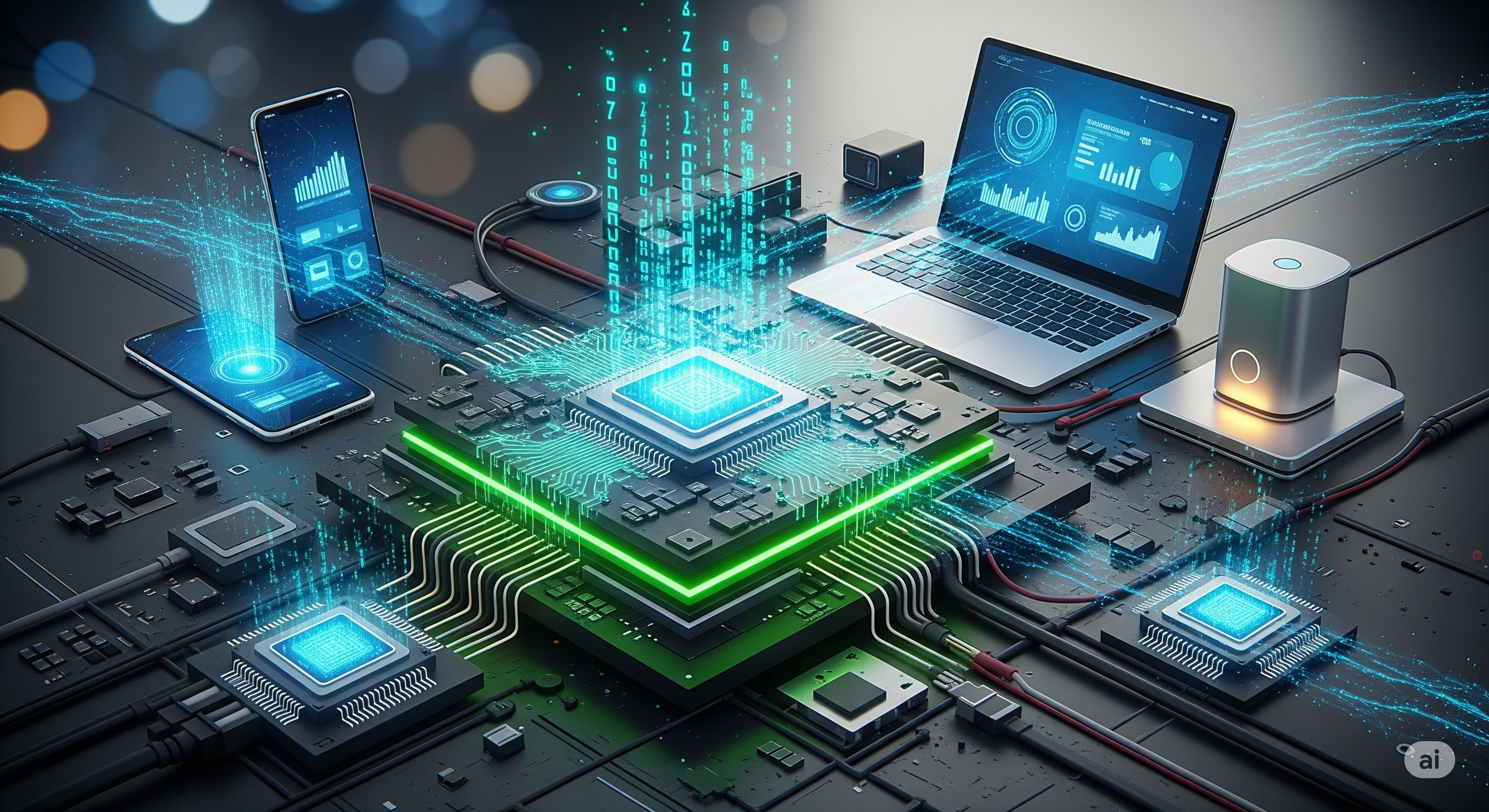
The Smart Home Revolution: How AI and Matter are Redefining Connected Living
Remember when smart homes felt like a futuristic concept straight out of a sci-fi movie? A place where lights knew your mood, doors unlocked with a glance, and coffee brewed itself precisely when you woke up. For a long time, the reality of smart homes was a patchwork of fragmented devices, complex setups, and frustrating compatibility issues, often falling short of that seamless, intelligent ideal.
But something fundamental has shifted. We're on the cusp of a true smart home revolution, driven by two powerful forces: the exponential growth of Artificial Intelligence (AI) and the unifying power of the Matter protocol. These aren't just incremental updates; they are game-changers poised to transform your living space from a collection of gadgets into a truly intuitive, responsive, and secure sanctuary.
Forget the days of juggling multiple apps and proprietary ecosystems. The future of the smart home is about effortless control, personalized experiences, and a deeper understanding of your needs. This article will dive into how AI is making your home smarter than ever before and how Matter is finally bringing all your devices together, paving the way for a connected living experience that’s simpler, safer, and remarkably intelligent.
Beyond Buttons: The Rise of Truly Intelligent AI in Your Home
For years, "smart" devices were largely reactive. You pressed a button, gave a command, or crossed a threshold, and something happened. While convenient, it lacked genuine intelligence. Enter advanced AI, which is now moving beyond simple automation to truly anticipate your needs and learn your habits, transforming your home into a proactive partner.
Predictive Power & Personalization
The latest AI integrations are learning at an unprecedented pace. Your smart thermostat isn't just turning on when you arrive home; it’s learning your preferred temperature patterns throughout the week, accounting for external weather, and even pre-heating or cooling based on your commute time. Smart lighting systems can adapt to your circadian rhythm, subtly shifting color temperature and brightness throughout the day to support your energy levels and sleep patterns. AI-powered speakers are becoming more adept at understanding context, distinguishing between users, and even anticipating follow-up questions or requests based on past interactions. This means less explicit instruction and more seamless living.
Proactive Problem Solvers
Imagine your home not only monitoring itself but actively seeking out potential issues. AI-driven sensors can now detect subtle changes in water pressure that might indicate a leak before it becomes a disaster. Cameras with advanced computer vision can differentiate between a pet and an intruder, sending more accurate alerts. Even air quality monitors powered by AI can suggest ventilation strategies or activate purifiers based on real-time data and predictive models of pollen counts or pollution levels. This proactive approach saves you time, money, and stress.
Natural Interaction
Voice assistants are evolving from simple command interpreters to conversational companions. Powered by large language models, they are becoming more capable of understanding nuanced requests, remembering past interactions, and engaging in more natural, human-like dialogue. This makes interacting with your home feel less like operating a machine and more like speaking to an attentive assistant.
Health & Wellness Integration
AI's influence extends deeply into health and wellness. Smart beds can monitor sleep patterns and adjust firmness to reduce snoring. Bathroom sensors can track vital signs and alert family members to unusual behavior. Beyond specific devices, AI can create a holistic healthy environment by optimizing lighting for mood, managing air quality for allergens, and even suggesting relaxation routines based on your daily schedule and stress levels.
Unifying the Ecosystem: Why Matter is the Smart Home's Unsung Hero
One of the biggest frustrations for smart home enthusiasts and newcomers alike has been the chaotic fragmentation of the ecosystem. You’d buy a smart bulb only to find it didn't work with your smart hub, or a security camera that required yet another proprietary app. This is where Matter steps in, poised to become the universal language that finally unites the smart home.
The Fragmentation Frustration
Prior to Matter, each major tech giant (Apple, Google, Amazon, Samsung) had its own smart home platform (HomeKit, Google Home, Alexa, SmartThings), along with countless smaller manufacturers creating their own proprietary systems. This meant consumers were often forced into a single ecosystem or had to rely on complex workarounds and third-party integrations, hindering adoption and creating headaches.
What is Matter?
Matter, developed by the Connectivity Standards Alliance (CSA) and backed by all the major players, is an open-source, royalty-free connectivity standard that aims to simplify and standardize smart home device setup and control. Think of it as a universal translator for your devices. Instead of each gadget speaking a different dialect, Matter enables them all to speak the same fundamental language over common network technologies like Wi-Fi, Thread, and Ethernet.
The Benefits of a Unified System
* Simplified Setup: Gone are the days of complex pairing processes. With Matter, adding a new device is as simple as scanning a QR code, and it will immediately be compatible with your preferred smart home platform(s).
* Improved Reliability: By standardizing communication, Matter reduces potential points of failure and makes devices more responsive and stable.
* Enhanced Compatibility: This is the big one. A Matter-certified device will work seamlessly with Apple HomeKit, Google Home, Amazon Alexa, Samsung SmartThings, and any other Matter-enabled platform, simultaneously. You are no longer locked into a single brand.
* Future-Proofing Your Purchases: Investing in Matter-certified devices means they’re more likely to remain compatible with future smart home innovations and platforms, protecting your investment.
Addressing the Elephant in the Room: Privacy, Security, and Sustainability
As our homes become smarter, concerns around data privacy, cybersecurity, and environmental impact naturally arise. The latest advancements, particularly Matter, are designed to tackle these head-on.
Fortifying Your Digital Frontier
Matter fundamentally enhances security by prioritizing local control whenever possible. Many Matter devices can communicate directly with each other and your smart home hub over your local network, reducing reliance on cloud servers for basic functionality. This not only improves responsiveness but also significantly limits the amount of data transmitted outside your home. Of course, robust cybersecurity practices remain crucial: always use strong, unique passwords, enable two-factor authentication, and keep your device firmware updated. AI can also play a role in security, identifying unusual network activity or device behavior that might indicate a breach.
AI and Ethical Data Use
The conversation around AI and privacy is ongoing. The trend is moving towards more on-device processing, where AI algorithms run directly on your smart devices rather than sending all your data to the cloud. This "edge computing" approach protects your privacy by minimizing data exposure and offering faster response times. Companies are also becoming more transparent about how they collect and use data, and regulations are evolving to give consumers more control.
The Green Smart Home
Sustainability is no longer an afterthought. AI is a powerful tool for energy optimization, allowing smart thermostats to learn your preferences and adjust heating/cooling with unprecedented efficiency. Smart lighting can dim or turn off automatically when rooms are vacant, and smart plugs can cut phantom power drain from idle electronics. Matter also encourages device longevity by ensuring compatibility, reducing the need to replace functional gadgets just because a new platform emerges. Choosing Matter-certified devices often means they adhere to higher standards of interoperability and potentially energy efficiency.
The Road Ahead: What to Expect from Your Future Home
The convergence of advanced AI and a unified Matter ecosystem paints an exciting picture for the future of connected living. We can anticipate:
* Truly Ambient Computing: Technology will fade into the background, working seamlessly and invisibly to enhance your comfort and productivity without constant interaction.
* Hyper-Personalized Environments: Your home will adapt dynamically to individual preferences, mood, and even health metrics, creating truly bespoke living spaces.
* More Proactive Assistance: Your home won't just respond; it will anticipate, suggest, and even initiate actions based on deep learning of your routines and external factors.
* Integration with External Services: Imagine your smart home automatically ordering groceries based on fridge inventory, scheduling maintenance appointments when it detects a potential issue, or coordinating with your smart car for seamless arrival and departure experiences.
The smart home is no longer just about convenience; it's evolving into an intelligent partner that enhances every aspect of your life, from security and energy efficiency to personal well-being.
What smart home feature are *you* most excited to see brought to life by AI and Matter? Share your thoughts and predictions for the future of connected living in the comments below! Don't forget to share this article with fellow tech enthusiasts and those looking to future-proof their homes.
