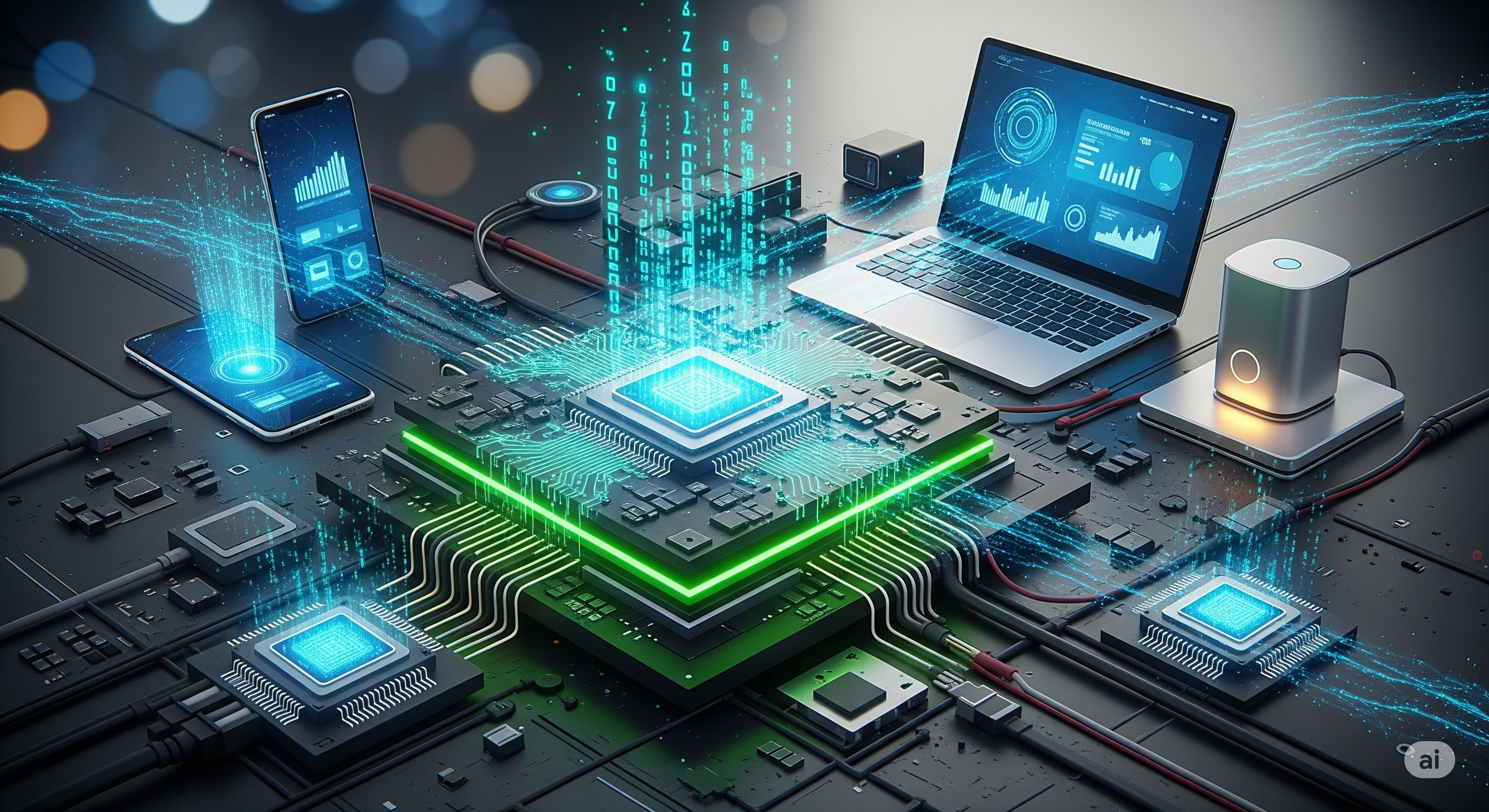
The Unseen Revolution: How IoT, AI, and Matter Are Hyper-Connecting Our World
Imagine a world where your refrigerator orders groceries before you even realize you're out of milk, your city monitors air quality block by block, and traffic lights adapt in real-time to ease congestion. This isn’t a sci-fi fantasy; it's the rapidly unfolding reality of the Internet of Things (IoT). For years, IoT has been a buzzing concept, connecting everything from smart thermostats to industrial sensors. But in recent times, this silent revolution has been accelerating at an unprecedented pace, driven by two monumental forces: the integration of Artificial Intelligence at the Edge and the emergence of the revolutionary Matter standard.
These innovations aren't just incremental upgrades; they're fundamental shifts that are transforming how devices communicate, think, and interact with us and each other. The implications are profound, promising not just convenience but also unprecedented levels of efficiency, sustainability, and autonomy across every sector imaginable. Yet, with this hyper-connectivity comes a heightened need for robust security and privacy measures. Buckle up, because we're diving deep into how IoT is not just evolving, but redefining our existence.
Beyond Simple Connectivity: The Rise of AI at the Edge
For a long time, IoT devices were primarily data gatherers, sending raw information to the cloud for processing and analysis. While effective, this model had its limitations: latency, bandwidth consumption, privacy concerns, and reliance on constant internet connectivity. Enter Artificial Intelligence (AI) at the Edge – a game-changer that is bringing the "brain" closer to the "body" of IoT devices.
AI at the Edge means that smart devices are no longer just passive sensors; they are becoming intelligent, autonomous agents capable of processing data, making decisions, and even learning directly where the data is generated – at the "edge" of the network. Think of a smart security camera that can identify a suspicious package in real-time without sending every frame of video to a distant server, or a factory machine that predicts its own maintenance needs with remarkable accuracy based on localized sensor data.
The benefits are transformative:
* Blazing Speed and Low Latency: Decisions are made almost instantaneously, critical for applications like autonomous vehicles or real-time health monitoring.
* Enhanced Security and Privacy: Less sensitive data is transmitted to the cloud, reducing exposure to breaches and improving data sovereignty.
* Reduced Bandwidth and Cost: Less data needs to be uploaded, cutting down on data transmission costs and network congestion.
* Increased Reliability: Devices can function effectively even with intermittent internet connectivity.
* Greater Efficiency and Sustainability: Localized processing consumes less energy than constant cloud communication, contributing to greener IoT.
This shift isn't just about faster gadgets; it's about creating a truly responsive and adaptive environment, from intelligent streetlights that optimize energy usage based on real-time traffic to wearables that offer personalized health insights without ever uploading sensitive biometric data to the cloud.
The Promise of True Interoperability: Matter and the Unified Smart Home
If AI at the Edge provides the intelligence, then the Matter standard provides the common language that allows this intelligence to thrive across a truly unified ecosystem. For years, the smart home dream has been hampered by a fragmented landscape. Apple HomeKit, Google Home, Amazon Alexa, Zigbee, Z-Wave – each ecosystem operated with its own protocols, often forcing consumers to choose sides or navigate complex compatibility charts. The result? Frustration, limited choices, and a slower adoption of smart home technology.
Matter is here to change all that. Backed by industry giants like Apple, Google, Amazon, Samsung, and the Connectivity Standards Alliance (CSA), Matter is an open-source, IP-based connectivity standard designed to enable smart home devices to work seamlessly together, regardless of their brand or underlying platform. It’s like creating a universal translator for smart devices.
What does this mean for you?
* Effortless Setup: No more complex pairing processes or dedicated hubs for every brand.
* True Compatibility: Your smart bulb from Brand A can talk to your smart thermostat from Brand B, and both can be controlled by your preferred smart assistant.
* Future-Proofing: As new devices emerge, they'll be designed with Matter in mind, ensuring long-term compatibility.
* More Choices: Consumers are no longer locked into a single ecosystem, encouraging innovation and competition among manufacturers.
Matter isn't just about convenience; it’s about unlocking the full potential of the smart home, paving the way for intricate automations and truly intelligent living spaces that adapt to your lifestyle with unprecedented ease. It's the standard that could finally make smart homes universally smart, inviting a new wave of users into the connected world.
IoT's Double-Edged Sword: Navigating Security and Privacy in a Connected Future
As we embrace this hyper-connected future, it’s crucial to acknowledge the "double-edged sword" of IoT: immense benefits alongside significant challenges, particularly concerning security and privacy. With billions more devices coming online, each potentially an entry point, the attack surface for cyber threats expands dramatically.
Security Concerns:
* Data Breaches: Connected devices collect vast amounts of personal and sensitive data, making them attractive targets for hackers.
* DDoS Attacks: Compromised IoT devices can be co-opted into botnets, launching crippling distributed denial-of-service attacks.
* Physical Security Risks: Smart locks or security cameras, if compromised, could jeopardize physical safety.
* Supply Chain Vulnerabilities: Flaws introduced at any stage of a device's production can lead to widespread vulnerabilities.
Privacy Concerns:
* Constant Surveillance: Smart cameras, microphones, and sensors can collect extensive data about our habits and whereabouts.
* Data Aggregation: Information from various devices can be combined to create highly detailed profiles of individuals, raising ethical questions.
* Lack of Transparency: Users often don't fully understand what data is being collected, how it's used, or with whom it's shared.
Addressing these challenges requires a multi-pronged approach:
* Security by Design: Building robust security features into devices from the ground up, including strong encryption and authentication.
* Regular Updates: Manufacturers must provide timely firmware updates to patch vulnerabilities.
* User Education: Empowering users to understand risks, choose strong passwords, and manage their privacy settings.
* Regulatory Frameworks: Governments and international bodies are developing regulations (like GDPR and CCPA) to ensure data protection and user rights.
* AI at the Edge (again!): By processing sensitive data locally, edge AI can significantly reduce the amount of private information that needs to be sent to the cloud, enhancing privacy by design.
From Smart Homes to Smart Cities: The Grand Vision
The impact of IoT, amplified by AI and unified by Matter, extends far beyond our living rooms. The grand vision encompasses entire ecosystems, transforming industries and public infrastructure:
* Smart Cities: IoT sensors in urban environments can optimize traffic flow, monitor air quality, manage waste collection, enhance public safety with intelligent surveillance, and create more energy-efficient infrastructure.
* Industrial IoT (IIoT): Factories are becoming smarter with sensors for predictive maintenance, supply chain optimization, and worker safety monitoring, leading to unprecedented efficiencies and reduced downtime.
* Healthcare (IoMT): From remote patient monitoring and smart hospitals to AI-powered diagnostics and personalized medicine, the Internet of Medical Things is revolutionizing patient care and operational efficiency.
* Agriculture (AgriTech): Precision farming uses IoT to monitor soil conditions, crop health, and livestock, optimizing resource use, increasing yields, and promoting sustainable practices.
* Environmental Monitoring: IoT devices deployed in remote areas can track climate change indicators, deforestation, water quality, and wildlife, providing critical data for conservation efforts.
The Future is Now: Are You Ready for the Hyper-Connected World?
The narrative of IoT has shifted dramatically. It's no longer just about connecting devices; it's about infusing them with intelligence at the edge, enabling them to communicate seamlessly through standards like Matter, and empowering them to create truly autonomous and responsive environments. This hyper-connected world promises unparalleled convenience, efficiency, and sustainability, fundamentally altering how we live, work, and interact with our surroundings.
However, this future also demands our active participation in ensuring its ethical and secure deployment. Understanding the benefits and risks, advocating for robust security, and prioritizing privacy will be paramount as we step deeper into this brave new world.
The revolution is unseen, but its effects are tangible, and they are here to stay. Are you ready to embrace a future where everything is intelligent, integrated, and connected? Share your thoughts below – what excites or concerns you most about this hyper-connected reality?