Unleashing the Brain's Blueprint: How Neural Networks are Reshaping Our World
Published on March 11, 2026
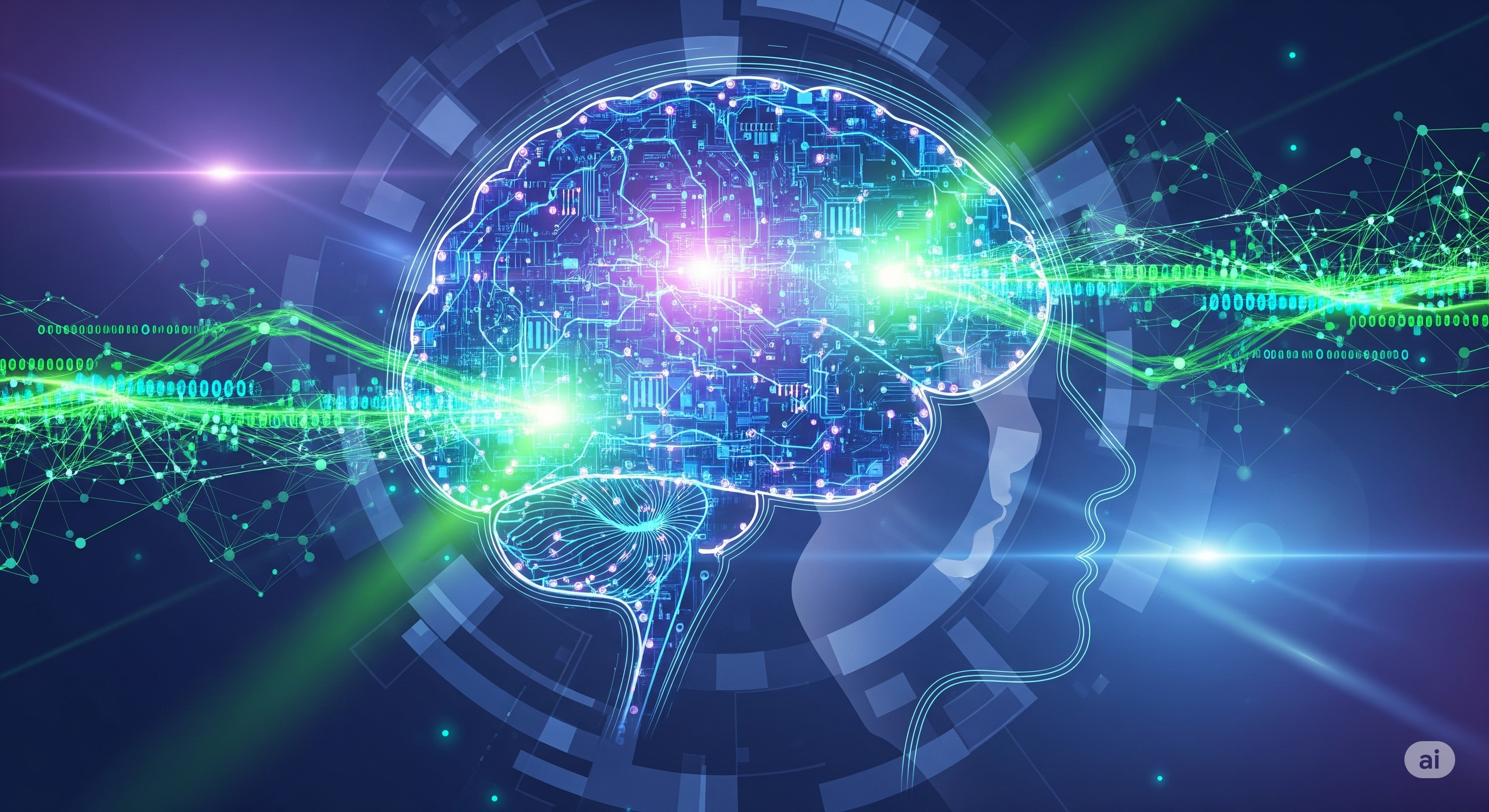
Imagine a world where machines don't just follow instructions but *learn*. A world where algorithms can compose symphonies, discover life-saving drugs, and hold conversations so natural they blur the line between human and machine. This isn't science fiction anymore; it's the present, driven by a technology inspired by the most complex machine known: the human brain. Welcome to the era of neural networks – the beating heart of modern Artificial Intelligence, and the engine behind the breathtaking innovations dominating headlines worldwide.
From the latest advancements in large language models that astound us with their creativity and reasoning, to AI systems predicting climate patterns with unprecedented accuracy, neural networks are not just evolving; they're fundamentally redefining what's possible. But what exactly are these digital brains, and why are they suddenly unlocking capabilities we once thought decades away? Let's dive deep into the revolution that's already shaping our tomorrow.
H2: What Exactly Are Neural Networks, Anyway? The Brain's Digital Twin
At its core, a neural network is an AI system designed to mimic the interconnected neurons of the human brain. Instead of being explicitly programmed for every task, it learns by processing vast amounts of data, identifying patterns, and making predictions or decisions. Think of it like a child learning: it sees countless examples, makes mistakes, and adjusts its internal "connections" until it gets it right.
These networks consist of layers of interconnected "nodes" or "neurons." An input layer receives data (like an image or text), hidden layers process it through complex mathematical transformations, and an output layer delivers the result. The "deep" in "deep learning" simply refers to neural networks with many hidden layers, allowing them to learn incredibly intricate patterns and representations from data – something traditional computing struggled with. This architectural depth is precisely what has propelled AI from simple pattern recognition to sophisticated understanding and generation.
H2: The Latest Frontier: Breakthroughs Redefining Possibility
The last few years have seen an explosion in neural network capabilities, moving beyond theoretical discussions to practical, transformative applications.
H3: The Rise of Generative AI and Large Language Models (LLMs)
Perhaps the most visible and impactful advancement comes from generative AI, particularly Large Language Models like OpenAI's GPT series, Google's Gemini, or Meta's Llama models. These behemoths, trained on unfathomable amounts of text data from the internet, have demonstrated an uncanny ability to understand, generate, and manipulate human language.
They can write essays, compose code, draft marketing copy, translate languages, summarize complex documents, and even engage in nuanced conversations, responding to prompts with coherence and creativity that often rivals human output. Their capabilities are not just about processing information; they're about generating *new* information, opening up unprecedented avenues for automation, content creation, and personalized interaction across every industry. This continuous improvement in language understanding is what makes today's AI feel less like a tool and more like an intelligent collaborator.
H3: Beyond Text: Multimodal Marvels and Perceptual AI
The revolution isn't confined to text alone. Modern neural networks are increasingly becoming "multimodal," meaning they can process and understand information from various sources simultaneously – text, images, audio, and video. Imagine an AI that can not only describe a complex image but also answer questions about its contents, generate a video based on a text prompt, or even create realistic audio from written instructions.
This perceptual AI is transforming fields from medical diagnostics (identifying anomalies in X-rays or MRIs) to autonomous vehicles (interpreting real-time road conditions) and even creative arts (generating hyper-realistic images and animations). By blending different forms of perception, these neural networks are building a more holistic understanding of the world, pushing the boundaries of what integrated AI systems can achieve.
H3: AI in the Real World: From Labs to Lives
The impact of these neural network advancements is reverberating across countless sectors:
* Healthcare: Accelerating drug discovery, personalizing treatment plans, and improving diagnostic accuracy.
* Science: Modeling complex phenomena like climate change, simulating molecular interactions, and discovering new materials.
* Finance: Detecting fraud, optimizing trading strategies, and providing personalized financial advice.
* Education: Creating adaptive learning platforms and personalized tutoring experiences.
* Creativity: Assisting artists, musicians, and designers in generating novel works and streamlining workflows.
These applications are not just about efficiency; they're about unlocking new insights and solving problems that were once deemed intractable, often by leveraging the neural network's unparalleled ability to sift through massive datasets and identify non-obvious patterns.
H2: The Promise and the Peril: Navigating the AI Era
With great power comes great responsibility, and the rapid evolution of neural networks brings both immense promise and significant challenges.
The promise is undeniable: a future of increased productivity, personalized services, groundbreaking scientific discoveries, and potentially solving some of humanity's most pressing issues. AI could augment human intelligence, free us from mundane tasks, and empower us to focus on higher-level creativity and problem-solving.
However, the perils are equally significant. Concerns about job displacement, the spread of misinformation through sophisticated deepfakes, algorithmic bias perpetuating societal inequalities, and the ethical implications of autonomous decision-making are paramount. Ensuring AI systems are fair, transparent, controllable, and aligned with human values is a monumental challenge that requires global collaboration from technologists, policymakers, and society at large. The discussion around AI safety and responsible development is as crucial as the innovation itself.
H2: What's Next? The Road Ahead for Neural Networks
The journey of neural networks is far from over. Future developments are likely to focus on:
* Efficiency: Making these powerful models less resource-intensive to train and run, democratizing access.
* Generalization: Developing models that can adapt to new tasks with less specific training, moving closer to Artificial General Intelligence (AGI).
* Explainability: Making AI decisions more transparent and understandable, addressing the "black box" problem.
* Human-AI Collaboration: Fostering more intuitive and effective partnerships between humans and intelligent systems.
* Neuromorphic Computing: Developing hardware specifically designed to mimic the brain, potentially leading to vastly more energy-efficient and powerful AI.
The trajectory suggests an even more integrated and pervasive role for neural networks in our daily lives, transforming industries and redefining our relationship with technology.
Conclusion: Join the Conversation on Our Intelligent Future
Neural networks are no longer just a fascinating concept; they are the fundamental force driving the current AI revolution. They are the digital architects behind the intelligent systems that promise to revolutionize how we work, learn, create, and interact with the world. While the journey ahead holds both incredible potential and complex challenges, one thing is certain: our future will be profoundly shaped by these brain-inspired algorithms.
The conversation about this future is one that needs all voices. What are your thoughts on the rapid advancements in neural networks? Are you excited by the possibilities, or concerned about the challenges? Share your perspectives in the comments below, and let's discuss how we can collectively navigate this thrilling, transformative era! Don't forget to share this article with friends and colleagues who are curious about the future of AI!

Turn Your Images into PDF Instantly!
Convert photos, illustrations, or scanned documents into high-quality PDFs in seconds—fast, easy, and secure.
Convert Now